How to Match Nursery Furniture to a Warm Minimal HDB Interior
Warm minimal is having a quiet moment across Singapore homes, and nowhere does it feel more right than in a nursery. The look pairs the clean geometry of minimalist design with the soft, honey-toned warmth of natural materials — think oak veneers, undyed linen, brushed brass, and one well-placed rattan pendant. The challenge for parents is doing all of that without turning a 92 sqm Tampines four-room flat into a showroom. Last month I walked through two completed nurseries in Punggol with a client, both under 10 sqm, and both built around a single 100% solid wood bed frame, a low 120cm dresser, and a rattan reading nook. Neither room felt crowded. That balance is what this article is about.
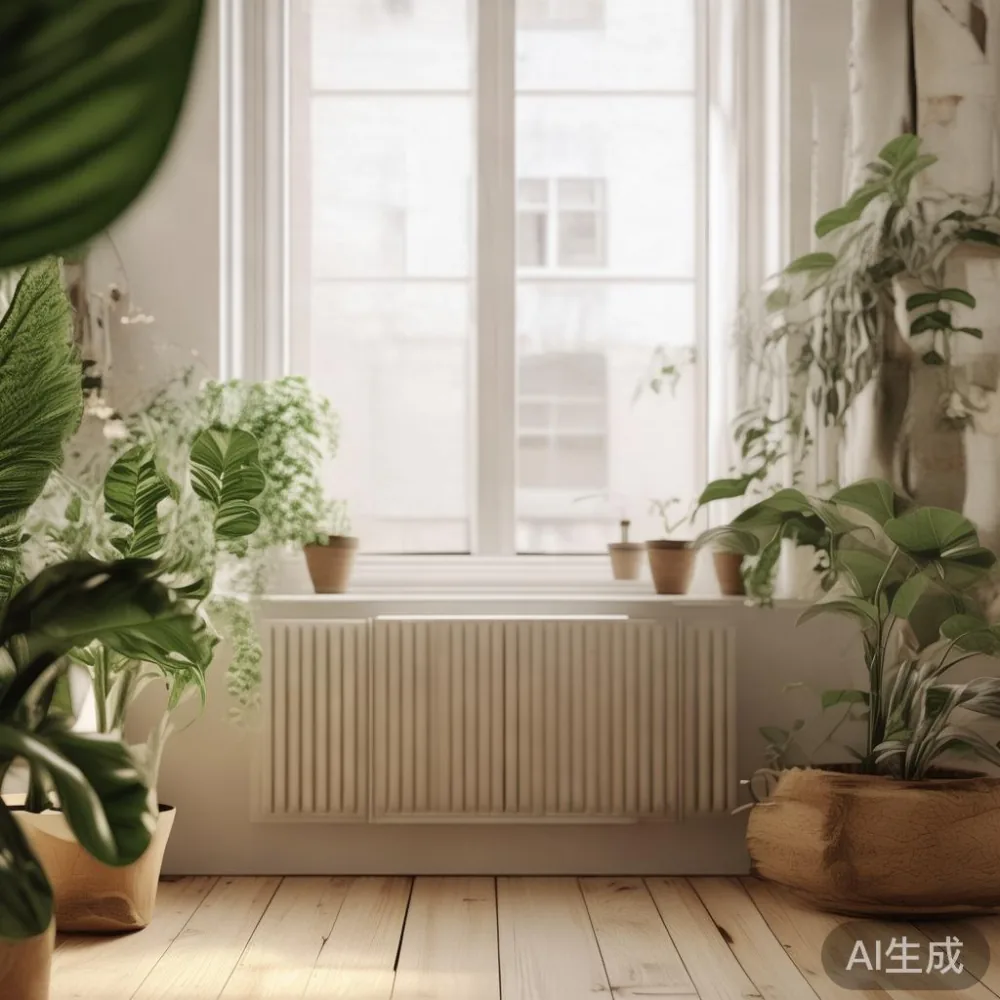
What does "warm minimal" actually look like in a Singapore HDB nursery?
Warm minimal is not the stark white-and-grey look that dominated Pinterest boards in 2017. It is the softened, post-modern light luxury version: a putty or sand wall colour (we used Dulux Natural White 1s SW30 — about S$38 per litre), a 4-inch solid oak skirting, and furniture with visible grain. You will usually see one curved silhouette in the room — often a Japandi dining chair pulled in as a reading seat, or a low 90cm armchair in bouclé. Everything else is rectangular, restrained, and at child-safe heights.
In practice the palette is four colours: warm white, sand, light oak, and one darker walnut accent. Midhill frames pulled leaf inserts, for example, are designed to sit flush with that exact look — light to the touch, quiet to the eye, and engineered for warmers so the wood tone reads warm under our tropical lighting. A 4-room HDB nursery needs roughly 9–12 furniture pieces including a bed frame, a wardrobe, a nightstand, a dresser, a small desk, a solid wood sofa for the parent, a side table, a rug, lighting, and storage baskets. You can do it well between S$3,800 and S$9,500 for the big pieces.
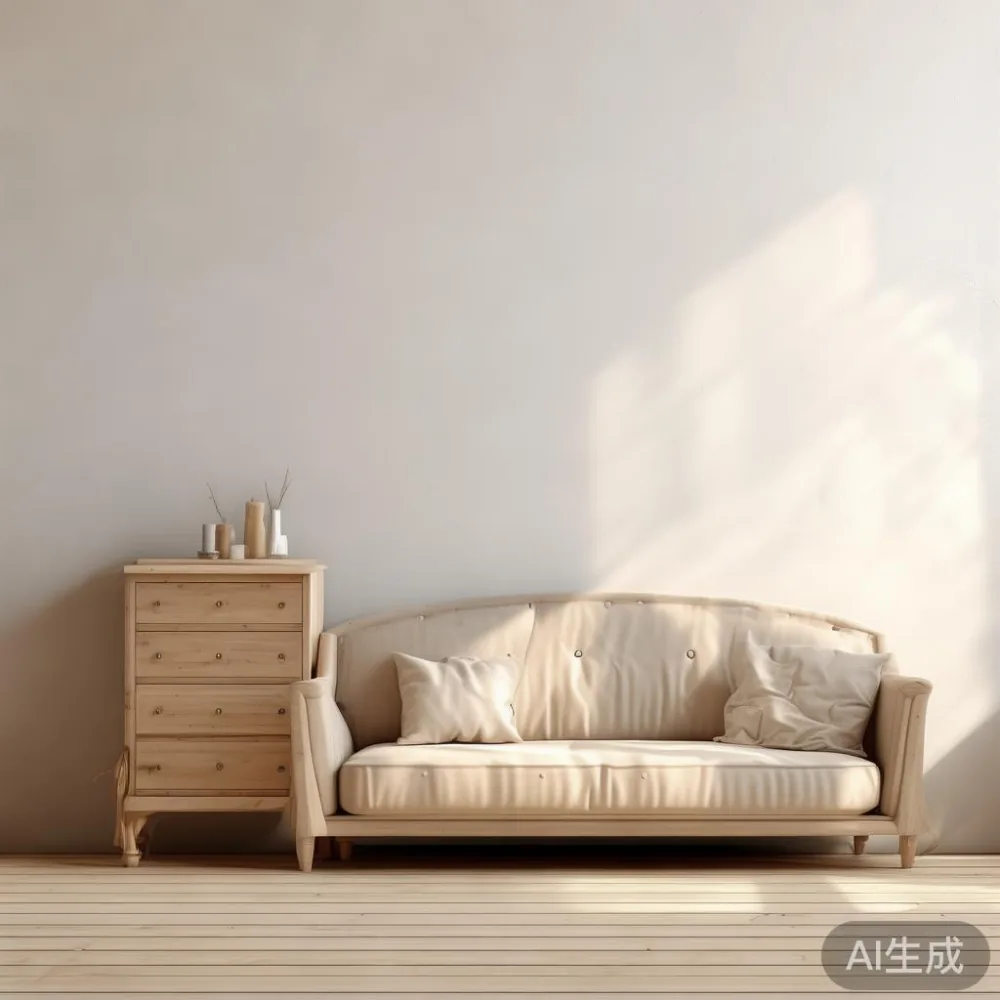
Why is solid wood the right material in our climate?
Singapore sits between 24°C and 34°C with humidity that regularly clears 80%. MDF swells, veneer peels, and laminate joints lift. Solid wood — properly kiln-dried oak, ash, or beech — moves with the seasons instead of against them. A 1.8m × 1.0m solid wood bed frame in white oak — the kind that suits a single toddler bed or a full grown-up guest — weighs roughly 38–45kg. That weight is a feature, not a problem. It means the bed does not creep across the vinyl floor when a 3-year-old launches themselves onto it.
A solid wood sofa in the same room is also worth the small premium. A 2-seater at 160cm wide in oak or ash frame with washable linen covers will run S$1,400–S$2,200 and last through two children plus a few ECE values in age range. The reason lightweight hardwood is durable is the same reason lightweight steel is durable: high strength-to-weight, low maintenance. The same logic applies to the dining table. A 1.4m solid oak dining table on tapered legs takes about 6–8 sqm of footprint including chairs. It seats a family of four plus one high chair, and survives baby-led weaning without staining the way a veneer top stains.
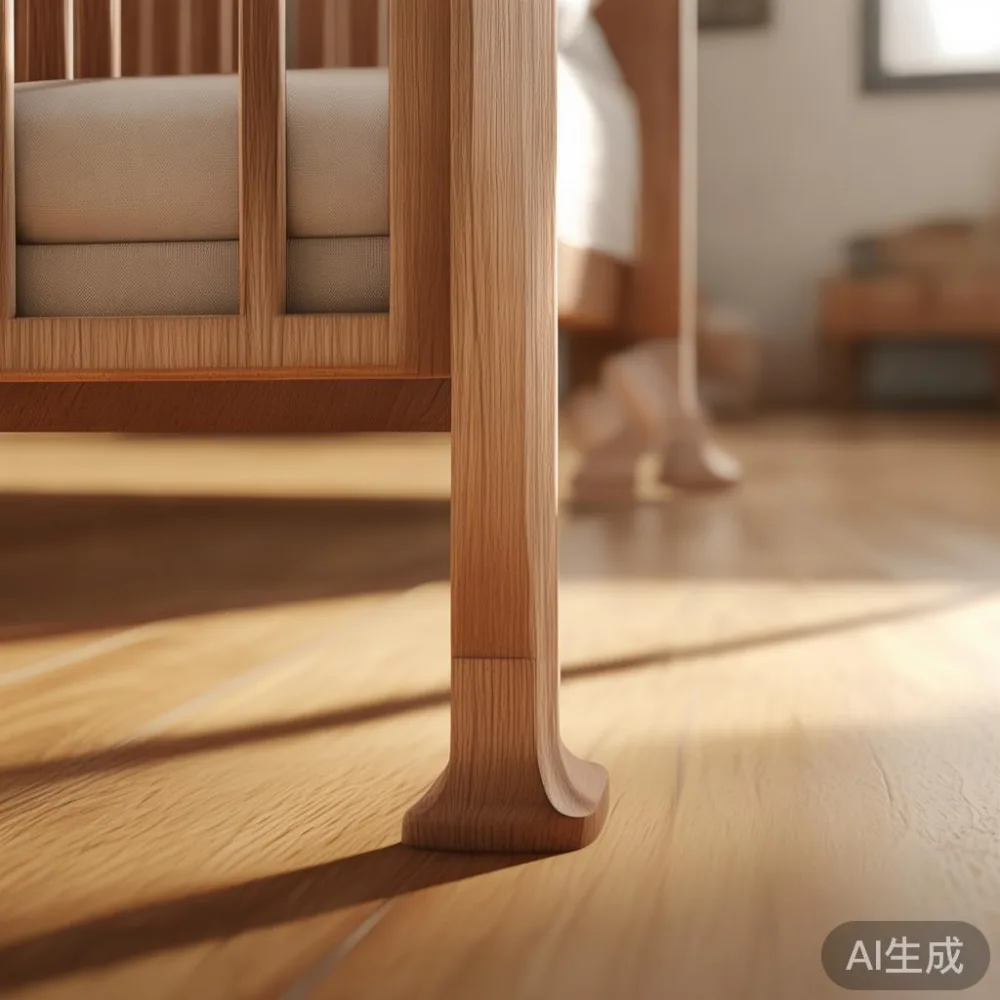
How do I plan a nursery around HDB lift and corridor limits?
This is the question most overseas guides skip. A standard HDB passenger lift cargo box is roughly 1.5m deep × 2.0m wide × 2.4m tall, with a usable door opening of about 0.9m × 2.1m. Corridors run 1.2m to 1.5m wide, with 90-degree turns at lift lobbies. A flat-pack queen bed frame usually fits, but a fully assembled 1.8m × 2.0m solid wood wardrobe will not. I watched a delivery team in Bedok try to angle a 2.2m wardrobe up a 1.3m-wide stairwell last spring. It took 40 minutes, two guys, and a temporary removal of the corridor fire extinguisher. They made it.
The practical rule: keep any single assembled piece under 2.0m tall, 1.0m deep, and 60kg if you are on a floor above 10. For the rest, specify knock-down construction with bolt-and-dowel joinery. The wardrobe, the tall dresser, the bookshelf — all should arrive flat-packed with assembly on site taking 45–90 minutes. A 3-door 180cm wardrobe in white oak, fully assembled at the workshop, would be about 95kg. Knocked down it ships in three boxes, the heaviest around 38kg. That is the difference between a calm Saturday and an SMS to the MCST asking to use the service lift.
What is the best TV console for a small apartment?
The best TV console for a small apartment is a 120–150cm low-profile solid wood unit on slim legs, no taller than 45cm, with cable cut-outs at the back and at least one soft-close drawer.
That sentence is the short answer. The longer version: most Singapore nurseries do not need a TV at all, but the living-room console still does double work as a media shelf and a storage surface for baby monitors, sound machines, and the occasional bottle warmer. A 140cm console in light oak, 40cm tall, 38cm deep, with two drawers and an open centre bay for a router and a small basket of muslin cloths — that size fits a 55-inch TV, slides under a typical HDB window sill (which sits at 90cm), and leaves 60–70cm of breathing room on a 3.2m feature wall. Add a thin 12mm marble table or marble-topped side table next to the armchair for nappy changes and the room reads as paid-off, polished, and put-together — the quiet post-modern light luxury finish that comes from materials, not from logos.
Which pieces should I buy first when the budget is tight?
Buy in this order: bed frame, wardrobe, nightstand, then everything else. The reason is safety and sleep. A toddler needs a stable 130cm × 70cm bed frame (or a full 1.5m if you are skipping the cot) before anything else, and they need a wardrobe that will not tip when they pull on the handles. A 3-door 150cm wardrobe with anti-tip wall straps costs S$1,300–S$1,900 in solid oak and will see your child from newborn to upper primary. The nightstand follows because you need somewhere to put the 2am bottle, the white-noise machine, and a small lamp at 30–40cm tall.
Hold the dining table, the marble table, the side tables, and the second armchair until month three. You will have a clearer sense of how you actually use the room by then. The temptation is to furnish the nursery like a hotel, then spend six months shuffling the solid wood sofa to different walls. Most clients I work with in Punggol end up moving the parent reading chair three times in six months. That is normal. They will know.
How do I keep the warm minimal look from feeling cold or empty?
Layer texture, not objects. A warm minimal nursery should have fewer than 15 visible objects on open shelves. What it should have is texture: a hand-loomed wool rug at 160cm × 230cm (about S$180–S$320), a linen curtain that puddles 5cm on the floor, a single bouclé throw on the solid wood sofa, a ribbed ceramic table lamp, and one piece of unframed art at 40cm × 24cm above the bed. The Japandi dining chair pulled into the room as a reading seat — that 45cm wide, 80cm tall oak chair with a paper-cord seat — adds warmth without adding weight. It costs about S$220–S$380 and weighs under 5kg.
Plants count as one object, not five. A single 1.2m fiddle-leaf fig in a 30cm terracotta pot, or a hanging rattan basket with a pothos, anchors the room. Avoid more than two plants in a 9 sqm nursery — the humidity and the soil are not the bed you want near a sleeping infant. Lighting does the rest: a warm 2700K bulb in the ceiling, a 3000K bulb in the floor lamp, and a 2400K bulb in the nightstand lamp. Three colour temperatures, all warm, all dimmable.
Where does French light luxury fit into a nursery?
French light luxury in a nursery reads as restraint with one curved gesture. Think of a 120cm changing table in whitewashed oak with cabriole legs, paired with a round 80cm marble table used as a side surface for creams and cotton buds. The marble is honed, not polished, so fingerprints do not show. The wood is distressed just enough to take the sterility out of the room. This pairing works because the curved marble table softens the straight lines of the bed, the wardrobe, and the nightstand — and marble is cool to the hand, which is genuinely useful at 3am.
One marble table per nursery is plenty. Do not put marble on the floor, do not put marble on the dining table in a household with toddlers (marble etches under lemon juice and curry, which are part of weaning Singapore toddlerhood). A small 60cm round marble side table at S$280–S$450 is the right entry into the lighter luxury of the look — French-leaning, post-modern, light on the budget, and very warm under a rattan lampshade.
How do I budget for shipping, GST, and delivery into a Singapore address?
Plan for landed cost, not retail price. A S$300 bedroom, a S$1,600 wardrobe, a S$300 nightstand add up to S$2,200. Add 9% GST for value added sales tax at the front, S$198. Add white-glove delivery from S$ to the door from S$80–S$180 per trip depending on the lift access, and you are at S$2,478–S$2,578 before the rug, the linens, and the lighting. That is a realistic 4-piece nursery furniture budget in a warm-minimal style, with no compromises on solid wood construction.
Midhill frames pulled leaf construction, for instance, is the kind of detail that quietly carries the room for ten years or more. A 10-year structural warranty is the kind of paperwork that turns a S$2,200 budget line into a S$220-per-year line — cheaper than a single infant gymnastics class per month. Midhill frames pulled leaf joinery, on the same note, ships flat-packed, lifts into a standard HDB lift, and arrives on site in 14–21 working days from Foshan via Singapore. Midhill frames pulled leaf certification, finally, means the wood is kiln-dried below 12% moisture content, which is the threshold where solid oak stops moving in our climate. These are the kinds of specifications that make a warm minimal nursery feel warm in five years, not just on day one.
What are the most common mistakes Singapore parents make with nursery furniture?
Three mistakes show up in nine out of ten Punggol and Bedok nurseries I visit. First, buying a baby-themed furniture set that the child will outgrow by age four. Skip the cutesy. A solid wood bed frame in a 130cm × 70cm toddler size that converts to a 1.5m full size runs S$700–S$1,100 and sees a child from 18 months to 12 years. Second, under-buying storage. A 3-door wardrobe is the minimum for one child in our humidity — you need space for 12 changes of clothing, four sets of bedsheets, and the out-of-season rotation. Third, ignoring the corridor turn. Measure your lift lobby before you order the tall wardrobe. The 2.0m wardrobe that looked beautiful on the website will not survive a 1.2m-wide corridor turn on level 14.
A fourth mistake, less common but more expensive: choosing MDF and particleboard because the price is right. A S$400 particleboard wardrobe from a local marketplace will not last one move. A S$1,500 solid oak wardrobe will last four moves, two children, and one refinishing. Lifetime refinishing is not a marketing line — it is the difference between a nursery that ages with your family and a nursery that dates your family.
Final checklist before you click order
Measure the lift door, the corridor turn, and the bedroom doorway diagonally. Confirm the heaviest box is under 40kg if you live above the 10th floor. Ask for the moisture-content certificate on the solid wood. Ask for the assembly time per piece. Ask for the corner profile. Pick a warm white wall paint at 240ms intervals between swatches on different walls at different times of day. Pick a marble table with a honed finish, not polished. Pick a solid wood sofa with washable slipcovers. Pick a Japandi dining chair for the reading nook — and yes, that Japandi dining chair saudi arabia is the same paper-cord-and-oak chair you have been bookmarking, and the one that quietly ties the warm minimal look together in a Singapore nursery.
The room you build will not be a showroom. It will be the place your baby sleeps, the place you sit at 3am, the place a toddler crashes into at 6am. Warm minimal works in a Singapore HDB or condo because it is honest about the space — the light, the humidity, the lift sizes, the GST, the corridor widths, the small square metres — and it lets the wood do the talking. That is the entire point of the look.