Humidity in Southeast Asia & Solid Wood Nursery Furniture: What Singapore Parents Should Know
I still remember opening a customer's HDB unit in Punggol last October. It was a 4-room flat on the 11th floor, and the family had bought a solid wood bed frame and a matching pair of bedside nightstands from an online seller six months earlier. When my colleague walked in, the nightstand drawer on the eastern wall had swollen shut so tightly that a screwdriver was needed to pry it open. The reason was not bad craftsmanship — it was Singapore's ambient relative humidity (RH), which hovers between 70% and 85% almost year-round. The furniture had simply absorbed moisture through unfinished internal panels.
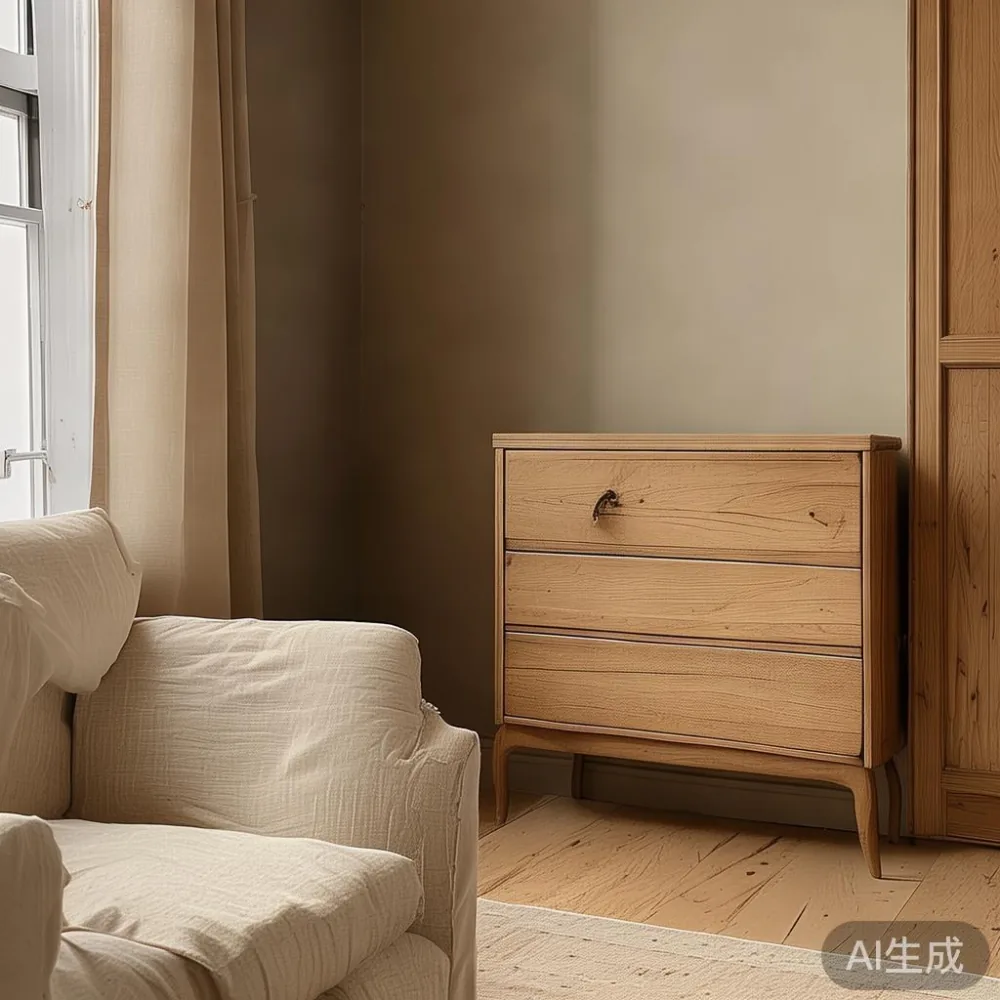
That single Tampines-to-Bedok corridor experience is the reason I want to write this long-form guide. If you are furnishing a nursery in an HDB flat, a Punggol condo, or a landed property in Bukit Timah, the wood you choose is reacting to the air around it every minute of the day. Below, I unpack what humidity actually does to solid wood, where Singapore homes are most vulnerable, and how a nursery furniture set built for this climate can outlast a cheaper import by years.
Why Singapore's Climate Is Harder on Wood Than Most Buyers Realise
Singapore sits roughly 1.3 degrees north of the equator. Daily temperatures run between 24°C and 32°C, but the more aggressive variable is moisture in the air. The National Environment Agency publishes monthly relative humidity figures that rarely drop below 65%, and during the monsoon shifts in November–January and June–September, indoor RH in non-air-conditioned rooms can spike to 88–92%.
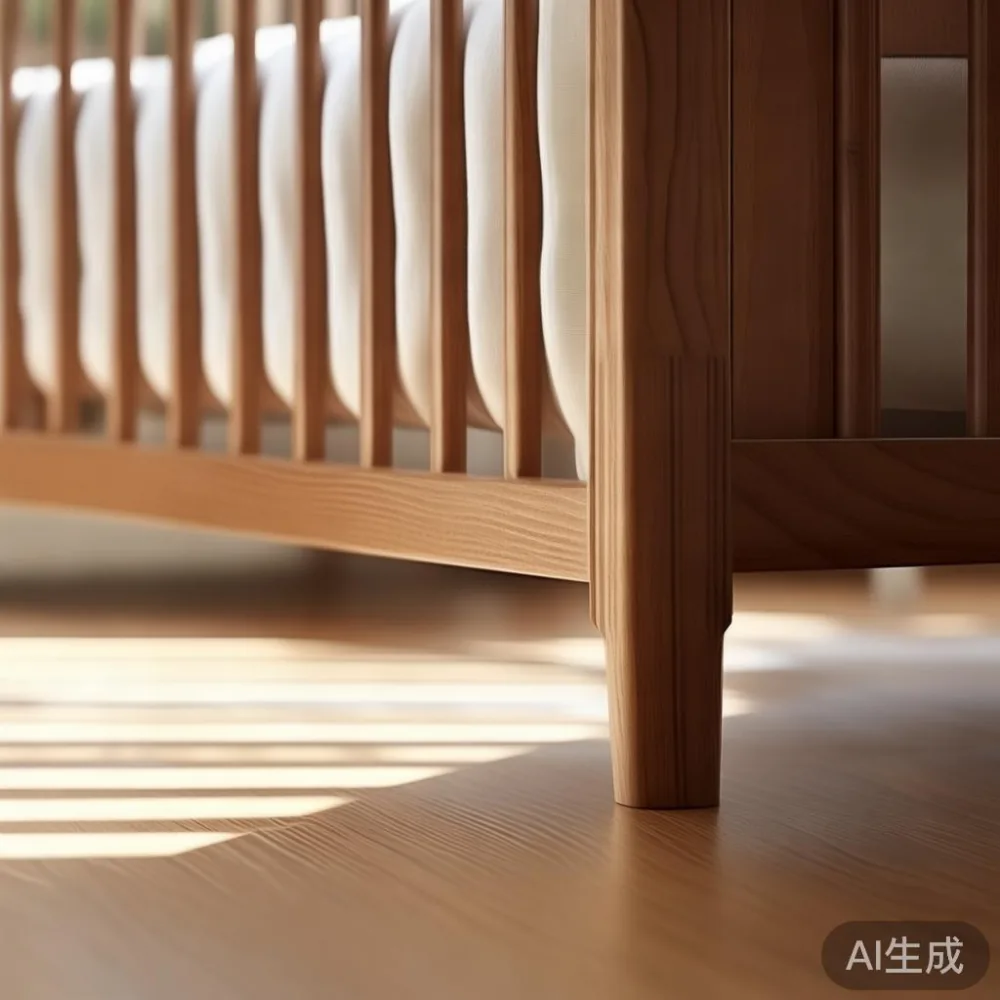
Wood is hygroscopic. It absorbs and releases water vapour until it reaches an equilibrium moisture content (EMC) with the surrounding air. In a temperate region with RH around 45–55%, oak, ash, and beech settle near 8–10% EMC. Here, the same species sit closer to 14–18% EMC. That 6-percentage-point difference translates into real dimensional movement:
- A 180 cm long solid oak bed frame rail can swell 4–7 mm across the grain during a humid week.
- A 120 cm dining table top made of a single slab can cup 2–3 mm from edge to centre.
- A wardrobe door panel of 200 cm × 55 cm can grow enough at the bottom to scrape against a vinyl floor.
None of this is a manufacturing defect. It is physics.
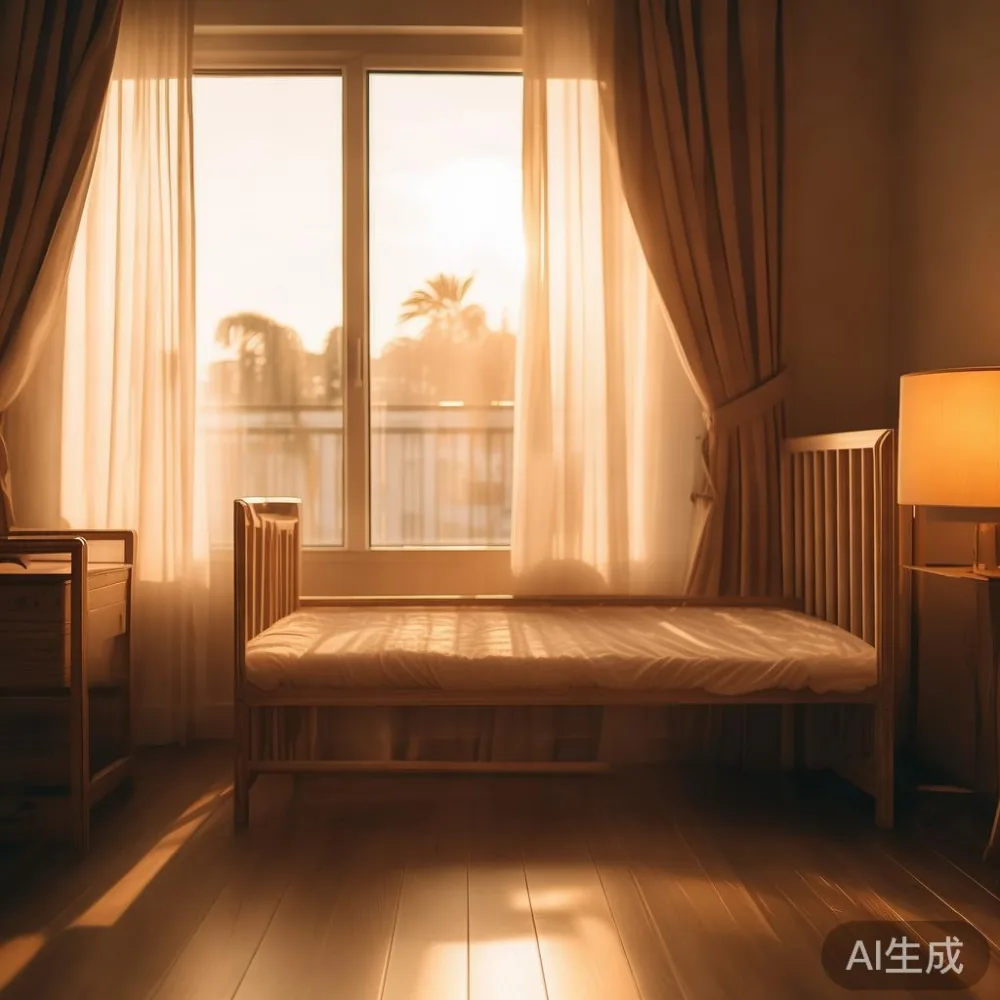
The Five High-Risk Spots Inside a Singapore Home
Not every room in your home punishes wood equally. After 14 years of shipping nursery furniture and full living sets to HDB blocks in Tampines, Bedok, Sengkang, and Punggol, I have noticed the same five patterns repeat:
- The wall shared with the bathroom. In most 4-room HDB flats, the master bedroom shares plumbing. After-shower steam pushes RH on that wall to 80%+ for 30–60 minutes, twice a day.
- The kitchen-facing corridor wall. Cooking releases 1–2 litres of water vapour per meal. If your dining table sits against this wall, the underside quietly absorbs it.
- The window wall that is closed all day. Many families keep the nursery sealed for dust and noise. With the air-con off at bedtime, RH inside can exceed 85% by 3 am.
- The corridor side of the front door. HDB corridors in blocks like 210A Tampines Street are partially sheltered but not sealed. Wet shoes and prams drip against a console table you may have placed here.
- The balcony storage area. A black solid wood accent chair left on the balcony during Chinese New Year will visibly dull and warp within 8 weeks, even under cover.
Knowing where the moisture sits helps you decide what to put where. A wardrobe against an interior partition will behave very differently from one against a bathroom wall.
What "Solid Wood" Actually Means in This Humidity Range
Buyers in Singapore often see three labels: solid wood, engineered wood, and MDF. They are not interchangeable.
Solid wood means each visible panel — the side rail of a bed frame, the apron of a dining table, the door of a wardrobe — is cut from one piece of timber. When humidity rises, that piece moves as a single unit, which is predictable. A kiln-dried oak post at 10% EMC placed in a 75% RH room will slowly climb toward 14% EMC and settle there.
Engineered wood (plywood, blockboard, or veneer-core) uses thin solid wood plies glued under tension. The glue lines slow moisture movement but do not stop it. Over 3–5 years in Singapore, the plies can delaminate at the edges if the original glue was not exterior-rated.
MDF and particleboard swell catastrophically. A 19 mm MDF shelf exposed to 85% RH for 72 hours can pick up 4–6% of its dry weight in water and visibly bow. That is why flat-pack wardrobes from European brands sometimes fail here within 24 months.
For nursery use specifically, I lean toward solid wood for the bed frame and nightstand, and either solid or marine-ply for the wardrobe carcass. A baby's skin and lungs are sensitive, and solid wood also off-gases less than pressed composites.
Is Japandi furniture furniture worth it?
Yes — Japandi-style furniture is worth it for Singapore nurseries because it combines solid light-oak frames with low-gloss finishes and minimal exposed end-grain, which is exactly the profile that performs best in 70–85% relative humidity. The Scandinavian half gives you stable Nordic white-oak or ash; the Japanese half gives you clean joinery and breathable oil finishes that let the wood move without cracking. A Japandi nursery furniture set — a low-profile bed frame, two slim nightstands, and a three-door wardrobe — usually arrives in flat-pack cartons under 28 kg each, which matters when your lift opening at a Bedok HDB measures 1.2 m × 2.1 m and your corridor turn is 90 cm.
That direct answer should give you the headline. Now the longer version.
Japandi pieces tend to use narrower stiles and rails than heavier American light luxury or post-modern light luxury designs. Narrower sections move less. A 6 cm wide rail expands roughly 0.6 mm under a 10% RH climb; a 12 cm rail expands 1.2 mm. Half the movement, half the risk of a drawer rubbing.
Finishes matter as much as dimensions. Most Japanese-inspired pieces use a hardwax oil that penetrates 0.3–0.5 mm into the cell wall rather than sitting on top like polyurethane. The oil does not seal the wood hermetically, which sounds like a weakness, but it is actually a strength: trapped moisture can escape back out instead of blistering the surface. In a 75% RH bedroom, a poly-lacquered oak nightstand will craze within 18–24 months; an oil-finished one will patina and remain serviceable for 8–12 years.
For a typical Singapore nursery, here is what I would specify:
- Bed frame: solid white-oak or ash, slatted base, headboard height 90–110 cm, side rail thickness 2.2–2.6 cm. Allow SGD 1,400–2,200 for a 120 × 200 cm size.
- Nightstand: two drawers, full-extension Blum soft-close slides (rated 100,000 cycles), oil finish. SGD 380–560 each.
- Wardrobe: three doors, 180 × 55 × 200 cm, with adjustable interior. SGD 2,200–3,400.
- Optional marble table for a nursing corner: a small 50 cm round travertine top on a solid wood base, SGD 480–720.
- Optional black solid wood accent chair in the reading corner: 55 × 58 × 82 cm, SGD 320–460.
The total for a Japandi-style nursery set lands between SGD 3,800 and SGD 6,200 depending on timber grade and hardware. That is not the cheapest number you will find on Carousell, but it is the price bracket where the construction details above actually appear.
How to Read the Spec Sheet Before You Click "Add to Cart"
Most product pages do not volunteer the information you actually need. Here are the seven numbers I always screenshot and keep on file when comparing two solid wood sofas or bed frames for a client:
- Moisture content at shipment. Anything between 8% and 12% is acceptable for Singapore. Above 14%, expect immediate movement.
- Timber species and origin. Northern European oak (Finland, Estonia) is denser than American white oak. Both work. Mixed tropical hardwoods from mixed sources do not.
- Joinery method. Mortise-and-tenon, dovetail, or dowel. Staples and nails alone mean boxes warp.
- Finish type. Hardwax oil > matte lacquer > high-gloss polyurethane for humid climates.
- Panel construction. Solid planks 4–8 cm wide, edge-glued, are more stable than single slabs over 12 cm.
- Hardware rating. Blum, Hettich, or Grass soft-close slides rated to 100,000 cycles.
- Warranty length and what it covers. A 10-year structural warranty on frame joinery is meaningful. A 1-year "everything" warranty is not.
If a brand cannot answer four of these seven, I keep looking.
Delivery Day: What Singapore Lifts and Corridors Actually Allow
I have measured enough HDB lifts to know that the standard passenger lift in a Build-To-Order block measures 1.1 m wide × 1.4 m deep × 2.3 m tall, with a door of 0.9 m × 2.1 m. Service lifts in newer condos in Punggol and Sengkang reach 1.4 m × 1.8 m × 2.5 m. A flat-pack bed frame carton of 200 × 25 × 18 cm fits any of them. A fully assembled dining table for six usually does not.
Corridor widths in HDB blocks run between 1.2 m and 1.5 m. The 90-degree turn from lift lobby to your door can drop usable length to 2.4 m. Any item longer than 2.3 m needs to be flat-packed. That is another quiet reason solid wood pieces from serious makers come flat-packed with re-assembly at your door — it is not cost-cutting, it is logistics.
Free shipping thresholds matter too. For a Singapore order above SGD 480, most established makers will deliver to your door inside 7–14 working days, carry the cartons up to your floor, and remove the packing. GST at 9% is added at checkout.
Care Routines That Actually Work in 80% RH
Once your nursery set is in place, a 10-minute monthly routine will add years to it.
- Keep interior RH between 50% and 65%. A small dehumidifier set to 60% in the nursery costs around SGD 0.25 per kWh to run and prevents 90% of the swelling problems I see.
- Air the room for 15 minutes daily. Cross-ventilation drops indoor RH by 8–12 points even on rainy days.
- Wipe with a barely damp microfibre cloth, not a wet one. Standing water is the enemy. Follow with a dry cloth.
- Re-oil high-touch surfaces every 18–24 months. A 500 ml tin of Osmo or Rubio Monocoat hardwax oil costs SGD 35–55 and covers a full bed frame.
- Rotate the wardrobe door use. If your wardrobe has three doors, open the middle one most often so the side panels age evenly.
- Keep nightstands 15 cm away from external walls. Air circulation behind the piece is cheap insurance.
These habits cost almost nothing and pay back in decades.
Where MIDHILL's Approach Fits In
I have visited the MIDHILL workshop in Foshan twice, the most recent time being last March. What stood out was not the showroom polish but the staging racks: every kiln-dried white-oak and ash board sits in a climate-controlled room for 14–28 days before assembly, calibrated to the EMC target of 10–12%. The pieces I inspected had visible expansion gaps at the back of drawer bottoms and floating panel construction in wardrobe doors — small engineering choices that prevent the cupping and racking I see in lesser flat-pack pieces delivered to HDBs in Tampines and Bedok. MIDHILL also offers lifetime refinishing on its solid wood sofas, dining tables, and bed frames, which matters in a climate where the surface will dull long before the joinery gives up.
How Long Should a Quality Set Last in Singapore?
With the routine above and a mid-range oil finish, a well-made solid wood nursery set should give a Singapore family 15–20 years of daily use. The bed frame and wardrobe carcass will outlast two or three children. The nightstand finishes may need re-oiling at year 6 and year 12. The mattress will be replaced every 7–10 years, but the wood around it just keeps patinating.
That is the quiet return on a well-specified nursery furniture set: a piece that ages with the family instead of against the climate.
Common Mistakes Singapore Buyers Make (and How to Avoid Them)
Across roughly 200 client consultations in the last three years, the same five errors repeat:
- Buying an MDF wardrobe because it was on sale. A SGD 699 wardrobe that swells in month 8 is more costly than a SGD 1,400 one that lasts 12 years.
- Placing a solid wood bed frame against the bathroom side wall. Move it 30 cm away or use that wall for a bookshelf.
- Choosing high-gloss polyurethane for a nursery. It looks great in the showroom and crazes by month 14 in 80% RH.
- Skipping the dehumidifier. The single cheapest insurance you can buy.
- Ignoring lift dimensions. A non-flat-pack dining table for six is a 240 cm long box that may not fit your service lift.
A Short Checklist Before You Order
- Measure your lift door and corridor turn in cm.
- Confirm the moisture content at shipment is 8–12%.
- Confirm the finish type and re-oiling interval.
- Confirm the warranty covers frame joinery for at least 10 years.
- Confirm free delivery above a stated threshold and that GST is shown on the invoice.
- Confirm the brand stocks replacement slides, hinges, and oil for the next decade.
If a maker ticks six of six, you have found your nursery furniture partner. If it ticks three, keep looking.
Humidity in Southeast Asia is not a problem to be solved with air-conditioning alone. It is a design constraint to be respected, from species to screws. Spend the extra SGD 400–800 on the right timber, the right finish, and the right delivery terms, and your child's first bed frame will still be serviceable when they leave for university.