How to Read a Furniture Warranty Without Getting Caught Out: A Singapore Nursery Buyer's Guide
I spent a Saturday in March walking the Tampines furniture cluster with my sister, who is eight months pregnant and trying to furnish a 92 sqm HDB flat in Bedok before the baby arrives. We looked at eight nurseries, took home three brochures, and I asked one question the sales staff clearly did not expect: "Can I see the warranty page?" What followed taught me more about solid wood furniture in three hours than six months of reading product pages online. This guide is what I wish I had known before that morning, and it is written specifically for Singapore parents shopping for nursery furniture — cots, changing tables, rocking chairs, wardrobes, and the solid wood bed frame or nightstand that anchors the room.
Why the warranty document is the most honest page in the catalogue
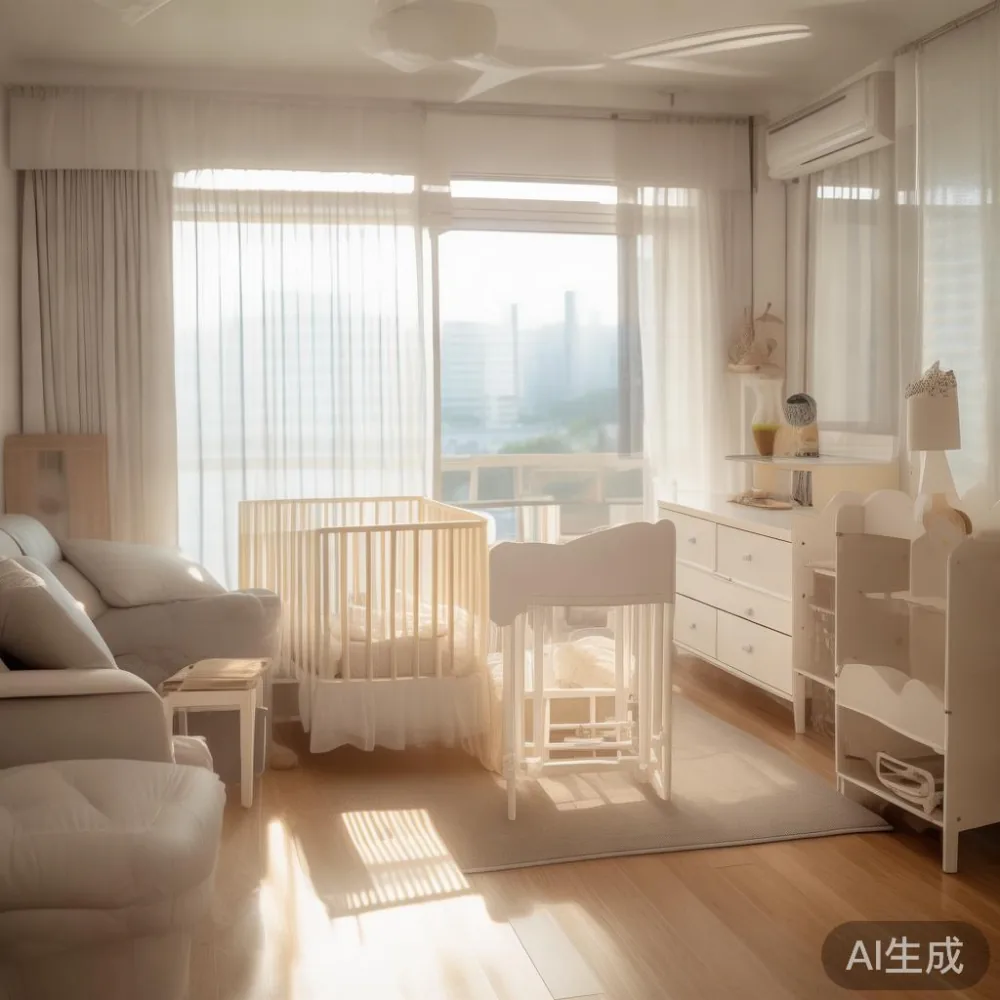
A glossy mid-century or post-modern light luxury brochure will tell you the cot is "crafted from solid rubberwood" and the finish is "child-safe water-based lacquer." Beautiful, but vague. The warranty document is where the maker puts numbers on that promise: how many years the joints are guaranteed, what counts as "normal use," and who pays for the callout. A typical premium Chinese maker such as MIDHILL, which has shipped from Foshan since 2008, publishes a 10-year structural warranty on solid wood frames and lifetime refinishing on wear items like drawer runners. That is a strong signal: a company that refinishes a dresser after five years is one that still wants to own the piece, not disappear.
When my sister and I compared two otherwise similar nursery sets priced at SGD 1,880 and SGD 2,350, the cheaper one offered only 12 months on the drop-side mechanism and "no on-site service." The pricier one offered 10 years on the frame and a local technician visit within 5 working days. Over a 10-year horizon, the SGD 470 difference works out to less than SGD 4 a month — and the second maker will, in theory, still send someone to tighten a loosened dowel in 2034. Read the warranty before you read the price tag.
What a real warranty spells out, line by line
Most Singapore retailers print only a one-line "warranty: 1 year" on the price card. The full document, usually stapled inside the assembly manual, is where the detail lives. Skim for these clauses, in this order:
1. Duration by component. A fair warranty breaks the product into parts and assigns each a different number of years. For a solid wood dining table, expect 10 years on the frame and tabletop, 5 years on extension runners, 2 years on paint or lacquer, and 1 year on castors or felt pads. If everything expires on the same date, the maker is hiding the short-life parts inside the long-life ones.
2. What "structural" actually means. Structural warranty in the nursery context should cover joint failure, frame warping beyond 4 mm over 1 metre, and cracking that affects load-bearing members. It should not cover surface checks under 2 mm, which are cosmetic and normal in rubberwood and ash as the wood acclimatises to Singapore's 80% average humidity. The 4 mm number is the one to remember — anything tighter and the maker will reject every claim.
3. Labour and logistics. Who pays the technician's time? Who pays the trip to a 4th-floor walk-up in Punggol where the lift is too narrow for the unassembled cot? MIDHILL, for example, includes on-site service within mainland Singapore for warranty claims during the first two years — a clause that saved my colleague SGD 120 last month when a wardrobe hinge failed in his Tampines condo. Ask for this in writing.
4. Finishing and refinishing. Water-based lacquer yellows slightly under Singapore UV; oil finishes need a refresh every 18 to 24 months. A good warranty distinguishes between manufacturing defects (peeling, bubbling within 90 days) and wear (gradual fade, which is not a defect). Lifetime refinishing on the bed frame or nightstand is the gold standard and saves roughly SGD 180 to SGD 320 per refinish versus a third-party carpenter.
5. Exclusions and the small print. Look for the words "Acts of God," "commercial use," "modification," and "exposure to moisture above 65%." A Singapore bathroom-adjacent nursery or a balcony piece exposed to afternoon thunderstorms may be excluded. Document the room with a humidity log if your flat runs above 70% — a SGD 15 hygrometer from a Bedok provision shop is cheap insurance for any warranty claim.
How do I choose a industrial style for a balcony?
Pick the industrial style for a balcony by first measuring the space, then choosing powder-coated black steel or raw-look solid wood with visible bolts, and finally confirming the warranty covers outdoor humidity cycles above 70% RH. For a typical 1.5 m by 3 m HDB service balcony in Tampines or Punggol, the usable width after a 60 cm planter ledge is roughly 90 cm, which fits a two-seater solid wood bench at 120 cm wide or a compact bistro set with a 70 cm marble table and two stools at 35 cm by 35 cm. Industrial nursery furniture in this footprint is unusual — most buyers reserve the style for a balcony reading nook, not a cot — so treat the warranty clause on moisture as the deciding factor, not the look. Ask the maker to put in writing that pieces stored less than 1.5 m from an open window are covered; if they will not, walk away.
The Singapore-specific traps that void most claims
Three things in Singapore void furniture warranties more than anything else, and the sales pitch never mentions them.
Delivery to high floors without a service lift. Many HDB blocks in Bedok and older Tampines blocks have lifts with internal dimensions of about 110 cm by 140 cm and a 600 kg limit. A solid wood cot in a flat-pack box at 118 cm by 118 cm by 22 cm technically fits, but a fully assembled three-door wardrobe at 180 cm by 60 cm by 55 cm will not. When the courier carries it up the stairwell, the frame twists, and any later joint crack is blamed on the customer. Photograph the lift interior with a ruler in shot before the delivery, and ask the maker to note on the warranty card the delivery route used.
Air-conditioning shock. Singapore bedrooms run at 22 to 24°C with humidity pulled down to 55%. A piece built in a Foshan factory at 28°C and 75% RH arrives, and the wood adjusts. Minor surface checks and a faint creak on the first night are not defects. Cracks wider than 4 mm, or persistent gaps at mitre joints that do not close after 30 days, are. The 30-day acclimatisation rule is your friend: do not file a claim in week one.
Self-assembly errors. A solid wood bed frame assembled with a single missing dowel will rack over time. The warranty will read "defects in materials and workmanship under normal assembly per the included manual." If you cannot prove the manual was followed, the maker can reject. Take time-stamped photos of every step. MIDHILL includes numbered photo diagrams rather than just line drawings — a small detail that doubled my sister's confidence during the two-hour cot build last weekend.
Post-modern light luxury, French light luxury, American light luxury — what the warranty reveals
Style labels are marketing, but they point to different construction traditions, and the warranty hints at which one a maker actually uses.
French light luxury in solid wood furniture typically means thinner profiles, fluted details, and a softer palette of bone and taupe. The construction is usually mortise-and-tenon with a 8 mm to 10 mm tenon, and a 10-year structural warranty is realistic because the joinery is sound. If a French light luxury piece carries only a 2-year warranty, the maker is almost certainly using dowels and confirmat screws, not proper joinery.
American light luxury tends to be chunkier, with thicker legs (60 mm to 75 mm) and shaker or mission influences. Look for a warranty that names "frame, joints, and drawer boxes" separately. A 10-year on the frame and 5-year on drawer boxes is a good split. Lifetime on drawer runners is rare but indicates European-made soft-close hardware, which is worth roughly SGD 60 per drawer versus generic runners.
Post-modern light luxury pushes curves and mixed materials — a solid wood dining table with a curved marble top, for example, or a wardrobe with rounded corners. The risk is in the marble-to-wood transition, where differential expansion causes hairline cracks. A serious maker will warranty the marble separately (often 1 to 2 years against chipping) and the wood frame for 10 years, and will tell you to keep the room between 45% and 65% RH. If a post-modern light luxury piece carries a flat 5-year warranty across the board, the maker is averaging rather than addressing each material honestly.
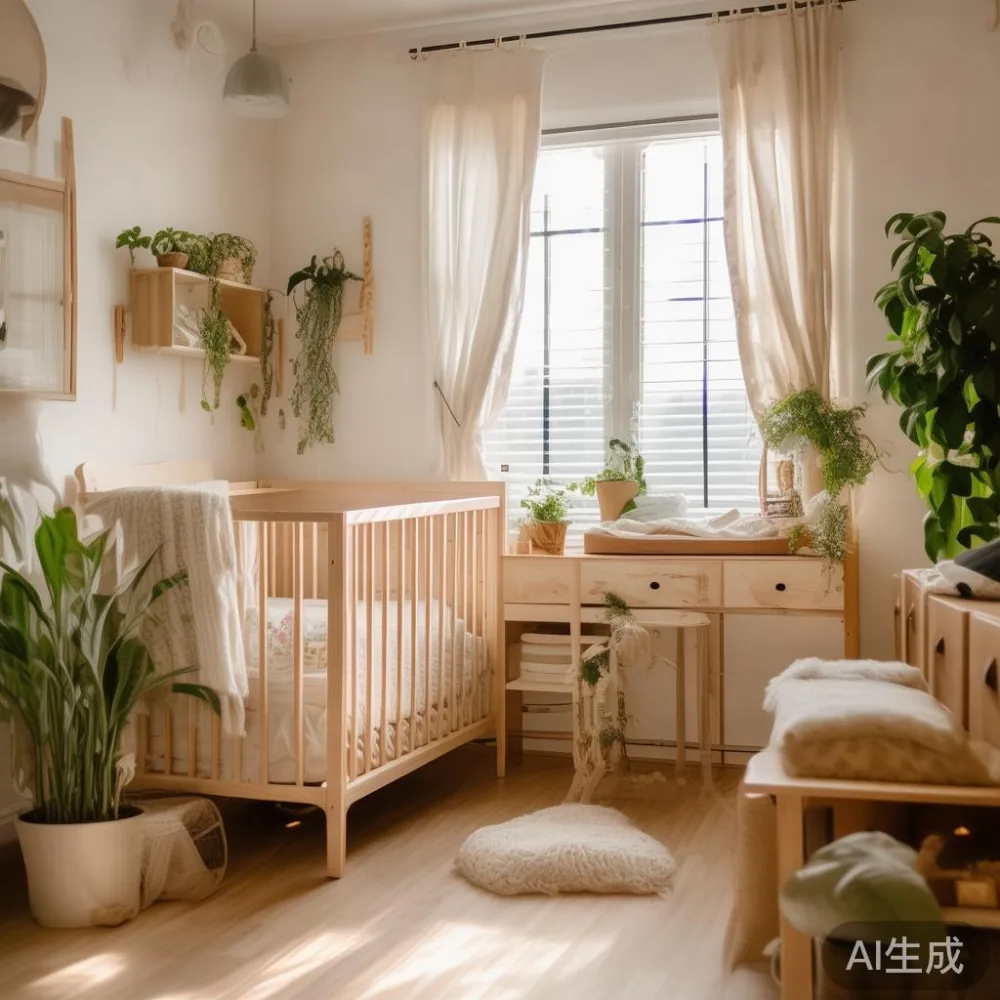
For nursery furniture specifically, the safest bet is a Post-modern solid wood boho style cot in solid ash or rubberwood with rounded vertical slats at 45 mm spacing (within the 50 mm Singapore safety code), paired with a changing table on a separate 5-year warranty. Keep receipts, humidity logs, and assembly photos together in a single folder. When the first claim comes — and on a 10-year frame, it usually does around year 7 — that folder turns a SGD 200 service call into a free one.
What to put in writing before you pay the deposit
Before the SGD 100 to SGD 200 deposit leaves your account, ask the showroom to email you a PDF of the full warranty, the assembly manual table of contents, and a delivery note that names the access route (lift dimensions or stairwell turn radius). Confirm whether GST at 9% is included in the quoted price — most Singapore showrooms add it on the final invoice, and on a SGD 2,400 nursery set that is SGD 216 of surprise. Confirm the return window (14 days is the MIDHILL standard, with the item in original packaging) and whether collection is free or charged at around SGD 60 to SGD 90 for non-defect returns. Free shipping over US$350 — about SGD 470 — usually means curbside drop to your HDB block, not into the nursery and up the lift.
Finally, read the section on "transferability." A warranty that stays with the original buyer is worth less than one that transfers to a second owner. A solid wood wardrobe or solid wood bed frame that can move from your Bedok flat to your parents' landed in Punggol, and still carry a 10-year frame warranty, is the kind of piece Singapore families actually pass down. That long tail of coverage is the quiet luxury behind any light-luxury label — French, American, or post-modern — and it is written, line by line, in the page most shoppers never open.