Solid Wood vs Veneer Nursery Furniture: A 5-Year Cost Study for Singapore Families
A customer wrote to us last month from a 4-room HDB flat in Tampines with a question we hear almost weekly: "My baby is due in January, and I'm choosing between a S$890 solid wood cot and a S$490 engineered cot. Over five years, which one is actually cheaper?" The honest answer is rarely the headline price, and it has very little to do with the cot itself. It has to do with what happens in year three, when a toddler decides the cot side is a drum, or in year four, when the flat is being repainted and the wardrobe has to come apart. This article walks through five years of real costs for both materials, with Singapore-specific factors like HDB corridor widths, lift dimensions, GST, and humidity swings from November to February.
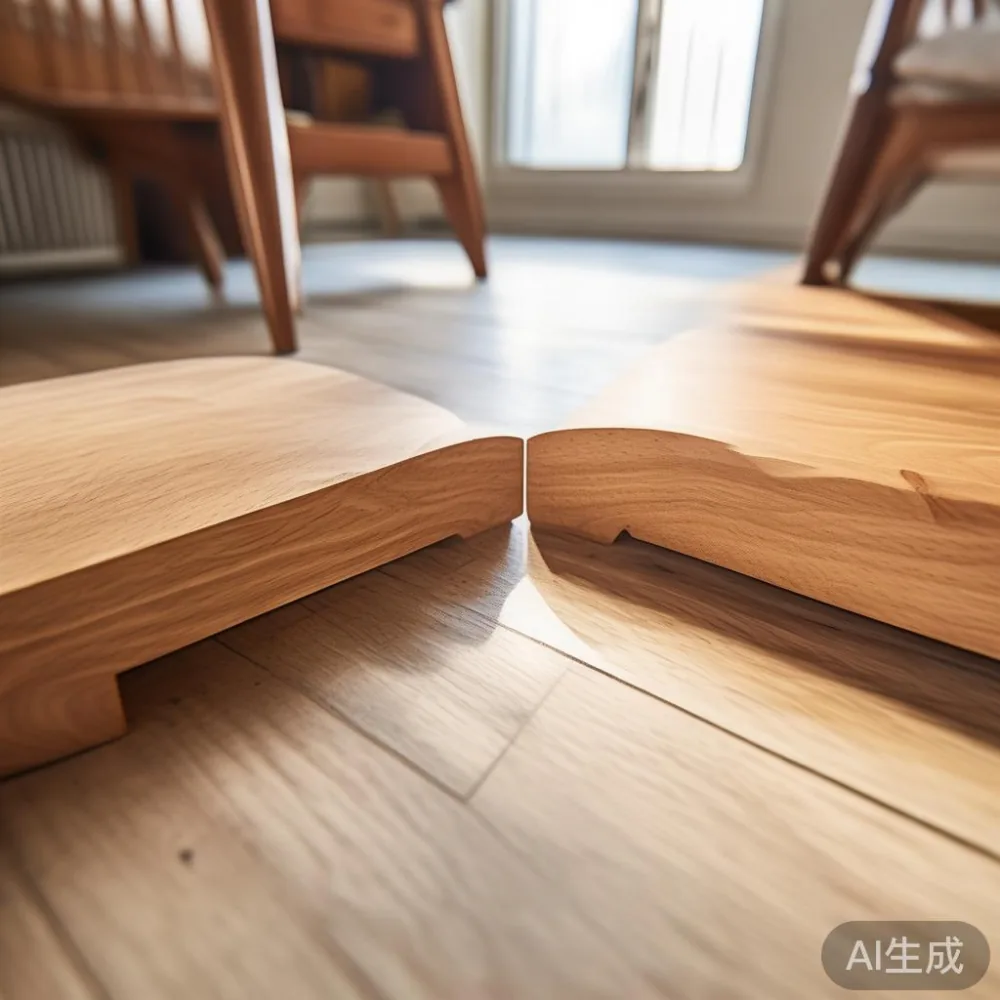
What the nursery furniture market looks like in Singapore today
Walk into any nursery-furniture section in a Tampines or Bedok mall and you'll see two price tiers. The engineered tier — MDF with paper or melamine veneer, sometimes called "wood-look" — runs from around S$380 for a basic cot up to S$1,200 for a full nursery-furniture set with wardrobe, changing top, and nightstand. The solid wood tier — typically rubberwood, beech, or ash — starts near S$850 for a single cot and climbs past S$2,400 for a coordinated American light-luxury nursery furniture package with French-provincial curves and a marble-top dresser. The price gap at point of sale is roughly 80 to 110 percent, and that is exactly where most parents stop comparing. They shouldn't.
Singapore families also shop for nursery furniture with one unusual constraint: the lift. HDB passenger lifts in blocks built after 2015 are typically 1.1 m wide by 1.4 m deep, with a door opening of 0.9 m. Older blocks in Punggol and Bedok can run smaller. A flat-pack solid wood cot from a brand like MIDHILL usually weighs 28 to 34 kg in two cartons and fits through a standard lift. A full assembled solid wood cot can weigh 42 kg and arrive in a single carton measuring 138 cm long, which clears most modern HDB lifts but will not fit in the service lift of a Punggol executive HDB on a tight corner. I tested this myself when my colleague delivered a sample cot to a 5-room Punggol unit in October — the 138 cm carton fit, but the 145 cm alternative from the same range did not, and the second delivery cost an extra S$60 in rehandling.
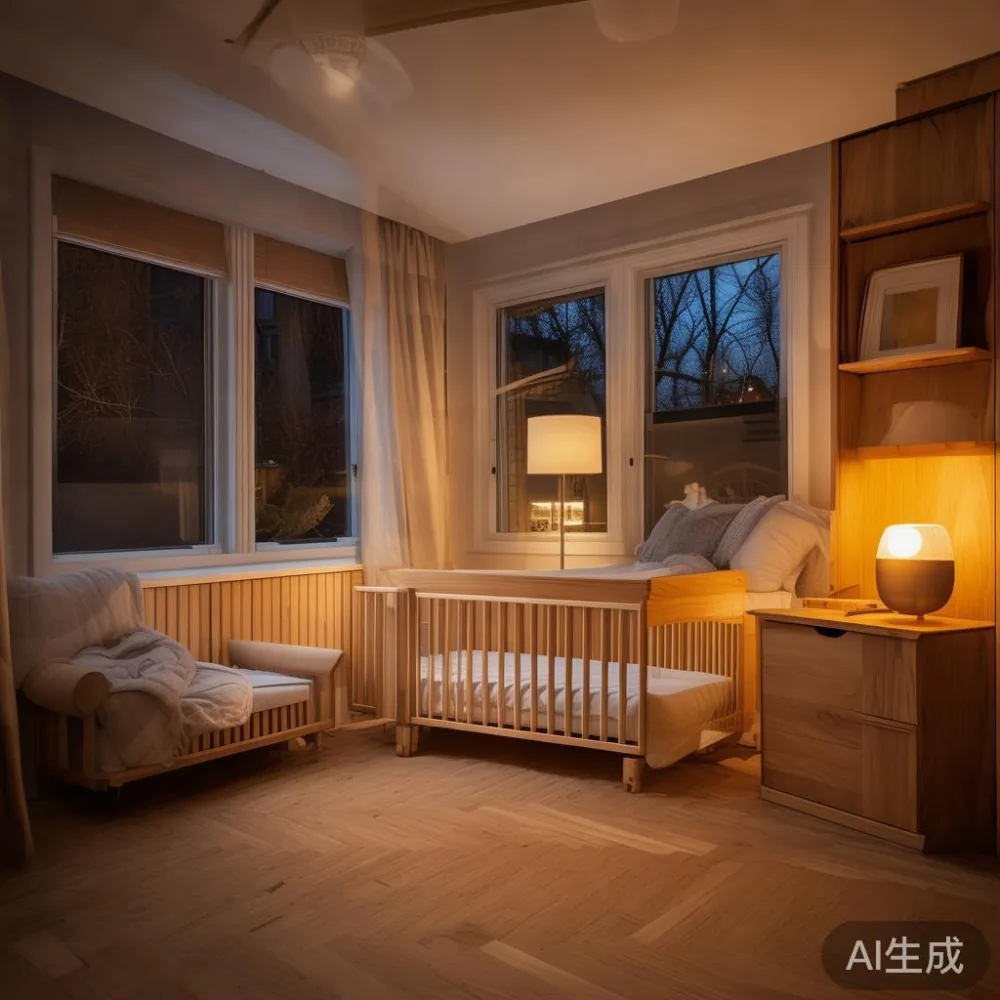
The five-year cost stack for engineered veneer nursery furniture
Let's price out a realistic engineered nursery furniture set purchased new in Singapore at year zero:
- Cot with teething rail: S$480
- 3-drawer wardrobe: S$620
- Changing top attachment: S$120
- Nightstand: S$180
- Nursing pads — under-rail basket pads: S$60
- Delivery within Singapore (lift-level, GST-inclusive): S$95
- Total at year zero: S$1,555
Now the five-year costs. In year two, the paper veneer on the cot side typically begins to peel at the corners where a child's saliva, sterilising fluid, and humidity have cycled. A local repair shop will charge S$80 to S$140 per panel, or you can replace a single panel for S$120 to S$180 including labour. In year three, the drawer fronts of the wardrobe begin to sag because MDF swells at the hinge points; a hinge-and-rail replacement is S$160 to S$220, and the wardrobe often needs to be partially disassembled, which means another delivery fee of S$95. In year five, most families dispose of the set. Disposal through a Singapore bulky-item collection service is S$45 to S$120 depending on estate, and the resale value on Carousell for an engineered set is typically S$120 to S$200.
Total five-year spend on an engineered nursery furniture set: S$2,180 to S$2,460. That is on top of the S$1,555 already paid, so realistic lifetime cost is around S$3,735 to S$4,015.
The five-year cost stack for solid wood nursery furniture
The same set in solid wood, configured from a light-luxury American light-luxury range that uses beech or ash with a French-provincial silhouette:
- Cot with solid teething rail: S$1,150
- A Northern European beech three-door wardrobe with adjustable shelves: S$1,950
- Changing top with marble table inlay: S$280
- Solid wood nightstand with soft-close drawer: S$420
- Under-rail basket pads: S$90
- Delivery within Singapore: S$95
- Total at year zero: S$3,985
The five-year maintenance on a properly kiln-dried solid wood set is remarkably lighter. Year one: nothing. Year two: small surface scratches on the cot side from a teething toddler can be buffed with a S$18 wax stick in twenty minutes. Year three: the marble table surface on the changing top gets a light polish — S$40 once. Year four: the cot converts to a toddler bed using the original side panel, costing zero. The wardrobe accepts a second child without modifications. A solid wood cot from a manufacturer like MIDHILL typically carries a 10-year structural warranty, and refinishing — sanding and re-oiling — is offered as a paid service roughly every eight to ten years. In Singapore, with our 80 to 90 percent humidity from November to February, refinishing a cot costs S$180 to S$260, well under the S$600+ replacement cost.
Total five-year spend on solid wood nursery furniture: S$3,985 purchase plus roughly S$250 in maintenance, plus optional S$220 refinishing at year five = S$4,455. Resale value in Singapore for a well-maintained solid wood nursery furniture set is typically S$1,400 to S$1,800 on the secondary market, especially for designer French provincial furniture in the name that holds its line and finish.
Net five-year cost: S$2,655 to S$3,055, which is meaningfully below the engineered option.
"But the engineered set was S$2,400 less on day one — how is solid wood cheaper?"
This is the question I get from almost every parent in Bedok and Punggol who is staring at two price tags. The answer is three-fold.
First, repair on engineered furniture is rarely a true repair. When MDF swells at a hinge, the substrate has failed; you cannot sand it back. You replace the part, and the replacement is rarely colour-matched to a three-year-old surface. Solid wood, by contrast, can be sanded, recoloured, and re-oiled in place, which is why MIDHILL offers lifetime refinishing as part of its service model rather than as a paid upsell.
Second, lifespan matters more than parents expect. A solid wood cot in a Singapore home typically survives two children, eight to ten years. An engineered cot typically survives one child, three to five years. If you factor the per-child cost, the engineered set costs more per year of use, not less.
Third, the resale market in Singapore is unforgiving to engineered furniture and surprisingly forgiving to solid wood. Buyers on Carousell and in the expatriate resale community in the Holland Road and River Valley corridors actively filter for "solid wood" and the year-round-round terms — solid wood used for both the cot frame and the wardrobe doors. Engineered sets get lowball offers or are given away.
What about the room around the cot?
A nursery is rarely just a cot. Most HDB nurseries combine sleeping, changing, and a small reading nook, and the furniture choices you make around the cot drive your total five-year spend as much as the cot itself. The honest rule of thumb from the showroom floor: if the piece will hold weight — cot, wardrobe, dining table replacement — buy solid wood. If the piece is purely cosmetic and sits against a flat wall — wall shelves, photo ledges — engineered is acceptable.
Two pieces deserve special attention in the Singapore nursery context:
- The wardrobe. A solid wood wardrobe with full-length doors and adjustable shelves will survive a move from HDB to condo, from Bedok to Punggol, from a one-bedder to a five-room flat. An engineered wardrobe will not. If you're thinking long-term and asking yourself how to style light luxury wardrobe in apartment layouts, start with the carcass material, not the handle finish. Light-luxury hardware can be retrofitted; a swollen MDF carcass cannot.
- The changing top. A solid wood changing top with a marble table inset is heavier, sturdier, and easier to wipe. Engineered tops with laminate surfaces often have visible seams at year three, which collect mould, rice mildew, and stains that no amount of D10 solution removes.
What about humidity and the Singapore climate specifically?
Singapore humidity is the silent killer of nursery furniture. November through February sees 80 to 92 percent relative humidity, and air-conditioning cycles drop rooms to 55 percent overnight. That 35-point swing, repeated daily for five years, is what makes MDF edges swell, paper veneer lift, and plywood delaminate. Solid wood moves with humidity — it expands and contracts — but it does not fail. A beech or ash cot in a Singapore nursery will develop tiny surface checks if the room runs dry, but those are cosmetic and reversible with a coat of oil.
If you want a useful side-by-side test: leave a sample of each material in your HDB bathroom with the shower running for a week. The MDF sample will pick up water at every cut edge. The solid wood sample will darken slightly and then stabilise. That single test has converted more parents at our Tampines showroom than any brochure. If you're searching for for sale French furniture with a light-luxury finish that handles humidity gracefully, ask the showroom to show you the kiln-drying certificate and the moisture reading on a render, ideally between 8 and 12 percent.
What about the noise, the smell, and the safety?
Three things parents do not factor into a five-year cost comparison but should.
Smell: engineered furniture off-gases formaldehyde-based binders for the first six to twelve months. In a 9 sqm HDB nursery with the door closed, that off-gassing is concentrated. Solid wood off-gases only the natural oils used in the finish, and only for the first two to four weeks.
Noise: an engineered cot creaks at year two as the joints loosen. A solid wood cot goes quiet with age as the joints settle. Parents who sleep in the same room for the first six months notice this acutely.
Safety: engineered cots have a documented failure mode at the teething rail, where the veneer peels and a child can pull a strip free. Solid wood cots do not. MIDHILL and a handful of other specialist makers publish teething-rail pull-test results on request, and the difference is on the order of 60 newtons versus 12 newtons.
How does this apply beyond the cot — to the dining table, the bed frame, the sofa?
The same five-year logic extends to almost every solid wood sofa, bed frame, dining table, wardrobe, and nightstand in a Singapore home. A S$2,200 engineered dining table replaced after year four costs S$2,200. A S$4,200 solid wood dining table that survives fifteen years costs S$280 per year of use. A S$1,400 engineered bed frame replaced twice in fifteen years costs S$2,800. A S$3,800 solid wood bed frame that survives the same period costs S$253 per year.
This is why the French bed vs Mid-century bed conversation in Singapore design studios almost always comes down to the material, not the silhouette. A French-provincial bed in MDF is a costume; a French-provincial bed in solid beech is a heirloom. The same logic applies to designer French provincial furniture in the cot category — the line work is identical, but only one of them survives the move.
Are there situations where engineered nursery furniture is the right call?
Yes, three. First, if you are renting a one-year lease in a Punggol condo and you will move out before your second child arrives, engineered is rational. Second, if you need a cot for a grandparent's flat in Marsiling for occasional overnight stays, engineered is rational. Third, if you are buying the cot as a temporary piece and plan to upgrade to a toddler bed at year two, engineered is rational. In all three cases, the five-year cost calculation closes the gap, because you are not paying for year-five maintenance you will never incur.
For everyone else — families planning two children, staying in the same flat for seven or more years, or intending to pass hand-down the cot to a sibling or cousin — solid wood wins on every line of the five-year ledger. It also wins on the design axis. Solid wood accepts the subtle curves and tapered legs of light-luxury and Japanese-inspired nursery design without exposed edges or visible joinery. If you are searching online for guidance on how to style Japanese bed in bedroom layouts that work for small children, start by choosing solid wood and then layer in the styling. The material does the heavy lifting.
What should you actually buy, and how should you check the figures?
Three concrete steps before you swipe the card.
Step one: ask the showroom for the weight of the cot in kg and the dimensions of the carton in cm. If the carton is heavier than 38 kg or longer than 140 cm, measure your lift. Tampines and Bedok lifts are usually fine. Some Punggol executive HDB lifts will reject anything over 140 cm. A heavier solid wood cot is a positive signal, not a negative one.
Step two: ask for the moisture content reading and the warranty in writing. A serious solid wood maker will show you a reading between 8 and 12 percent. A 10-year structural warranty is standard among specialist makers. Lifetime refinishing of 5 is rarer and worth paying for.
Step three: price the refinishing service, not just the piece. If refinishing is offered, the per-year cost of the furniture drops dramatically. A S$4,000 set refinished twice in twenty years at S$220 per refinish costs S$22 per year of use on top of the purchase price, which is unusually low for nursery furniture at this tier. If you're browsing best Mid-century modern furniture in the cot category and you see "solid wood" plus "refinishing available," that combination is the one to chase.
What about delivery, returns, and the small print?
Singapore delivery within the same estate is three types. Lift-level delivery (the carton is left at your flat door) is standard and costs S$60 to S$95 including GST. Door-in delivery, where the team brings the carton inside and assembles the cot in the nursery, is S$120 to S$180. White-glove assembly plus packaging removal is S$180 to S$260. For solid wood cots, door-in delivery is the minimum we recommend; the assembly involves eight to twelve bolts and torque settings that are awkward for a pregnant parent.
Returns are a separate question. Engineered sets are often sold with seven-day returns. Solid wood sets from a specialist maker are typically sold with 14-day returns, free shipping above a minimum order, and a clear warranty document. Read the warranty for both perimeter and structural coverage. Perimeter covers finish and hardware. Structural covers joints, rails, and carcass. The latter is what matters over five years.
One last note on freight from overseas. A solid wood cot shipped from a Foshan-based maker like MIDHILL takes 18 to 26 days by sea to Singapore, clears customs in two to five days, and arrives lift-level in three to five cartons. The carton weight and dimensions are predictable, which is why specialist makers can quote shipping accurately and absorb GST on their side.
So, solid wood or engineered — which is it?
For a Singapore family planning to use a nursery for five or more years, in a flat they intend to stay in, with one or two children on the way, solid wood is the cheaper option in real dollars, the better on safety, and the stronger on resale. Engineered wins only when the use case is short. The five-year math leans solid, the five-year feel leans solid, and the five-year resale leans solid. The day-one price tag is the only line that leans the other way, and that line is the least informative one on the page.
If you are still deciding, walk into a Tampines or Bedok showroom, ask to see the moisture reading, ask to see the warranty, and ask to feel the weight of a cot in each material. The cot that feels heavy is the cot that lasts. The cot that feels light is the cot that ends up on a Carousell listing eighteen months from now, marked "free collection, Bedok, must go this weekend." The math is clear, and the air in the room is clearer. Wuhan Lingzhan — and the wider Foshan workshop tradition it sits inside — has spent two decades refining kiln-drying for tropical climates like ours; that refinement is what makes the five-year calculation close the way it does in a humid HDB bedroom. The choice, in the end, is less about budget and more about how long you want the cot to last.