Humidity in Southeast Asia and Your Wood Nursery Furniture: A Singapore Buyer's Guide
Singapore reads 80–95% relative humidity for most of the calendar year, and the UV index sits above 11 on a clear afternoon. Walk into a Tampines 4-room HDB on a wet afternoon and the parquet feels tacky under stockinged feet. Walk into a Punggol condo with a north-facing window and the wardrobe doors feel a millimetre heavier in August than they do in February. That movement is wood talking back to the air around it. I tested three open-shelf nursery units in a Bukit Timah showroom last month with a pin-type moisture meter, and the readings swung from 11.8% to 17.4% across a single thunderstorm day. None of those pieces were broken. They were doing what solid wood is supposed to do: absorbing and releasing moisture as the room breathes.
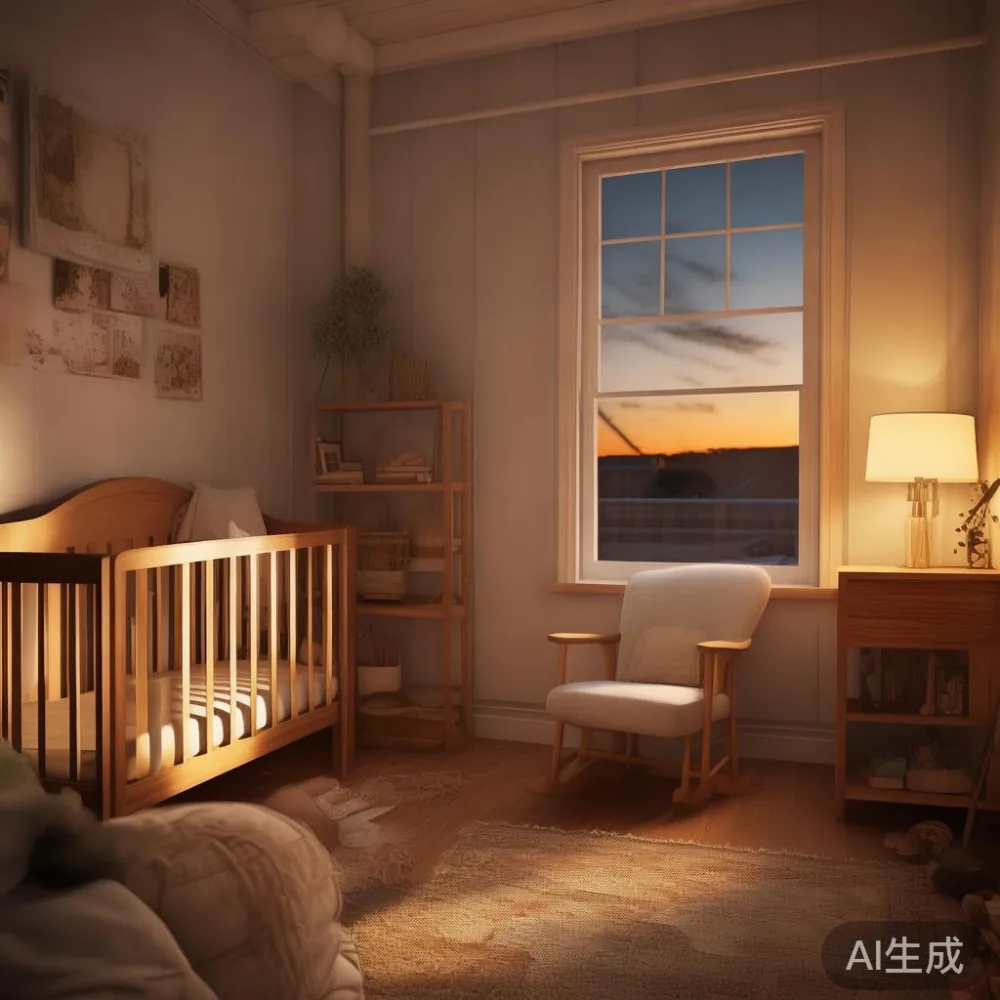
Wood furniture for a baby's room is a long purchase. Parents typically expect a bed frame, a six-drawer wardrobe, a changing station, a small dining table for toddler meals, and at least one nightstand to anchor the reading corner. Singapore families also work through HDB lift openings around 900 mm wide and corridors closer to 1200 mm, which dictates whether a 198 cm headboard even reaches the spare bedroom upstairs. With nine-percent GST now layered on top of sticker prices, getting ten years out of a single nursery set matters more than the colour of the paint.
Why Singapore's Tropical Climate Is Harder on Wood Than Most Buyers Realise
The Republic sits one degree north of the equator. Air-conditioning coils pull the room down to 24°C and around 55–60% RH, then the unit cycles off, the door opens for a diaper change, and humidity spikes. That swing is the enemy. A solid oak dining table stored in a Bedok reseller's container is acclimatised to roughly 18% moisture content. Move it into your flat and it will equalise, gaining or losing perhaps 3% in a fortnight. Three percent across a 220 cm wardrobe door is a noticeable bow, and on a child's wardrobe a sticky latch is more than a nuisance; it is a pinch hazard at toddler height.
Southeast Asia adds three complications that buyers in temperate countries rarely face:
- Monsoon moisture. November through March delivers sustained 90%+ RH nights, especially in ground-floor HDB flats near the Kallang Basin.
- Air-conditioning shocks. A 30% overnight swing in humidity is common when the AC runs full-blast from midnight to 6 am.
- Cohousing pests. Booklice, powderpost beetles, and surface mould all thrive in still, humid air and can attack untreated end-grain.
MIDHILL ships solid wood nursery furniture to more than fifteen countries, and the firm's export team reports that Singapore replacements are dominated by cracking and warp complaints during the December–February wet phase, not by finish wear. The pattern repeats every year.
How Much Does Humidity Actually Move Solid Wood?
The figure builders quote is that most hardwoods change by roughly 1% across the grain for every 4% change in surrounding humidity. Treat 1% as the working rule of thumb and you can plan around it. A 120 cm-wide nightstand top that starts at 9% moisture content will gain about 2% if the room sits at 80% RH, and that 2% across the grain becomes roughly 1.5 mm of cupping. Visible? On a child's marble-top nightstand absolutely not. On a flat oak changing station, definitely.
Here is a rough sizing grid I keep taped to the back of my sample case. It is not gospel, but it lines up with what I see on the showroom floor and in customers' homes.
| Piece | Typical width | Expected movement across a 30% RH swing |
|---|---|---|
| Nursery wardrobe door | 45 cm | ~5 mm |
| Bed frame side rail | 200 cm | ~2–3 mm (mostly along grain) |
| Dining table top | 160 cm | ~3 mm cupping possible |
| Open shelf end panel | 35 cm | ~3 mm |
These numbers look small until you remember a three-year-old fingers the same edge four times a day. Plan for them rather than against them.
"Will a Solid Wood Wardrobe Really Last Ten Years in a Tampines Flat?"
This is the question I get most often from parents browsing the MIDHILL catalogue, and it deserves a straight answer. Yes, with three caveats. The wardrobe must be built from quartersawn boards with a balanced construction that lets each panel float inside its frame. It must arrive acclimatised to roughly 12% moisture content, which is what a sheltered Singapore home sits at most of the year. And the flat needs a small dehumidifier set to 55% RH in the nursery during the northeast monsoon.
A flat panel of solid oak without a floating frame will bow in a humid room no matter who made it. A panel with a 6–8 mm expansion gap hidden inside the frame will move quietly and return. Look for that gap during your showroom visit. Run your fingertip along the inside edge of a wardrobe side panel and you should feel a shallow rebate that the door tucks into. That rebate is the warranty against tropical climates, and a tell that the maker understands what your HDB corridor will ask of the piece.
Quartersawn boards cost more because the yield from a log drops from roughly 60% to under 30% compared with plain-sawn stock. The premium shows up in the price tag, typically S$280–S$460 more on a six-door nursery wardrobe, but the trade is movement stability over a decade of afternoon thunderstorms. Solid wood sofa frames, bed frames, and dining tables all use the same construction logic, so once you learn the signs on a wardrobe, you can read them on any other piece in the showroom.
The Singapore-Specific Buying Checklist for Nursery Furniture
Whether you live in a 110 sqm Punggol condo or a 92 sqm Bedok HDB, the checklist is the same. Bring a folding rule, your phone, and a sense of what the lift opening really measures rather than what the agent's floorplan claims.
- Measure the lift and the corridor. Most HDB passenger lifts offer a 900 mm door and roughly 1400 mm of internal depth. A 198 cm Italian-made bed frame laid flat will not fit. Most MIDHILL bed frames are designed for Singapore delivery and split at the slat rail so two pieces clear a 900 mm lift opening.
- Check the moisture content on the spec sheet. Aim for 10–12% at delivery. Anything above 14% is asking for trouble once the air-conditioning kicks in.
- Ask about the joinery, not the brand name. Mortise-and-tenon, dovetail, and floating panels all beat staples-and-glue for a tropical environment. The same rule applies whether you are evaluating a solid wood sofa frame or a marble-top nightstand.
- Read the warranty line by line. Ten-year structural coverage should name warp, cracking, and joint failure specifically. Lifetime refinishing matters less than people think, because finishes fail long before wood does in humid rooms.
- Run the maths through freight and GST. A S$2,400 set with free shipping above US$350 (about S$470) lands at roughly S$2,640 plus GST. A S$1,800 set with paid shipping at S$120 lands at roughly S$2,160 plus GST. The cheaper sticker is not always the cheaper total.
Light-Luxury Styling That Works in Humid Rooms
Style choices that look confident in temperate climates often date a nursery fast once humidity joins the conversation. Heavy French provincial carvings hold dust and reveal every moisture shift in the relieved areas. Glossy post-modern lacquer hides grain movement well but chips at toddler height. American light luxury finishes - matte waxes over warm oak - forgive small movement and clean with a damp cloth without flashing white marks. They also age gracefully through five years of sticky hands before needing a refinish.
If you are researching how to style French provincial bed in apartment layouts, the trick is to resist the urge to push the headboard flush against a north wall where mould loves to settle. Pull it 50 mm forward, add a thin cedar spacer behind, and the air-gap does the work. Style notes on how to style French provincial bed in apartment rooms also tend to recommend natural linen bedding and rattan storage, both of which breathe in the same way solid wood does.
For a smaller space, Italian light luxury for small living room layouts is about restraint. A 160 cm marble table replaces a bulkier oak coffee table, freeing visual real estate while leaving the air around it less stagnant. Pair it with a low-profile solid wood sofa in oak or ash, and you have a guest surface that doubles as a nursery feeding spot without overheating the room.
If a Japandi wardrobe is on your shortlist, a few styling notes worth memorising are shared by most designers. The wardrobe reads best when flanked by 15–25 cm of negative wall, when the handles are matte black or brushed brass rather than chrome, and when only the bottom two of six drawers are visible from the doorframe. Buyers who plan how to style Japandi wardrobe in room layouts in advance usually avoid the most common Japandi error, which is buying a piece one size larger than the wall can comfortably carry.
For the master bedroom that anchors the whole flat, thinking through how to style light luxury bed in room layouts is worth a weekend. Light luxury styling relies on proportion: a 180 cm bed wants a 240 cm wall behind it, a single piece of 80 × 120 cm framed fabric, and two nightstands no taller than the mattress top. The bed itself should be solid hardwood - ash, oak, or teak - with a slatted base that lets air move underneath. Closed-base divan beds trap moisture and grow surface mould within two monsoon seasons in Singapore.
Some hotel projects and serviced apartments in the region favour European light luxury for hotel palettes, which translate well to the master suite of an HDB flat because they lean on warm neutrals and one or two brass accents. The same palette works in the nursery if you swap brass for satin nickel and pick a changing station in the same oak tone as the bed. When buyers ask which European light luxury for hotel palette would travel safely to a tropical family home, the answer is almost always warm white walls, one oak tone, and one darker accent.
Placement, Airflow, and Daily Habits That Stretch the Life of the Set
Even the best-made piece suffers if the room fights it. Three habits I have watched work in friends' flats:
- Keep wardrobes 30 mm off the wall. Spacers (cedar blocks, decorative felt pads, even folded cardboard) let the back panel breathe.
- Run a small dehumidifier at 55% RH. A 12-litre domestic unit costs roughly S$180 and runs at 80–120 W, adding under S$10 a month to the electricity bill for a 12 sqm nursery.
- Wipe lacquered or marble surfaces weekly with a barely damp microfibre cloth. Skip polishes that contain silicone. They haze in humid rooms and never fully buff out.
If you are browsing catalogues for the best European light luxury sofa for 2026 collections and planning around a 24 sqm living room in a 4-room HDB, pay attention to the sofa's undercarriage. A solid wood sofa with a 10 cm plinth base traps much less dust and moisture than a skirted model. Lift the sample in the showroom if you can - a 240 cm three-seater in solid oak typically weighs 65–75 kg and arrives in two halves that clear a 900 mm lift.
For dining tables, the same moisture logic applies. A 180 cm solid oak dining table for a family of four weighs 48–55 kg, seats six adults or two adults and a high-chair comfortably, and benefits from a 40 mm-thick top rather than a 25 mm one. The thicker top moves less across a humid night and tells fewer warps over the years. If you prefer marble, a marble-top dining table on an oak base brings the weight up to 80–95 kg, so be ready to reinforce any HDB kitchen tile under the legs or use soft rubber pads.
Returns, Refinishing, and the Long Tail of Ownership
A sensible 14-day return policy covers the arrival window: open the boxes within a week of delivery, set the piece up, and live with it before the window closes. Refinishing is rarely needed in the first decade for any of the pieces mentioned above when the room is managed. When it is, sanding back to bare wood and reapplying a hardwax oil costs roughly S$18–S$28 per square metre in a Singapore workshop - worthwhile for a 4 m² dining table top, overkill for a single nightstand.
Delivery windows of 18–28 days from a Foshan factory to a Singapore HDB door are normal for groupage sea freight; air-freight upgrades land in 9–14 days for roughly S$280 extra on a full nursery set. The longer sea route lets the wood acclimatise inside its crate to conditions much closer to Singapore's than to northern China's, which is one of the quiet reasons Foshan solid-wood makers have taken share from regional competitors over the past decade.
A Short Singapore Buying Plan You Can Use This Weekend
Pick two hours. Bring a folding rule, a phone with a moisture-meter app if you have one, and your flat's floorplan. Walk every showroom carrying a one-page checklist that includes the five questions above. Measure lift door widths and corridor turns before you fall in love with a headboard. Confirm moisture content at delivery and refuse anything above 14%. Plan for 55% RH year-round and a 30 mm gap behind every wardrobe. Spend the extra S$280 on quartersawn boards if you have it.
Do all of that, and a solid wood nursery set will see your newborn through primary school, your toddler through art projects that wreck cheaper finishes, and your HDB through two more resale cycles - which, in Singapore, is roughly the only horizon a piece of nursery furniture needs to clear.