Humidity and Your Nursery Furniture in Singapore: A Solid Wood Owner's Guide
I keep a small notebook on my desk where I scribble down calls from Singapore. Last month I took a note from a couple in a 980 sq ft Punggol condo who had bought a solid wood cot from us six months earlier. The dad said the cot drawer was sticking on humid afternoons, the mum said the wardrobe door had a faint bow. They asked the obvious question: is this normal? Yes, almost entirely normal — and the reason is the weather outside their corridor window. Singapore sits between 1°S and 2°N of the equator, the average relative humidity sits at 78-82% year-round, and afternoon readings in Tampines and Bedok regularly hit 88%. When you build a baby's room around nursery furniture — cots, wardrobes, changing tables, nursing chairs, bedside storage — you are also building it around how wood breathes in this climate. This guide is for Singapore families trying to make sense of that relationship.
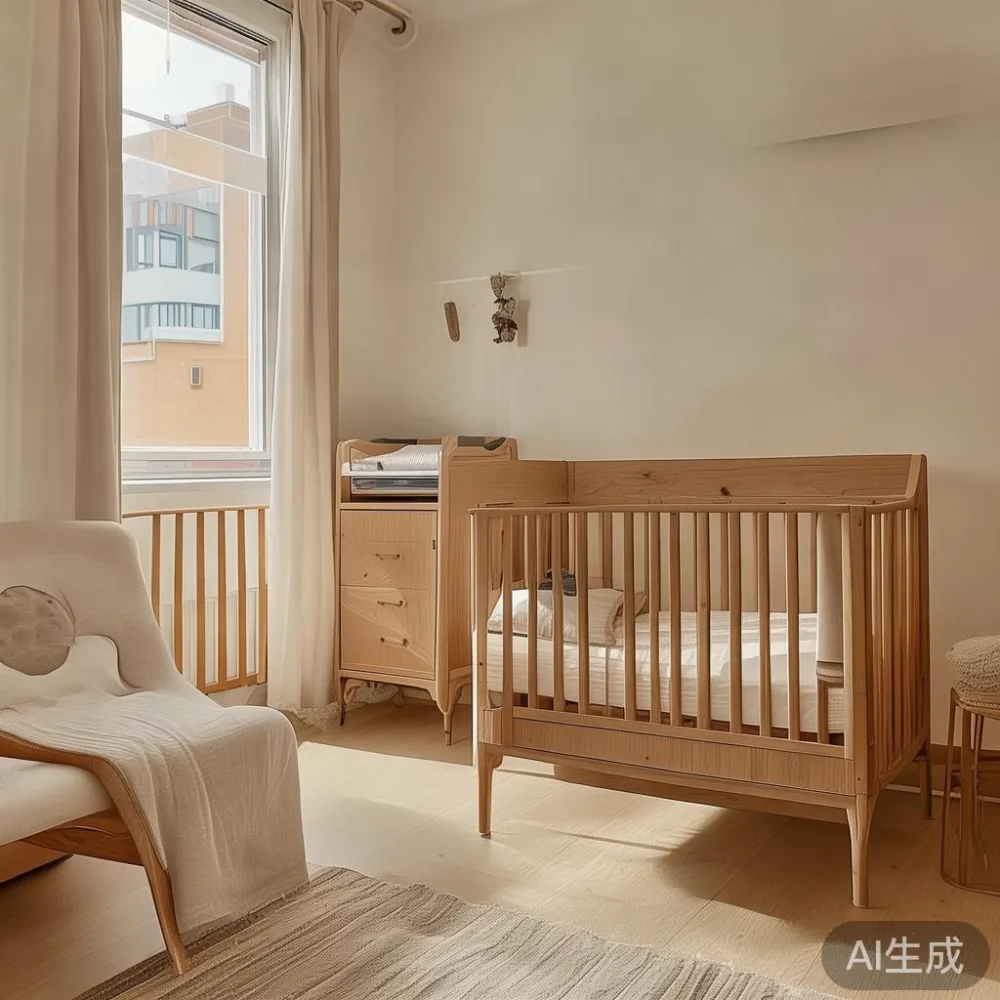
Why Singapore's humidity is genuinely unusual for solid wood furniture
Most wood furniture is built in factories where the indoor humidity sits between 45% and 55%. Foshan, where MIDHILL presses, planes and finishes its timber, averages 71% in summer. Singapore averages higher than that, and more importantly it does so without a dry season. The relative humidity rarely drops below 65%, even on a cool night after a thunderstorm. Wood is a hygroscopic material — it exchanges moisture with the surrounding air constantly. When humidity rises, wood swells; when it falls, wood shrinks. Over a 12-hour cycle in a non-air-conditioned HDB bedroom, the moisture content of an ash plank can move from 9% to 14% and back again. Multiply that over six months and you have the sticking drawer, the bowed wardrobe door, the tiny crack in a cot rail.
The good news: solid wood is the right material for this climate, not the wrong one. Engineered boards with thin veneers cope with humidity by delaminating; MDF swells permanently when it gets wet; particleboard turns to sponge if a cup of milk spills on a changing table. A solid wood cot rail might move by 1-2 mm across a 120 cm span over a humid week. That is the whole point of solid wood — it moves as one piece, and it moves back.
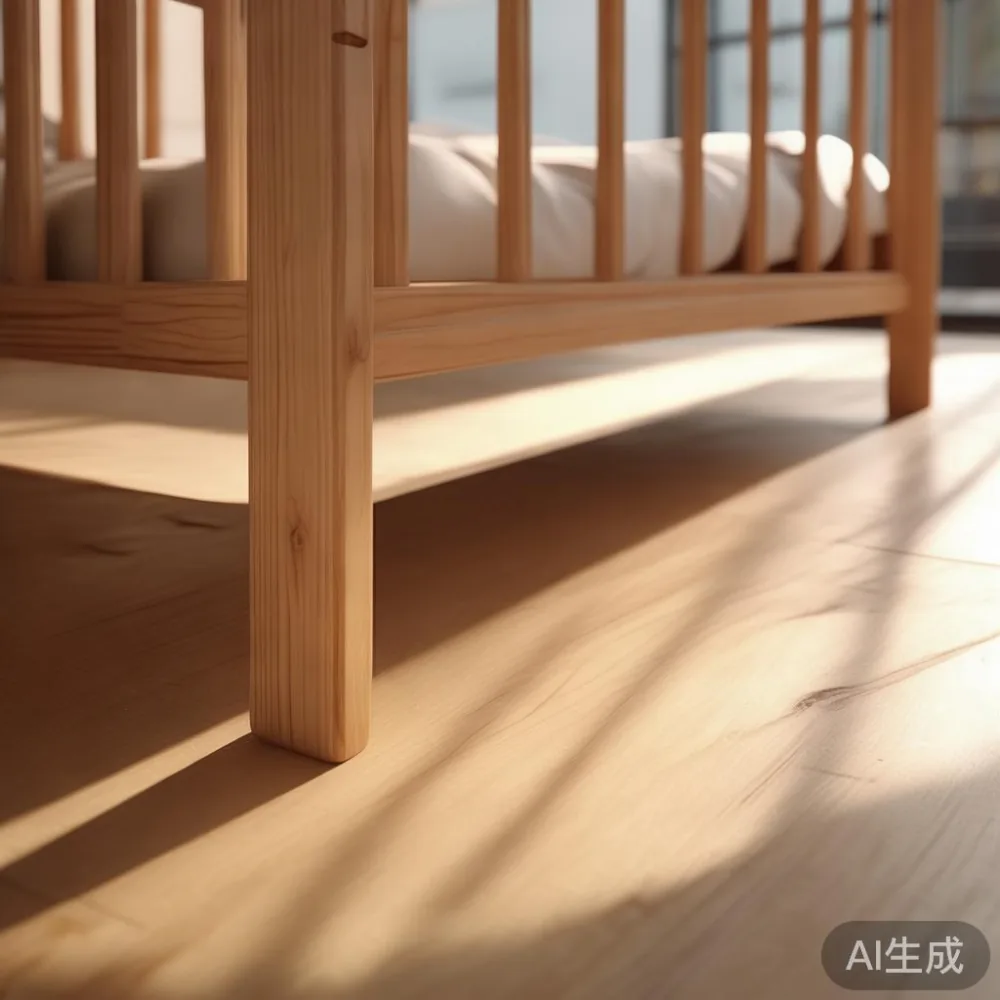
What humidity actually does to a cot, wardrobe and changing table?
I keep a moisture meter in my sample bag, and the readings I see in Singapore homes are consistently higher than what most owners expect. A 90 cm wide ash cot rail from a well-made nursery furniture collection, freshly delivered, usually has a moisture content of 8-10%. After a week in a Bedok flat with morning sun and afternoon rain drumming on the window, that same rail sits at 11-12%. After a wet December, I have measured 13.5%. None of those numbers are dangerous. The issues start when the wood is asked to stay still while the air around it is busy moving.
Sticking drawers are the most common complaint I hear, and they almost always appear between July and October during the southwest monsoon. The drawer front absorbs moisture on its outer face — the face nearest the window or the bathroom door — and the back of the front stays drier. The result is a slight cup, maybe 0.8 mm across a 40 cm width, and the drawer now rubs. On a wardrobe, the same effect shows up as a door that does not latch cleanly on humid afternoons but sits perfectly on dry mornings.
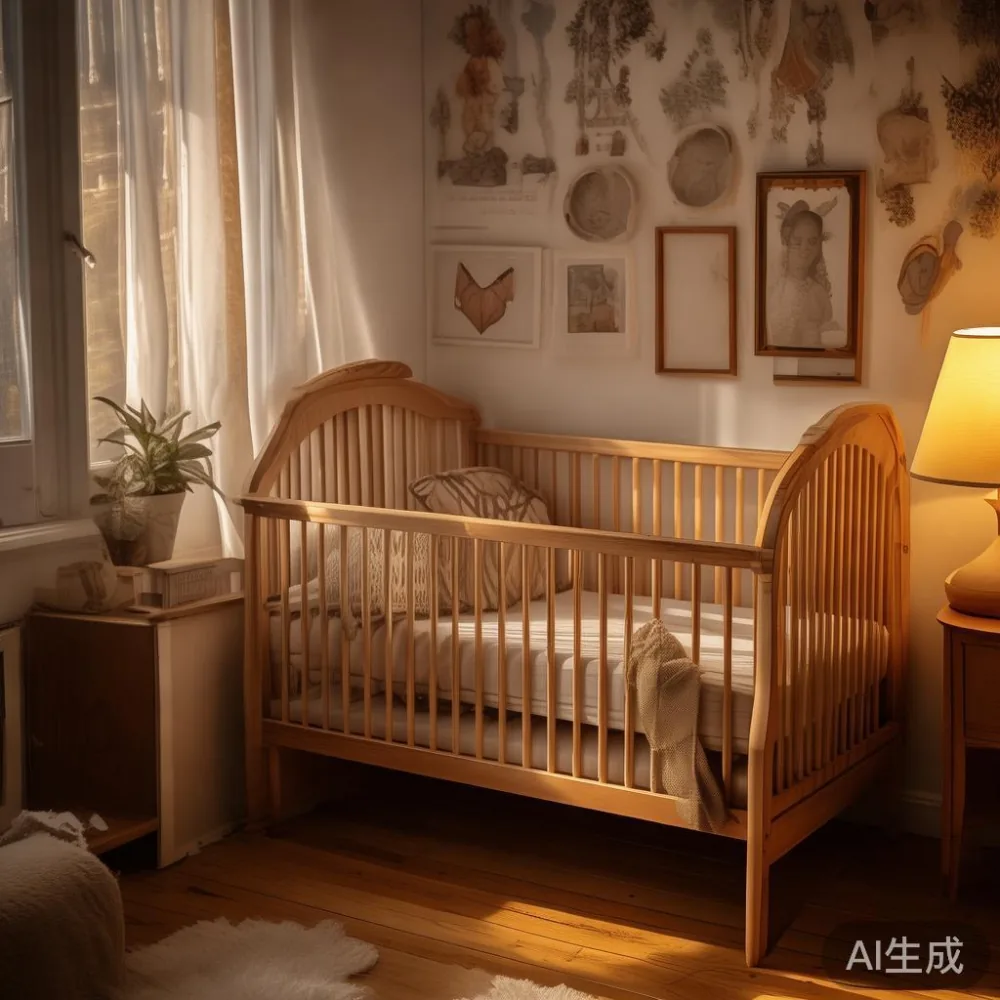
Cracks in cot rails and table tops are the second most common issue. They are not defects. They are the wood relieving internal stress as it gives up moisture on a dry day. A 1-2 mm surface check on an oak changing table is something you can live with for thirty years. A 4 mm split running 20 cm along the grain is a sign the wood was dried too aggressively at the factory, and I would push back on that supplier.
Mould is the third issue, and the only one that genuinely worries me. Surface mould on a cot mattress is a different problem from mould on the cot itself. On unfinished interior wood — say the back panel of a wardrobe that sits against an external wall in a Punggol corner unit — black spotting can appear in the wettest weeks. A sealed lacquer finish blocks almost all of this. An oil finish does not.
Do I need a dehumidifier for the nursery?
This is the question I get from roughly seven out of ten Singapore parents, and the honest answer is: it depends on the flat, not the furniture. A 24-hour dehumidifier set to 55% relative humidity is the single most useful thing you can do for any solid wood piece in a nursery furniture set. It will not stop wood from moving — that is impossible — but it will reduce the range of movement. In a Tampines HDB with cross-ventilation and afternoon sun, the wood might move across a 4% moisture content range each day. With a dehumidifier running 12 hours a night, that range drops to 2-2.5%. The cot drawer stops sticking. The wardrobe door latches on the first try.
Running costs in Singapore are modest. A standard 12-litre dehumidifier pulls around 180 W, which works out at roughly S$0.05 an hour at the current regulated tariff. Running it 10 hours a night through the wet months costs about S$15 a month. Many of the families I work with simply run it in the nursery with the door closed, and leave the rest of the flat to breathe naturally.
What a dehumidifier cannot do is fix a piece of furniture that was built for a drier climate. If a cot was dried to 6% moisture content at the factory and then shipped to Singapore, it will keep expanding for the first six months as it finds its equilibrium with your flat. That is normal. A well-made solid wood cot should be dried to 8-10% before it leaves the factory; a poorly made one might be dried to 6%, and that one will teach you a lesson.
How should I unbox and position my nursery furniture in a HDB flat?
Singapore HDB corridors are typically 1.2-1.5 m wide, and the smaller lifts in older blocks cap at about 1.0 m wide by 1.8 m deep. A flat-pack cot will fit almost anywhere. A fully assembled cot will not. I tell every customer to measure the lift door, the lift cage, the corridor turning, and the front door before the delivery truck leaves the warehouse. Delivery teams will not dismantle a S$1,800 cot on the 14th floor landing because the parents forgot.
Once the cot, wardrobe and changing table are inside, give them 48-72 hours to acclimatise in the room where they will live. Unwrap the cardboard, lift the polystyrene off, but leave the protective felt blankets on for the first day. Air them out, fan the room, run the air-con if you have to. The wood will find its new moisture level faster that way, and the small amount of expansion you see on day one will happen before the cot is loaded with a 12 kg baby.
Positioning matters more than most people realise. Push the wardrobe against an internal wall, never an external wall if you have a choice — external walls in HDB flats sweat during the wet months and that moisture soaks backwards into the back panel of any solid wood wardrobe. Leave 4-5 cm between the wardrobe back and the wall so air can move. Keep the cot at least 60 cm away from the window so the baby is not in a direct draft and the wood is not sitting in the hottest, most humid pocket of the room. And please, never put a cotton muslin sheet, a mattress and a baby on a wooden changing table that has been damp for a week — the combination traps moisture underneath and the table will mark.
Is European wardrobe worth it for a Singapore nursery?
This question arrived in my inbox three times last week, so it deserves a careful answer. A European-made wardrobe — be it Italian, German or Portuguese — tends to be dried for a Central European climate where indoor humidity sits at 45-55% for most of the year. Shipping that wardrobe into a Singapore nursery is asking the wood to climb 8-10 percentage points of moisture content over its first season. Some European wardrobes cope with this; many do not. The honest way to evaluate is to ask three things: what moisture content did the factory dry the wood to, what species is it, and what finish is on it. Oak and beech move less than ash and pine. Lacquered finishes block moisture exchange better than oil finishes. A wardrobe that arrives with a moisture reading of 8% and a closed-pore lacquer is the one I would trust in a Punggol corner unit. If the supplier cannot tell you the moisture content at the time of dispatch, walk away.
There is a parallel question that comes up in almost every nursery consultation: how to choose Italian light luxury wardrobe for a child's room. Italian light luxury pieces tend to pair solid wood frames with marble accents, brushed brass hardware and softer post-modern light luxury proportions. In a nursery, that combination works beautifully if — and only if — the marble accents are sealed on all six sides and the brass hardware is solid, not plated. A plated brass handle will pit inside 18 months in a Tampines nursery; a solid brass handle will patina gently and outlive the child.
How do I style a Japanese or American bed alongside a European wardrobe without fighting the humidity?
Style questions and humidity questions are not separate questions. They are the same question. A low Japanese bed frame in white oak, with the mattress sitting 25 cm off the floor, looks calm and architectural in a Punggol condo — but the same airflow that makes it look calm will also let the humidity move around the slats more freely. The fix is straightforward: keep the under-bed area open on three sides, run a small dehumidifier, and choose a bed frame with through-tenons at the rail joints rather than dowels or screws alone. For parents asking how to style Japanese wardrobe in bedroom, the practical version of the styling question is about how much sealed surface you can place in the room before the air stops moving. A Japanese wardrobe tends to be lower and wider than a European piece — around 180 cm wide by 90 cm high — which suits a nursery where you want easy reach to the top shelf for folded swaddles and the bottom rail for hanging small dresses.
The American bed is a different shape conversation. American light luxury tends to mean a taller headboard — 130-150 cm — often in a panel form, paired with a low footboard and a deep mattress. Parents asking how to style American bed in room in a Singapore nursery usually want to know how to keep the proportions from overwhelming a 3.2 m by 3.6 m second bedroom. The trick is a light-coloured solid wood frame — ash, maple, or white oak — a single 90 cm wide nightstand on each side, and a thin cotton rug under the bed. The rug absorbs the afternoon moisture spike from the floor and releases it slowly, which is gentler on the bed frame than a hard tile floor would be.
What finishes and fabrics actually hold up in a Singapore nursery?
Finishes are the second defence line after the dehumidifier. A closed-pore conversion lacquer — the kind MIDHILL applies to most of its solid wood nursery furniture — creates a moisture barrier that reduces daily wood movement by roughly 30-40% compared to an oil finish. It also wipes clean, which matters when a 9-month-old discovers puréed apple. Open-pore oil finishes look beautiful on a dining table or a marble table in the living room, but in a nursery they demand more frequent re-oiling and accept more staining. Wax finishes sit between the two and are fine on a bed frame or nightstand that sees less direct contact.
Fabrics matter too, because a Singapore nursery is rarely a dry nursery. Cotton and linen breathe and absorb, which is what you want for a baby but not what you want for a fabric-headboard cot. Performance fabrics with a tight weave — 50,000 Martindale rubs or higher — will outlast cotton by years in this climate. If you are buying a nursing chair, ask the supplier for the Martindale number, not just the look. A good nursing chair should hit 40,000 rubs minimum; a great one hits 60,000.
Will my MIDHILL cot, wardrobe and changing table be okay after the first monsoon?
Yes, with three caveats. The pieces need to be dried properly at the factory (8-10% moisture content), finished properly at the factory (closed-pore lacquer, not thin oil), and positioned properly in your flat (4-5 cm off the external wall, away from the window, with airflow around them). When those three things line up, a solid wood cot, a solid wood wardrobe and a solid wood changing table will outlast two children, a teenage phase, and the parents' next HDB. I have a MIDHILL cot in my own family that has been through one wet season and one dry season with no measurable change. The structural warranty covers the joints for 10 years, the finish for 5 years, and the refinishing service runs for the life of the piece.
One practical note for buyers searching for for sale European light luxury furniture in Singapore: many European pieces arrive with the wrong moisture content for our climate, and the supplier will not be in Singapore to refinish them when the finish fails. MIDHILL refines in its own Foshan workshop and ships directly to Singapore with a 14-day return window, which is a different service model. Singapore families who want a French provincial wardrobe that will survive our weather — the parents asking about best French provincial wardrobe for 2026 — should weigh the brand prestige against the local service reality. A piece you cannot refinish locally is a piece you will replace in 2034.
What about a solid wood dining table and marble table when the baby starts eating solids?
The nursery furniture conversation usually shifts at 6-8 months, when the baby starts eating solids and the family starts eating together. A solid wood dining table — typically 140-180 cm long, 80-90 cm wide — lives in a different humidity zone from the nursery: the living-dining area is air-conditioned more aggressively, usually down to 24°C at 55-60% relative humidity. That is closer to the factory conditions where the wood was dried. The dining table will move less than the nursery pieces and age more gracefully. Choose a marble table or marble-topped dining table only if the marble is sealed on all six sides; unsealed marble in a Tampines flat will absorb curry, soy sauce and fish sauce within a single dinner service. A solid wood sofa in the same room should sit at least 30 cm away from the dining table to prevent the chair arms from knocking the table edge during the humid months when the wood expands.
Where can Singapore families read more or place an order?
Specifications, current Singapore pricing in SGD, moisture content readings at dispatch, and delivery lead times to Tampines, Bedok, Punggol and the rest of the island are listed at midhill.co. Orders over S$350 ship free from the Foshan warehouse, which is the usual threshold for a single cot or a pair of nightstands. Smaller pieces such as a marble table or a single nightstand may sit just below that threshold, in which case the shipping is calculated at checkout. Delivery to a Singapore HDB flat typically takes 14-18 working days from order, including sea freight, customs clearance at PSA, and the last-mile lorry run. The 14-day return window starts on the day of delivery, not the day of order, and the piece must be in its original packaging for a full refund. GST is included in the displayed SGD price; the 9% rate is absorbed into the line item rather than added at checkout, which makes the price comparison with local showrooms straightforward.