How to Read a Nursery Furniture Warranty in Singapore Without Getting Caught Out
I spent a Saturday morning last month at a Tampines HDB flat, watching a friend unbox a solid wood cot for her six-month-old. The cot looked beautiful in the showroom photos, and the price in SGD felt fair for the joinery. What she had not read, line by line, was the warranty card folded into the box. By the time the baby started pulling up at ten months, one of the side rails had developed a 2 mm bow, and the manufacturer politely told her that "seasonal movement of solid timber" was not covered. That single sentence cost her S$280 to remediate, and it pushed her to ask me a question I hear almost weekly: how do you actually read a nursery furniture warranty in Singapore without being caught out?
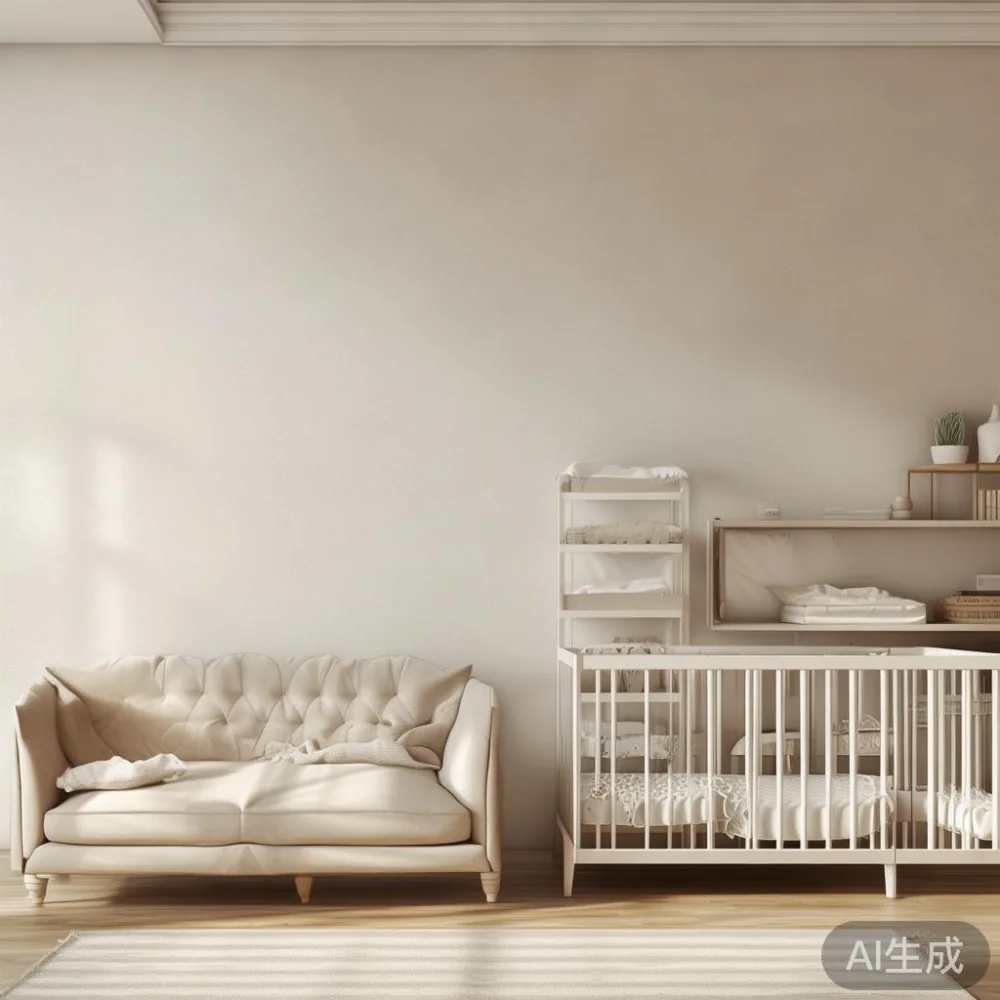
This guide is for parents and grandparents shopping for cot beds, wardrobes that double as baby storage, nursing chairs, and the small pieces of light luxury furniture — think a French neoclassical nightstand for small apartment corners — that anchor a nursery. Every figure below is in centimetres, kilograms, or Singapore dollars, and every tip has been pressure-tested against the realities of HDB corridors, lift openings, and humid equatorial weather.
Why a Warranty Matters Even When the Furniture Looks Solid
A piece of solid wood nursery furniture is not a small-towel purchase. A single bed frame in solid oak or ash from a light luxury brand such as MIDHILL will typically sit in the S$1,400 to S$2,600 range before GST. A two-door wardrobe runs S$2,200 to S$4,800, and a four-seater dining table that doubles as a homework station later will land between S$1,800 and S$3,500. When you are paying that kind of money, the warranty document is the only contract you have against hidden defects, kiln-drying failures, joint loosening, and finish problems that appear three to six months after delivery.
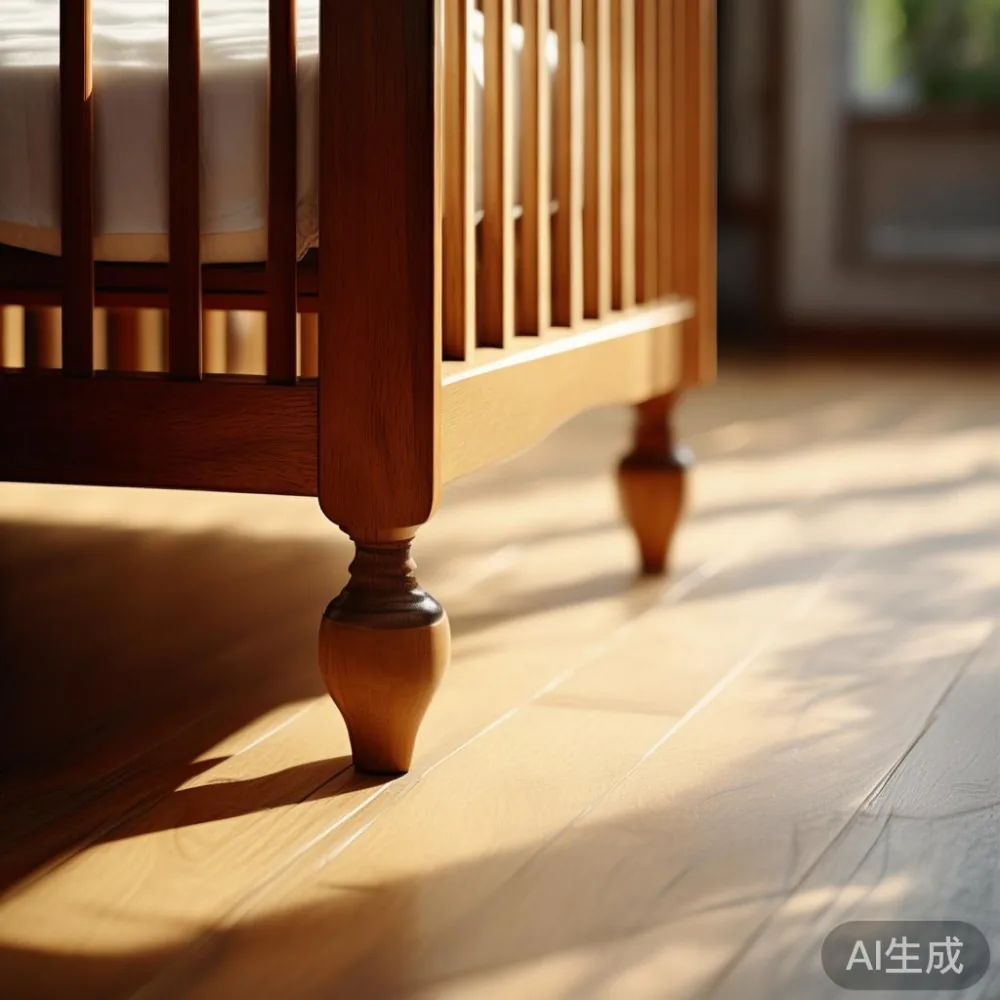
Light luxury positioning — French light luxury, American light luxury, post-modern light luxury — usually means the piece is built with a visible solid wood frame, sometimes paired with a marble top on a side table or dresser. The catch is that light luxury pieces often use natural materials that move. A 140 cm dining table top can cup 1 to 2 mm across its width during the November to February rainy season in Singapore, when indoor relative humidity climbs above 80 percent. Your warranty needs to distinguish between normal movement and a structural failure. If it does not, you will absorb the cost.
What Should a Solid Wood Nursery Furniture Warranty Actually Cover?
For nursery use, the warranty has to cover four specific risks, not vague promises:

1. Structural integrity of the cot or bed frame for a minimum of 5 years, ideally 10. The standard from established Foshan makers such as MIDHILL is a 10-year structural warranty, which is generous by Singapore retail standards and worth asking about by name.
2. Joint failure at mortise-and-tenon or dowel connections, including the side rails of a convertible cot that becomes a toddler bed.
3. Hardware defects: barrel nuts, cam locks, drawer runners rated to 45 kg, and the soft-close hinges on a nursery wardrobe. Drawer runners for baby clothes are typically rated 30 to 45 kg per pair; if the rating is not stated, that is a red flag.
4. Finish defects such as lacquer cracking, peeling, or yellowing under normal indoor conditions (temperature 22 to 28 °C, humidity 50 to 75 percent).
Anything outside that list — scratches, water rings, ink marks, teething damage, "natural wood movement", discolouration from direct sunlight through an east-facing window — is usually excluded. Knowing the boundary between covered and excluded is the whole game.
How Long Should the Coverage Last for Cot Beds, Wardrobes, and Nursing Chairs?
A realistic benchmark by category:
• Cot beds and toddler beds: 5 to 10 years on structure, 1 to 2 years on hardware and finishes. The cot your baby uses from birth to age three will see roughly 8,000 hours of use, plus the occasional jumping phase at age two. Anything under 5 years of structural cover is thin.
• Wardrobes used as nursery storage: 5 to 10 years on frames, 2 to 3 years on drawer runners and hinges. A two-door wardrobe measuring roughly 90 cm wide × 55 cm deep × 180 cm tall will weigh 55 to 80 kg once loaded with baby clothes and linens.
• Nursing chairs and rockers: 3 to 5 years on frame, 1 year on upholstery and mechanism. Weight ratings should be at least 110 kg to accommodate a parent plus a 10 kg baby.
• Side tables, nightstands, and the small marble-topped pieces that complete a light luxury nursery: 5 years on structure, 1 to 2 years on the stone or finish. A marble table top, for example, is often covered only against manufacturing defects and not against staining from spilled milk or baby formula, which is why a sealed finish matters.
When a brand publishes a single number such as "10-year warranty", always push for the breakdown by component. A 10-year promise that excludes drawer runners after 12 months is not really a 10-year warranty.
How Do I Choose a Return Policy for a Small Apartment?
Choose a return policy that gives you at least 14 calendar days from the date of delivery, allows the piece to be returned even if it has been lightly assembled for inspection, and includes free pick-up from a HDB unit on a ground floor or accessible floor with lift access. A workable policy should also refund the original outbound delivery fee, charge no hidden restocking fee above 5 percent of the item price in SGD, and allow a replacement of equal value if a defect appears within the first 30 days. These five conditions protect you when the lift opening in your Tampines or Punggol block turns out to be 78 cm wide and the wardrobe you ordered is 82 cm wide, which happens more often than people think.
Singapore-specific measurement traps worth memorising: most HDB passenger lifts have a clear door opening of about 80 to 90 cm and an internal depth of 130 to 160 cm. Corridors on the typical 4-room HDB measure 1.2 to 1.5 m wide, and the turn into your front door is usually a 90-degree corner. Always check the packed dimensions of every nursery piece, not just the assembled dimensions. A solid wood cot that is 70 cm wide when built often ships in a flat-pack box 75 × 65 × 18 cm, which fits easily; a wardrobe in two boxes of 185 × 55 × 12 cm each will fit a lift but may not fit around the corridor corner.
GST is 9 percent in 2025 and applies to all imported furniture delivered to a Singapore address, so a S$2,000 nightstand becomes S$2,180 at checkout. Make sure the warranty document names whether GST is included in the "free replacement" promise or billed separately. Reputable makers spell this out.
What Are the Most Common Exclusions in Singapore Warranties?
Reading exclusions is dull work, but it is where the contract actually lives. The clauses I see causing the most friction in Singapore:
• Humidity-related movement. Tropical indoor conditions above 80 percent RH for sustained periods will cause solid wood to expand across the grain. A 120 cm dining table or a cot side rail can swell 1.5 to 2.5 mm. Most warranties explicitly exclude this, even when the brand sells the same piece in dry-climate markets.
• Direct sunlight. UV exposure through unfiltered HDB windows will bleach cherry and walnut within 6 to 12 months. Excluded almost universally.
• Improper assembly. If you used a handyman service rather than the brand's recommended assembler and a joint later fails, the claim can be refused. Keep the assembly receipt.
• Commercial or rental use. A cot used in a confinement nanny agency or co-living space is not the same as home use. The warranty term may shrink from 10 years to 90 days.
• Second-hand transfers. If you sell the wardrobe to a friend when your second child outgrows the nursery, the warranty usually does not follow.
• "Natural variations" in marble, grain, and colour. A marble table top will never be uniformly veined; that is the nature of the stone, not a defect.
• Force majeure and pest damage. Termites are uncommon in HDB flats but not unknown in older walk-ups in Geylang or Tiong Bahru, and wood-boring beetles can travel in packaging.
Which Questions Should I Ask the Salesperson Before I Pay the GST?
Ask these in writing, and ask for the answers in writing too, ideally in the same email thread:
1. Is the 10-year warranty prorated or full replacement for the first 24 months? A prorated warranty in year eight might only refund 20 percent of the original SGD price.
2. Who pays for return shipping if the piece is defective — me or you — and is the pick-up from a HDB without a loading bay included? Loading bays in some Bedok blocks require a booking 3 working days in advance.
3. What is the claim turnaround time? A reasonable benchmark is 7 to 14 working days for inspection and 14 to 30 days for repair or replacement.
4. Is on-site repair offered, or must the piece be shipped back to a Singapore service centre or, worse, to a factory in China?
5. What proof of purchase and original packaging is required? Keep the box for at least 60 days.
6. Does the warranty cover the mattress support slats on the cot? Slat failure at 18 months is one of the most common claims I see, and some brands exclude it as a "consumable".
7. Is refinishing included? MIDHILL, for instance, publishes a lifetime refinishing commitment, which is a quietly powerful clause that turns a 10-year structural warranty into a piece of furniture you can pass down.
What Is a Fair Delivery and Assembly Promise for a HDB or Condo?
For a HDB in Tampines, Bedok, or Punggol, expect a 14 to 35 working day lead time for solid wood pieces made to order, plus 1 to 3 days for in-stock items. Free shipping over S$480 is the common threshold, and many Foshan direct sellers such as MIDHILL set it around US$350 converted, which lands close to S$470 in 2025 exchange terms. Always confirm whether delivery includes carrying up the lift, carrying through the corridor, and assembly in the room of choice. A three-man delivery team should manage a 60 kg cot-bed and a 75 kg two-door wardrobe in roughly 90 minutes combined, including assembly.
Condo delivery has its own rules. Some condominiums in the River Valley and Bukit Timah areas require a contractor pass, a S$50 to S$150 refundable deposit, and weekday-only access between 9 am and 5 pm. If your warranty excludes "delivery delays caused by access restrictions", that is a clause you want to negotiate out before paying.
How Do I Document a Defect So the Claim Actually Succeeds?
Take three things within 48 hours of spotting the issue: a photograph with a ruler or coin for scale, a short 10-second video showing the wobble or crack, and a written note with the date of delivery, batch number on the warranty card, and the ambient conditions in the room. If the cot rail has bowed 2 mm, photograph it against a steel ruler. If the drawer runner on the nursery wardrobe has failed at 4 months, film the drawer under load with a 2 kg weight. Send all three to the brand's warranty email the same day, and keep the courier consignment note if the piece must be returned.
A claim that arrives with measurements, timestamps, and ambient readings is settled in days. A claim that arrives as "it looks wrong" can drag on for weeks.
Final Checklist Before You Click Pay
Read the warranty card the same way you would read a CPF statement — slowly, line by line, and with a highlighter. Confirm in writing the structural term by component, the return window in days, the pick-up terms for your specific HDB block or condo, the GST treatment of replacements, the humidity and sunlight exclusions, and the refinishing offer. If the brand is a Foshan maker with a Singapore-facing English-speaking service team and a published history of exports to 15 or more countries, you are in safer hands than a marketplace reseller who lists no physical address. A solid wood cot, a convertible bed frame, a two-door wardrobe, a small marble-topped nightstand, and a dining table that will outlive the nursery phase are large purchases in SGD; the warranty is what turns them from a gamble into an inheritance.