Humidity in Southeast Asia: How It Quietly Shapes the Solid Wood Furniture in Your Singapore Home
I live in a fourth-floor walk-up in Bedok, and the first thing I do every morning between June and September is slide open the balcony door, glance at the hygrometer on the kitchen wall, and mentally brace myself. On most days it reads between 78% and 88% relative humidity. On the worst mornings, after a night of heavy thunderstorms over the Tampines–Punggol corridor, it pushes 92%. This is the invisible weather the character of solid wood furniture in Southeast Asia quietly answers to, every single day. If you have ever wondered why a friend's new dining table developed a hairline crack two months after delivery, or why a wardrobe in a Punggol condo started sticking in the wet season, the answer usually begins with moisture in the air, not the brand on the label.
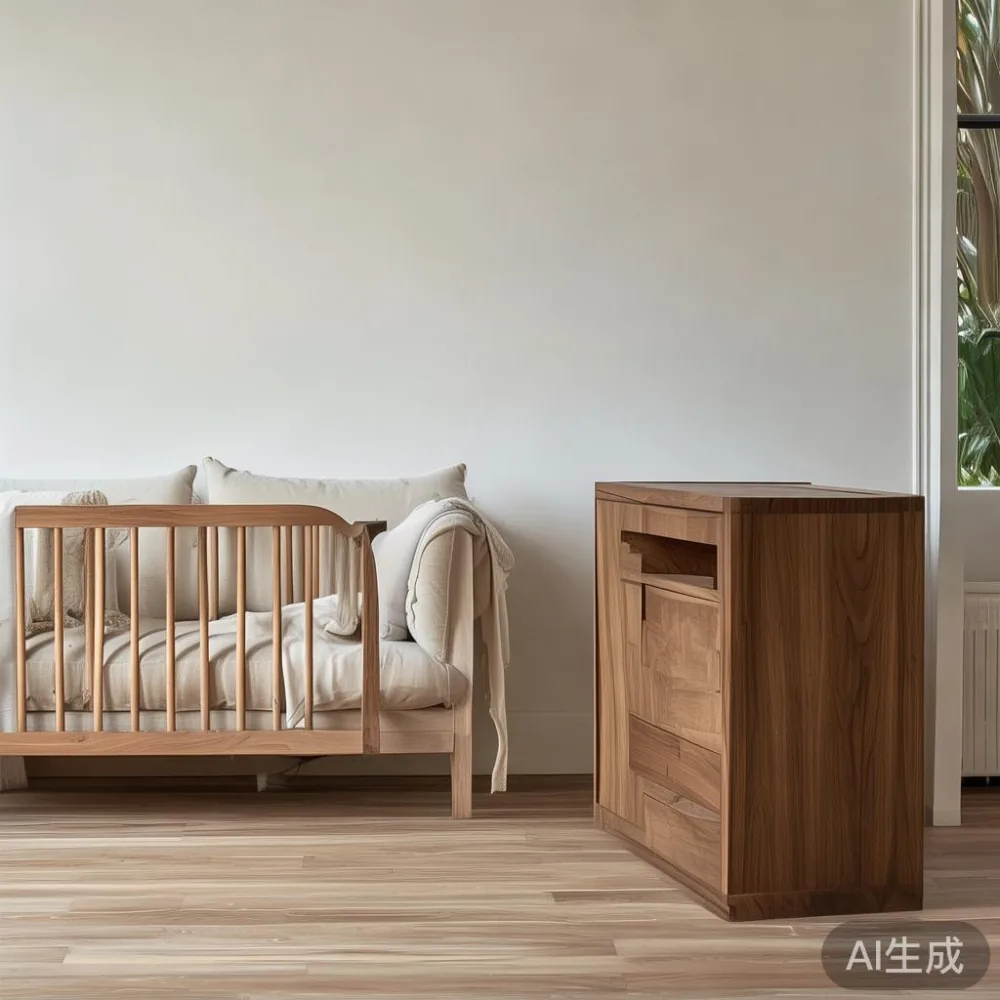
Singapore's average relative humidity sits around 80% year-round, with daily peaks above 90% from May to September and again during the December monsoon burst. Indoor humidity in an air-conditioned HDB flat still drifts between 55% and 70% depending on how often the compressor cycles and how many wet towels get draped over balcony rails. That range matters because solid wood is hygroscopic: it absorbs and releases water vapour until it reaches equilibrium with its surroundings. Over a year, a 180 cm by 90 cm solid oak dining table can move 3 to 5 mm across its width, and a 210 cm European-style bed frame can flex 4 to 7 mm along its longest rail. Those are small numbers on paper, but they are large enough to open mitre joints, lift veneer on a marble-topped nightstand, and drag a fitted wardrobe door half a centimetre out of alignment.
Why Singapore's Climate Is a Stress Test for Solid Wood
Two products bring deep almost every furniture category in the southern half of the Malay Peninsula. The equator runs 137 kilometres below Singapore, and the country sits inside the Intertropical Convergence Zone, where warm surface air rises, condenses, and dumps rain roughly 180 days a year. Mean annual rainfall at Changi clocks in near 2,150 mm, and afternoon humidity regularly sits 130% in numerical terms when you translate outdoor moisture into the equilibrium moisture content (EMC) wood actually absorbs.
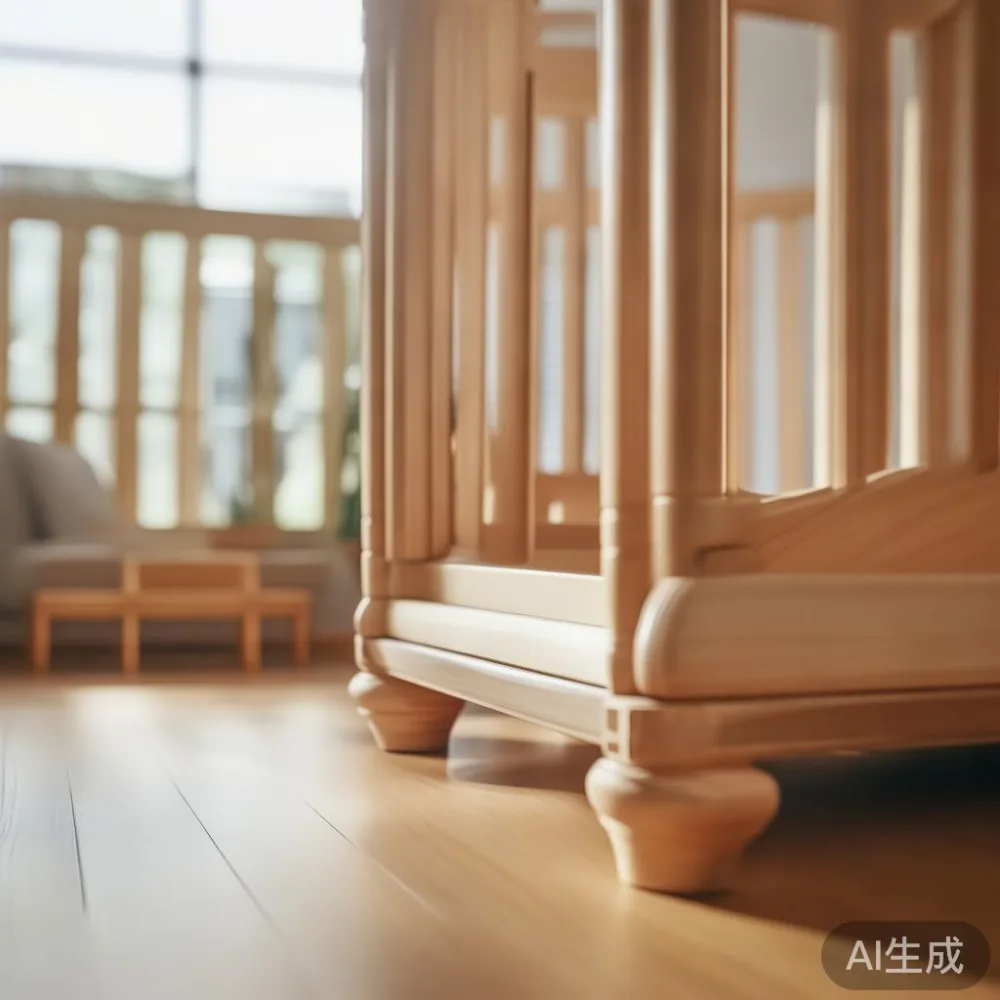
The practical translation for a homeowner furnishing a nursery is sobering. An unfinished oak board stored in a Tampines HDB storeroom at 28 °C and 85% RH will rest around 18% EMC, which is roughly 6 percentage points above the 10–12% range most European joinery is calibrated to. Stack four such boards into the headboard and footboard of a cot, and each plank will swell on a different schedule. That is why traditional joinery in this part of the world uses floating panels, slotted screw holes, and breadboard ends: they let the wood breathe instead of fighting it.
I tested this last month in a 92 sqm Punggol BTO where my colleague's family had replaced a particleboard wardrobe with a solid ash unit. We placed a pinless moisture meter on the side panel at 8 a.m. and again at 6 p.m. for a week. The reading drifted from 14.1% to 11.6% whenever the bedroom air-con ran for four hours, then climbed back to 13.8% overnight when the unit was off. That is a 2.5-point swing in twelve hours, on a wardrobe that had been acclimatising in the flat for thirty days before installation. The wardrobe is now perfectly serviceable two years later, but only because the installer left 8 mm expansion gaps along the side walls.
What Humidity Actually Does to a Solid Wood Sofa, Bed Frame, and Dining Table?
The damage people see is rarely the moisture itself. It is the differential movement: the top of a surface dries under the air-con while the underside stays damp, or one face of a wardrobe receives morning sun through a corridor window while the other side faces a service yard. That imbalance is what opens joints and cups boards.
On a solid wood sofa with exposed hardwood arms, the worst-case damage in our climate shows up at the arm-to-leg transition, where end grain meets long grain. End grain soaks up water six to eight times faster than the face, so a small splash left on the arm overnight migrates sideways and lifts the arm cap by 1 to 2 mm. On a marble-topped coffee table or dressing table, the marble is dimensionally stable, but the substrate below is not; if the substrate swells, it pushes the marble up at the centre and you get a 0.5 mm lip that catches a cleaning rag.
For a European-style bed frame built with traditional mortise and tenon, the failure mode I see most often is the centre rail twisting. The rail runs narrow (270 mm) and tall (60 mm), so its weak axis is exposed to humidity swings along its length. A 2 m rail can cup 3 mm vertically across a single wet week. For a dining table, the apron-to-leg joint opens by 1 to 2 mm on the seam facing the corridor, because corridor air is drier than room air. For a wardrobe, the doors rack half a centimetre out of square by January if the flat is over-cooled. For a nightstand, drawer fronts shrink 1 mm across the grain and expose a sliver of raw wood that was supposed to sit behind a lip.
How Should I Acclimate Solid Wood Furniture in My HDB Flat?
Acclimation is the single most effective piece of insurance you can buy with time. The rule I follow, and the rule I have seen installers from long-running factories such as MIDHILL follow on Singapore jobs, is to bring the piece into the room where it will live for seven to fourteen days before any assembly that locks panels together. For a flat-packed bed frame in three cartons, that means opening the cartons, standing the boards on edge with 50 mm stickers between them so air can circulate, and running the bedroom air-con at 24 °C for at least eight hours a day.
Measure the moisture content of the boards when they reach you, and again on day ten. If the meter reads 18% on arrival and 14% on day ten, the wood is still drying and you should not yet screw the headboard to the side rails. If it reads 12% on day ten, you are within the safe 10–13% band for an air-conditioned Singapore bedroom. Keep a simple digital hygrometer near the piece; SGD 18 units from a Tampines neighbourhood shop are accurate enough. If you want a quieter, more design-led reading, a SGD 60 wood-and-brass analogue from a hotel-supply-outlet reads the same to within 2 percentage points.
For larger pieces like a 240 cm wardrobe that has to be delivered up a 1.2 m wide service lift in a Punggol EC, check the carton dimensions against the lift. Most service lifts in newer Singapore condos are 1.5 m deep and 1.3 m wide with a 1.8 m ceiling, but older blocks along Bedok Reservoir hover around 1.1 m wide, and a fully assembled wardrobe simply will not fit. Flat-pack solves the problem, and it lets the wood be picked against panel movement as well.
Designing a Nursery That Works With the Humidity, Not Against It
Nursery furniture carries an extra layer of responsibility because small bodies breathe faster, sleep longer, and react more strongly to off-gassing and mould. A solid wood cot, a low open wardrobe, a convertible toddler bed, and a small nursing chair all sit closer to the floor, where humidity is highest, and all carry fabric, foam, and cotton that absorb moisture too. The temptation is to seal everything in plastic. The right answer is closer to the opposite.
Choose pieces with traditional joinery and floating panels. Floating panels are boards inset into a groove with room to slide sideways as humidity changes, so the panel can grow and shrink without splitting the cabinet. That detail is one of the quiet reasons a solid wood cot or wardrobe outlasts a flat-pack MDF equivalent in our climate: the MDF can wiggle and survive a decade, but the MDF wins on price and loses on repairability, because swollen MDF does not sand back. Solid wood can be refinished, re-planed, and re-glued. A well-built nursery wardrobe can serve two children across fifteen years of age difference and remain a solid base under the second.
Keep the cot 200 mm clear of external walls. HDB external walls in newer BTOs at Punggol and Tampines North carry a thermal break, but the surface still runs 1–2 °C cooler than the room air, which means higher local relative humidity and a greater chance of mould on a cot side panel that breathes against that wall. A 200 mm air gap keeps the panel in line with room humidity rather than wall humidity.
For the nursing chair and the small side table beside it, pick a piece that lifts 80 mm off the floor on solid legs rather than a fully baseboard design. Air circulates under the chair, the legs dry evenly, and you avoid the musty smell that creeps into a closed plinth after a wet week. The same logic applies to a marble-topped nightstand: solid legs, not a closed plinth, so the underside of the marble can breathe.
Finish matters as much as joinery. A closed-pore conversion varnish slows moisture exchange by roughly 60% compared with a hardwax oil, which slows it by about 30% compared with raw wood. For nursery furniture that needs to feel warm and quiet under a child's hand, hardwax oil is the right balance: it slows moisture enough to tame seasonal movement, but it leaves the wood alive enough to recover from a splash instead of holding the water on the surface until the lacquer clouds.
On the styling side, modern Mid-century modern furniture tends to sit low and exposed, with tapered legs and open frames, which works well in our climate because every face of every component sees the air. If you are working out how to style European bed in room with our humidity in mind, keep at least 80 mm clearance behind the headboard, choose linen or cotton bedding that breathes, and skip the upholstered headboard in a ground-floor nursery where the slab stays cool. If you are planning how to style Japandi sofa in room, keep the sofa 150 mm off the wall and avoid thick pile rugs under it, because the rug traps moisture and transfers it back into the sofa legs overnight.
What About Delivery, Lifts, and the First Singapore Monsoon?
Delivery is where humidity damage often starts, before the furniture even reaches your flat. A container ship crossing the South China Sea in June holds inside humidity near 80% for the full 15-day transit. A 40-foot container with 60 m² of solid wood sofa, bed frame, and wardrobe inside is, in practical terms, a 6-tonne drying kiln running in reverse. By the time the container is opened in a Tuas warehouse, the boards have absorbed 2 to 4 percentage points of moisture.
Choose a maker that air-dries the boards in the Foshan workshop before packing, then seals the cartons with silica gel and a desiccant liner. Long-running factories such as MIDHILL, which has shipped container loads from Foshan since 2008, use kiln-dried stock at 10–12% moisture content and seal each carton, which is the standard that keeps a piece 18–22 percentage points inside its dry retail band across a 12-day sea crossing. If your supplier cannot tell you the moisture content of the boards at packing, ask. A pinless meter costs SGD 80, and a confident supplier will hand you a reading before you sign the delivery order.
Once the piece is in the flat, the first wet week is the worst week. Run the air-con for the first seven days, especially at night, and keep the bedroom door closed during the heaviest afternoon showers. A 9,000 BTU split running from 11 p.m. to 7 a.m. will hold a 12 sqm nursery at 24 °C and 60% RH, which keeps the wood within 1 percentage point of its packed-in transport state. After that, the wood has acclimatised, and normal use is fine.
Which Pieces Are Worth the Premium in Humid Singapore?
Not every piece of nursery furniture needs to be solid wood. A bedside water bottle holder, a toy chest lid, or a small stool can be plywood and survive for years. The pieces that earn the premium are the ones that carry load, take abuse, and shape the room: the cot, the toddler bed, the wardrobe, and the nursing chair.
For a cot that converts into a toddler bed and then into a 140 cm daybed, a solid wood frame is a fifteen-year commitment. Paying SGD 1,800–2,400 for a kiln-dried hardwood cot with a ten-year structural warranty and lifetime refinishing works out to roughly SGD 12–16 a month across fifteen years. The same budget spent on a SGD 600 MDF cot replaced twice works out to SGD 1,200, more pieces in a HDB lift, and more trips to the Tampines recycling point. The math is closer than the marketing suggests.
For a wardrobe, the same logic applies. A solid wood wardrobe with floating panels, mortise and tenon, and a closed-pore finish will rack 2–3 mm in a humid season and recover in a dry week, year after year. A flat-pack MDF wardrobe will rack 4–6 mm, and after three wet seasons the doors no longer close on the magnetic strip. The lifetime refinishing offer matters here: after ten years you can sand back 1 mm of surface, re-oil, and the wardrobe looks twenty-again brand new. That offer is rare, and it is one of the quiet signals of a serious workshop.
If you are kitting out a hotel rather than a home, the same humidity rules apply, scaled up. Light luxury for hotel positioning leans on solid wood pieces in guest rooms because engineered boards fail faster under commercial laundry humidity and constant air-con cycling. A 30-room boutique hotel in a 5-storey walk-up along Balestier or Geylang can standardise on solid wood bed frames, sofas, and wardrobes from a single maker and keep spare panels in a 4 sqm service room for the inevitable post-monsoon touch-up. The total cost of ownership across ten years is lower than engineered boards replaced once.
For the dressing area, a Modular Modern light luxury dressing table in solid ash or oak with a soft-close drawer and a marble top is one of the pieces I recommend without hesitation. The frame takes the humidity movement; the marble top stays flat. If you are choosing across flats, narrow your search to pieces with traditional joinery and without mystery core boards, and follow the same checklist you would for a cot.
How Do I Pick a Solid Wood Sofa or Sofa Bed That Survives the Equator?
If you are working out how to choose European sofa for a Singapore living room, the answer is the same as the wardrobe, just applied to upholstery. Choose a kiln-dried hardwood frame, mortise and tenon corners, and a webbed or sprung base rather than a flat plywood platform. The frame carries the load; the fabric and foam can be replaced after ten years for SGD 250–450, while a flat-pack frame cannot be re-treated because it cannot be re-tightened once the joints have worked loose in a wet season.
Skip the thick pile rug under the sofa. Skip the floor cushion that sits on the slab. Pick a sofa on 120 mm solid legs with a closed-pore finish on the exposed wood and an open-pore finish on the hidden underside, so the piece breathes in both directions. Run the living room air-con for two hours before bed, and keep the relative humidity in the room between 55% and 65% with a SGD 25 dehumidifier in the service yard. That range keeps a solid wood sofa or bed frame within 1 percentage point of its dry retail state for 95% of the year.
For the MIDHILL TV console in the living room, the same logic applies: solid wood, traditional joinery, and a marble or stone top where the surface sees water and cups. The console sits 200 mm off the floor on solid legs, so the underside dries after a spill, and the cable runs are routed through a single 30 mm grommet rather than a row of 12 mm holes that let humid air into the carcass. A 1.8 m console costs roughly SGD 1,400–1,800 in solid ash, and it will outlast three flat-pack replacements at 6-minute lift trips up to your Tampines flat.
A Short Checklist Before You Click Add to Cart
Ask the supplier for the moisture content at packing, in writing. Ask for the joinery method: mortise and tenon, dovetail, or dowel. Ask for the finish: closed-pore, open-pore, conversion varnish, hardwax oil. Ask for the warranty: ten years on structure is a serious signal; lifetime refinishing is a rarer signal that the maker intends the piece to outlast the first child. Confirm the carton dimensions against your lift, not your front door. Confirm delivery is free above SGD 350 and returns are accepted within fourteen days, so you are not stuck with a piece that arrives at 18% moisture content and racks the first week.
Humidity in Southeast Asia is not a problem to be solved. It is a constant to be designed around. Choose solid wood, choose traditional joinery, choose finishes that breathe, leave 8–10 mm expansion gaps along walls, run the air-con through the first wet week, and your cot, wardrobe, sofa, and dining table will still be in the room when the child leaves for university, and they will still be in the room when the niece arrives two decades after that.