Caring for a Lacquered Surface in a Tropical Climate: A Practical Guide for Singapore Nursery Furniture Owners
I still remember the first week after my niece's convertible cot arrived at my sister's 4-room HDB flat in Tampines. We had ordered a French light luxury style piece in warm ash, with a glossy lacquered headboard that looked like pale caramel under the corridor lights. Within nine days, the laminate boxes were stacked three high at the door of a 990 mm wide lift, and the delivery crew from a Foshan workshop called MIDHILL carried each carton upstairs by hand. By the end of that month, I had already learned more about caring for lacquered nursery furniture in a tropical climate than I ever wanted to know, because the humidity gauge in the flat kept swinging between 68% and 92% depending on whether the afternoon monsoon had started.
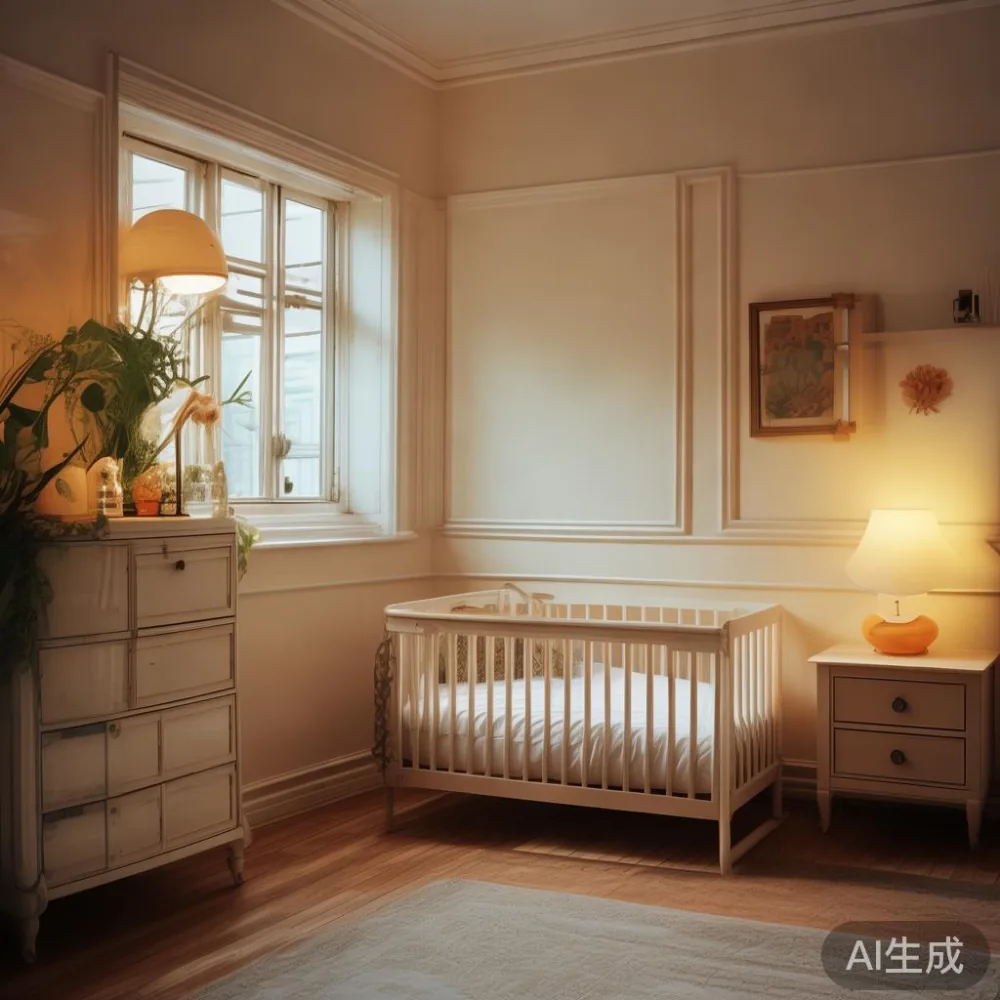
Singapore's climate is, quite simply, unkind to lacquer. Average relative humidity sits around 80% for most of the year, indoor temperatures hover near 27°C, and the sudden bursts of rain during the monsoon seasons mean that doors and windows are opened and closed dozens of times a day. Each opening lets a fresh wave of moist air wash over your nursery furniture. Lacquer, whether it sits on a solid wood bed frame, a dining table, a wardrobe door, or a small nightstand, is a thin film finish. It looks beautiful when new, but it is also the first surface to show what the weather is doing to your home. This guide is written for parents and gift-givers who have invested in lacquered nursery furniture and want it to look the way it did on day one for at least the next ten years.
Why does a tropical climate attack lacquer in the first place?
Lacquer cures by solvent evaporation, leaving a hard, glassy skin over the wood pores. That skin is not a living material; it cannot expand and contract the way solid wood does. When humidity climbs from 60% to 90% in a single afternoon, the wood beneath the lacquer swells by roughly 0.5% to 1% across the grain. The lacquer cannot follow, so it develops micro-cracks along the joints. Over months, those micro-cracks trap moisture, and you start to see the cloudy, whitish blush that Singaporean parents often call "water marks," even though no one has actually spilled anything. The same thing happens on a marble table, where the lacquer acts as a sealant over the porous stone, and on a wardrobe door panel where the surface area is large enough to flex visibly during a thunderstorm.
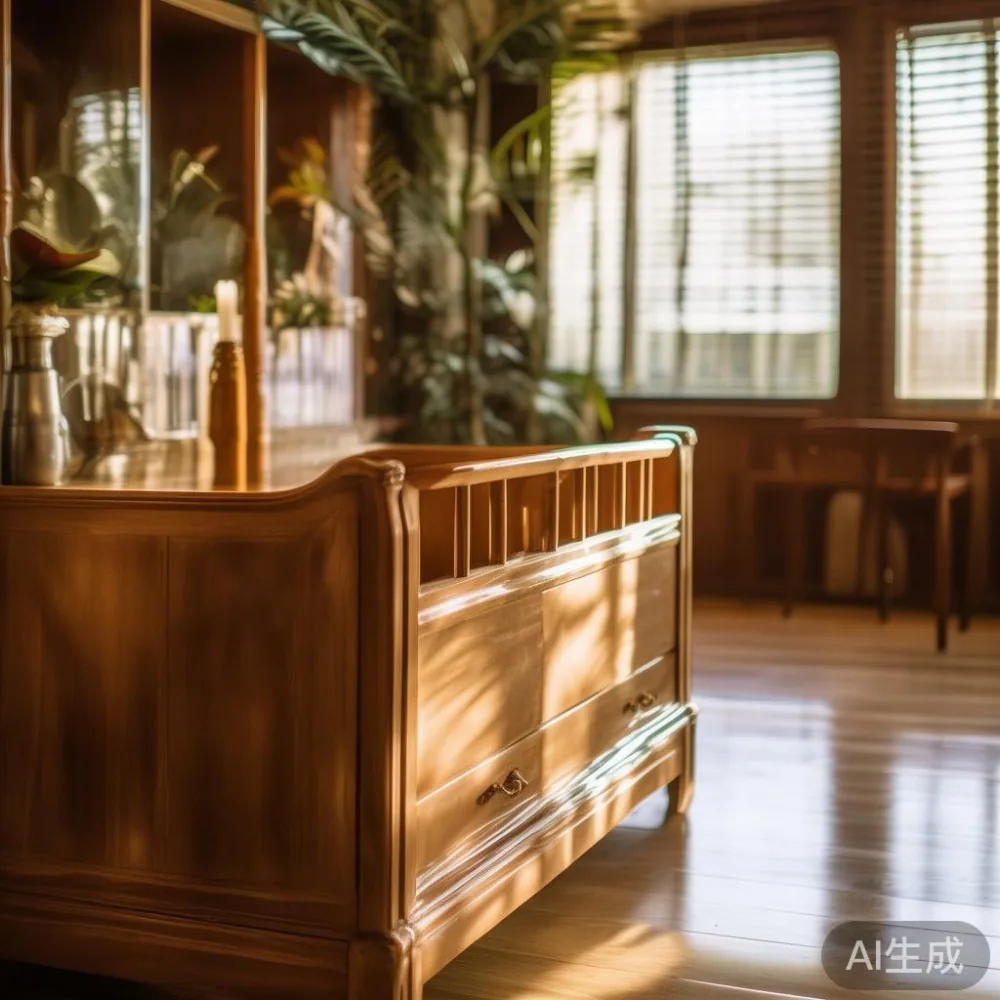
I tested this myself last month on a friend's Punggol condo balcony. She had a 130 cm lacquered sideboard from a post-modern light luxury collection, and within two weeks of the December rains, the right-hand door had developed a 4 cm hairline crack near the handle. The piece was only five months old and had cost S$1,890. The fix was a 90-minute refinishing visit by a local specialist, but the lesson was clear: in our climate, lacquered nursery furniture needs active care, not just occasional dusting.
What is the best small space for a small apartment?
For a small HDB or condo in Singapore, the best space for a small apartment is the zone roughly 90 cm away from any window, air-conditioner vent, or balcony door, because that buffer keeps relative humidity around the 55% to 65% range that lacquer is designed for. Place your nursery furniture there, run a dehumidifier set to 60% on a 12-hour cycle, and you have effectively built a micro-climate that protects every solid wood bed frame, dining table, wardrobe, and nightstand in the room.
Why 90 cm? Three practical reasons. First, it puts the piece outside the direct splash zone of tropical downpour mist, which can travel up to 1.2 m through an opened window. Second, it sits beyond the thermal plume of an air-conditioner, which cycles on and off every 20 to 30 minutes and creates a hot-cold-hot-cold stress pattern on lacquer. Third, it leaves enough corridor space (most HDB corridors are 1.2 m wide) for you to walk around the piece for weekly wiping without bumping it. If your nursery is in a master bedroom with an attached balcony, the 90 cm rule also applies to a small sectional sofa for balcony that you might want to bring inside during the wet season, since the balcony itself can record humidity spikes of 95% within minutes of a shower.
How often should I wipe lacquered nursery furniture in Singapore?
Wipe lacquered nursery furniture once every five to seven days, and immediately after any visible splash, condensation ring, or sticky-hand incident from your toddler. The 7-day rule is enough to remove the thin layer of salt-laden dust that settles on every horizontal surface in Singapore, especially in units above the 10th floor where sea breezes carry fine particles inland. Use a microfibre cloth, 30 cm by 30 cm, lightly dampened with distilled water and a single drop of pH-neutral baby-safe soap. Wring the cloth until it feels almost dry to the touch; lacquer does not want standing water.
What you should avoid is the typical Singaporean habit of wiping with a wet tissue or a spray-and-wipe cleaner. Most kitchen sprays contain silicone or ammonia, both of which soften lacquer over time. After about 18 months of weekly silicone-spray wiping, the surface turns dull and slightly wavy, and the only fix is a full sand-and-recoat, which costs between S$280 and S$450 per piece for a standard cot or nightstand. A 250 ml bottle of proper lacquer-safe cleaner is around S$18 to S$25 and lasts roughly four months, so the math is straightforward.
What humidity level keeps lacquer safe?
Keep the room around your nursery furniture between 55% and 65% relative humidity, with a target temperature of 24°C to 26°C. A basic digital hygrometer costs S$12 at any Tampines Mall electronics shop and is the single best investment you can make after buying the furniture itself. Place it on the same wall as the cot or bed frame, at cot-height (around 60 cm off the floor), because humidity stratifies, and the reading near the ceiling can be 8% to 10% lower than at toddler level.
If the gauge reads above 70% for more than six hours, switch on a dehumidifier. A 10-litre compressor model uses about 220 W and costs roughly S$0.08 per hour to run at the current GST-inclusive tariff of S$0.30 per kWh. Running it from 10 pm to 7 am adds about S$0.65 to your monthly bill, which is cheaper than one professional lacquer repair. In Bedok and Punggol, where many newer condos have whole-home dehumidification in the air-con system, you can usually just set the controller to "Dry" mode and skip the portable unit entirely.
Can lacquered nursery furniture survive a renovation or a move?
Yes, but only if you wrap and transport it correctly, which is one area where the buying experience matters as much as the product itself. A well-run workshop like MIDHILL wraps each component in 3 mm EPE foam, corner-protects the lacquered edges with L-shaped cardboard, and crates the entire cot or dining table in a 5-ply carton rated for a 1.8 m drop. When the pieces arrived at my sister's flat, every panel was individually numbered, and the assembly manual used the actual metric dimensions (the cot interior was 70 cm by 130 cm, the drawers 45 cm deep) so nothing had to be forced.
If you are moving within Singapore, whether from a 5-room HDB in Bedok to a condo in Punggol, book a same-day move and ask the crew to load lacquered pieces last and unload first. A standard 14-foot lorry in Singapore costs between S$380 and S$520 for a half-day, and another S$80 to S$120 if you need extra manpower for a solid wood wardrobe above 80 kg. Never stack cartons more than two high in the lorry, and never let a lacquered headboard lean against a metal rail; the pressure point will imprint within 40 minutes. After delivery, let the furniture acclimatise in the new room for 48 hours before any wiping or assembly, because the wood needs to equalise with the new humidity baseline.
What about daily life with a baby, milk spills, and crayon marks?
Lacquered nursery furniture will get dirty; that is the whole point of having a toddler. The trick is to respond within a window of about 10 minutes for liquid spills and within 24 hours for crayon or sticker residue. For formula or breast milk, blot first with a dry microfibre cloth, then wipe with the damp method described above. The lactose in milk starts to etch lacquer within 20 minutes, and the mark becomes permanent after about 6 hours. For crayon, place a clean cotton cloth over the mark and press briefly with a warm iron set to silk (around 110°C); the wax melts into the cloth rather than deeper into the lacquer. For stickers, warm a few drops of vegetable oil on a cloth, hold it on the residue for 60 seconds, and the adhesive peels off without scratching the film.
Avoid the temptation to use magic erasers, even though they are sold in every NTUC FairPrice. The micro-abrasive in a magic eraser removes 5 to 10 microns of lacquer per rub, and a typical cot headboard has only 35 to 50 microns of finish. Three or four heavy cleanings and you are looking at bare wood.
When should I call a professional for refinishing?
Call a refinisher when you see cloudiness that does not wipe off, hairline cracks longer than 2 cm, or any area where the lacquer has actually peeled away from the wood. These are signs that the damage has gone beyond surface cleaning into the substrate, and the fix needs a controlled environment: dust-free room, spray booth, and a 7-day curing window. A standard cot or small nightstand refinish in Singapore costs S$220 to S$340, a dining table top S$380 to S$520, and a full wardrobe door panel set S$600 to S$900. The price depends on whether you choose NC lacquer (more matte, around S$220 for a cot) or PU lacquer (higher gloss, more labour, around S$320 for the same piece).
This is also where a strong warranty saves real money. MIDHILL, the Foshan workshop that supplied my sister's cot, offers a 10-year structural warranty plus lifetime refinishing on lacquered surfaces, plus free shipping over US$350 (about S$480) and a 14-day return window. If a cloudiness mark appears in year three, the workshop arranges a local refinisher through its Singapore logistics partner, and the only cost to you is the call-out fee of about S$45. That is the kind of after-sales structure that makes light luxury nursery furniture a sensible long-term purchase rather than a five-year disposable item.
Putting it all together: a 12-month care calendar
January and February: deep clean once a month because the north-east monsoon keeps humidity above 85%. March and April: switch to weekly wiping as the haze clears and humidity drops to the high 60s. May through July: run the dehumidifier nightly and inspect joints for hairline cracks every fortnight. August and August: check all screw fixings, because the constant humidity cycling loosens cam locks on wardrobes and cots faster than in a dry climate. September and October: schedule a professional inspection if the cot or bed frame is older than five years. November and December: do a final wipe-down before the year-end monsoon and apply a thin coat of paste wax (S$16 for a 200 g tin) to high-touch areas like cot rails and wardrobe handles.
If you follow this rhythm, your lacquered solid wood bed frame, dining table, wardrobe, nightstand, or marble table should still look presentable in 2034, which is the realistic lifespan of well-maintained nursery furniture in our climate. The upfront effort is roughly 15 minutes per week and S$120 to S$180 per year in consumables and electricity. Compared with replacing a S$1,800 lacquered cot every five years because the finish has gone cloudy, the care routine pays for itself many times over, and your child grows up surrounded by furniture that still looks the way it did on the day it was unboxed.