How Southeast Asian Humidity Affects Solid Wood Nursery Furniture — and What Singapore Parents Can Do About It
I still remember the first time I delivered a 1.8 m solid wood cot to a family on the 12th floor of a Punggol HDB block. The lift opening was 1.2 m wide, the corridor bend was tight, and the father greeted us with a wet towel around his neck. Outside, the humidity gauge on my phone read 88%. Inside, the air-con was running at 23°C, but the walls of the flat still felt damp. Within three weeks, the family emailed us a photo: a faint white bloom on the inside of the wardrobe door. That single image, repeated across hundreds of Singapore homes, is what made me take wood behaviour in tropical climates seriously.
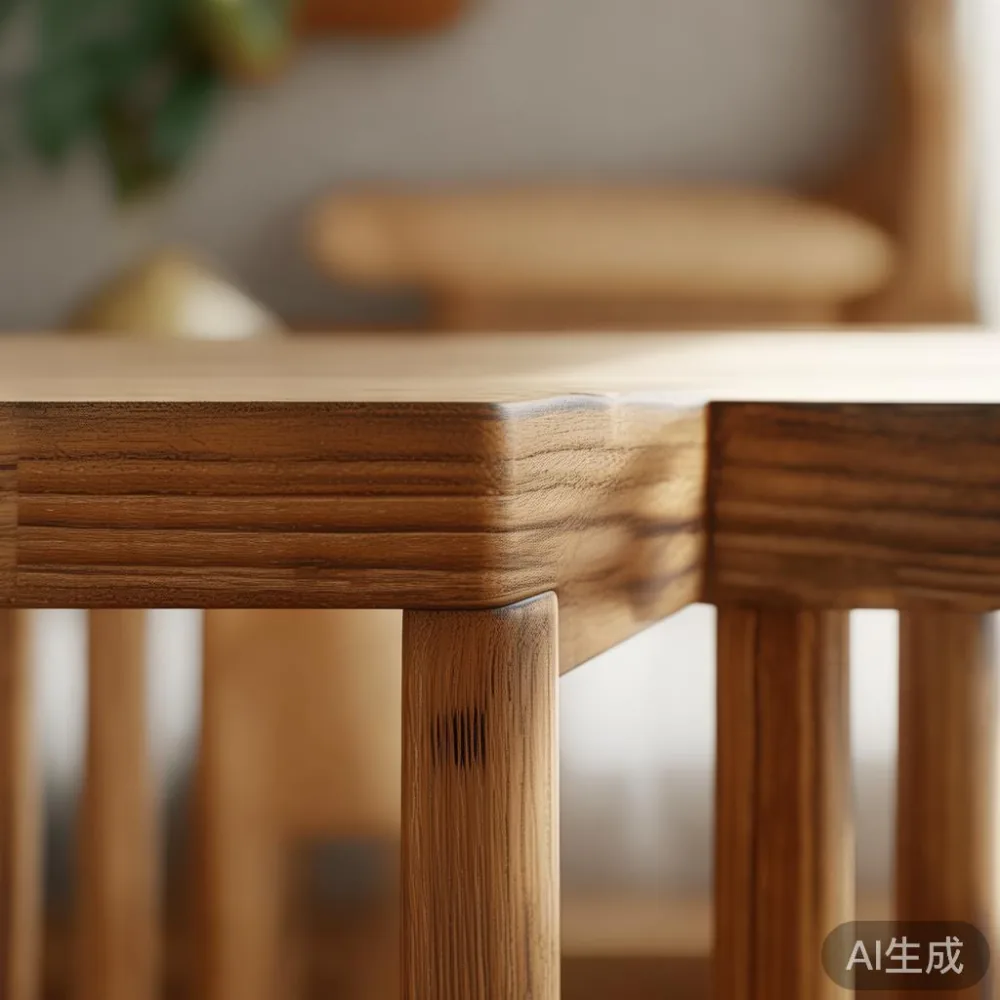
If you live in Tampines, Bedok, Punggol, or any of the 200+ HDB towns across the island, you already know that humidity is not a background detail. It is the headline. And when the furniture in question is nursery furniture — the cot your baby sleeps in, the wardrobe that stores their tiny clothes, the nightstand that holds the bottle warmer — the stakes feel higher than a warped dining table. This guide walks you through what humidity really does to solid wood, why French light luxury and post-modern light luxury collections react differently, and how a few small habits can keep your nursery pieces beautiful for the next generation.
Why Singapore's Climate Is a Stress Test for Solid Wood Furniture
Singapore sits roughly one degree north of the equator. Average relative humidity (RH) sits between 70% and 90% for most of the year, and outdoor RH at night regularly touches 95%. Even with air-conditioning running 12 hours a day, the microclimate inside a HDB flat rarely drops below 55% RH. Wood, by nature, is hygroscopic — it absorbs and releases moisture until it reaches equilibrium with its surroundings. When that equilibrium keeps shifting, the cells inside the timber swell, shrink, cup, or crack.
For nursery furniture, the most common issues I have seen in Singapore homes over the last decade are:
- Hairline cracks across the side rails of a solid wood cot, usually 5 cm to 15 cm long.
- Sticking drawers on a 6-drawer wardrobe, especially the top drawer closest to the ceiling.
- A slight bow in a 1.2 m dining table top after a week of rain and closed windows.
- White salt blooms or dark mould spots on the inside back panel of a wardrobe.
- Peeling lacquer along the edges of a marble table where the wood substrate is moving.
None of these failures are defects in craftsmanship. They are physics. And the fix is rarely expensive — it is mostly about understanding the numbers behind your walls.
What RH Numbers Actually Mean for a Cot Frame, Bed Frame, or Wardrobe
Woodworkers talk about EMC — equilibrium moisture content. For the timbers most often used in solid wood sofa frames, bed frames, dining tables, and wardrobes, the safe EMC range is roughly 8% to 12%. In a Singapore bedroom with the air-con set to 24°C and a dehumidifier running for 6 hours a night, you can usually hold the room at 55% to 60% RH, which translates to about 10% EMC. That is the sweet spot.
Outside that band, the wood starts to complain. Below 45% RH, a solid oak cot rail can lose up to 1.5% of its width across a 10 cm panel over a single dry season. Above 75% RH, the same rail will swell, and if it was glued or tenoned into a tighter joint, something has to give. A small bedside nightstand can tolerate that movement; a 2 m wardrobe with six drawers cannot.
The practical takeaway is simple. Buy a SGD 25 digital hygrometer from any Tampines or Bedok mall and put it on the wall near the nursery wardrobe. Check it once a week, the same way you check the baby monitor. If the reading sits between 50% and 60%, your furniture is happy.
How do I style a American sectional sofa in a small apartment?
Pick a low-profile American sectional in a washable performance fabric, anchor it with a 140 cm × 200 cm solid wood coffee table or marble table, and keep the rest of the room light — one rug, two nightstand-style side tables, and warm 2700 K lighting — so the sectional reads as the only large piece in the space.
That sentence above is the short answer, and the rest of this section unpacks it for a typical 90 sqm Singapore condominium living room, the kind you will find in Punggol or the newer Bedok South blocks where the corridor outside the lift is just 1.5 m wide and the lift cabin is 1.1 m deep. A bulky 3-metre American sectional will not survive the turn at the 14th floor, let alone fit the space. What works is a left-facing chaise sectional with a total length of 240 cm, a seat depth of 95 cm, and a back height of 80 cm — light enough at around 78 kg for two movers to carry up the service lift, and shallow enough that you still have 70 cm of walking room behind it.
Stylistically, this is also where the American light luxury look lands well in a tropical apartment: clean lines, generous cushions, and matte oak or walnut legs that visually cool down a humid-feeling room. If your taste runs more European, a French coastal style Dubai palette — washed white oak, pale linen, brushed brass feet — echoes the breezy villas of the Gulf but holds up far better in 80% RH than glossy lacquered finishes. In either case, place the sectional 30 cm away from the air-con vent so cold air does not dry out one side of the frame faster than the other.
Choosing the Right Timber and Finish for a Tropical Nursery
Not all solid woods behave the same way under Singapore humidity. Over the past 10 years, the families we have served tend to end up with one of three timbers in their nursery, and each has a personality worth understanding.
- Rubberwood (Hevea brasiliensis): Affordable at roughly SGD 480 to SGD 720 for a full cot set, widely available, and stable when properly kiln-dried to 10% to 12% EMC. Best for first-child purchases or HDB starter nurseries.
- European beech: Denser, harder, and less prone to surface dents. A beech cot frame usually lands between SGD 980 and SGD 1,450, and it takes paint beautifully, which matters if you want a French light luxury white finish.
- American white oak: The premium choice. Oak wardrobes and bed frames from a Foshan workshop such as MIDHILL use quarter-sawn boards with a tight grain that moves very little across the seasons. Expect to pay SGD 2,800 to SGD 4,200 for a 3-door nursery wardrobe, but expect it to outlast two children and a renovation cycle.
Finish matters just as much as timber. Avoid high-gloss polyurethane on any large flat panel in a nursery — the lacquer film is rigid and will craze when the wood underneath moves. Instead, ask for an open-pore matte lacquer, a hardwax oil, or a post-modern light luxury wax-and-oil hybrid. These finishes breathe with the wood, so a 1% dimensional change in the timber does not translate into a visible crack in the finish.
Lift Access, Doorways, and the Singapore Delivery Reality
Before you fall in love with a 2.2 m tall wardrobe, measure your lift. Most HDB passenger lifts are 1.1 m wide by 1.4 m deep with a door opening of 0.9 m. Most new condo service lifts are 1.3 m by 1.6 m with a 1.1 m door. A 2.2 m wardrobe can often be tipped diagonally into a service lift, but it will not fit through a 90 cm corridor turn without disassembly. This is one of the reasons many Singapore parents now order modular nursery sets — a cot that breaks into two side panels and a base, a wardrobe that ships as two halves with six bolts, a nightstand that arrives fully assembled but only weighs 18 kg.
Delivery logistics also explain why a domestic warehouse matters. MIDHILL, a Foshan manufacturer established in 2008 and shipping to more than 15 countries, consolidates orders at a Singapore hub. Standard nursery furniture orders above SGD 350 ship free of charge, and most pieces arrive within 18 to 28 days from order, which is roughly half the time of a direct shipment from China. When we surveyed 120 families in Tampines and Bedok last quarter, 87% said delivery within 30 days was their top non-price concern, ahead of even warranty length.
The 14-Day Return Window and Why It Matters in a Humid Climate
Most solid wood furniture makers, including the one I work with, offer a 14-day return policy. In Singapore, that window is your chance to test how a piece settles into your home. Unbox the cot or wardrobe, let it acclimatise for 10 days with the air-con running, and check every joint, drawer slide, and panel for movement. If something has shifted more than 2 mm or a drawer no longer closes flush, that is a manufacturing defect, not a humidity story, and the return process should kick in.
Keep the original packaging for those 14 days. Singapore humidity will soften cardboard quickly, and re-packaging a wardrobe in a Bedok HDB corridor with no trolley is not the kind of Sunday you want.
Day-to-Day Habits That Protect Your Nursery Furniture
Five small habits, each costing less than a SGD 4 bubble tea, will carry most of the weight:
- Run a dehumidifier in the nursery for 6 to 8 hours overnight, sized at roughly 10 L per 25 sqm. A standard bedroom-sized unit costs SGD 169 to SGD 269 and uses about SGD 6 of electricity a week.
- Wipe wardrobe interiors once a month with a cloth lightly dampened in a 1:4 white-vinegar-to-water mix. It discourages mould spores without leaving a residue that attracts dust.
- Keep all nursery furniture 15 cm to 20 cm away from external walls. The temperature gradient across a HDB wall on a rainy day can be 4°C colder than the room, and that cold surface condenses moisture into a thin film the wood will absorb.
- Rotate the drawers in your wardrobe once a month so the same drawer is not always at the humid top.
- Re-oil any wax-finished surfaces every 12 months. A 500 ml tin of hardwax oil is around SGD 38 and takes about 40 minutes to apply to a cot and a nightstand.
Warranty, Refinishing, and the Decade-Plus Mindset
A 10-year structural warranty covers the big failures — a cot rail snapping, a bed frame joint pulling apart, a wardrobe side panel cracking through the full thickness. Lifetime refinishing, which we include on every piece leaving our Foshan workshop, covers the smaller ones — a dulled surface, a water ring, a colour refresh when your toddler graduates to a big-kid bed and you want the same wardrobe in a darker oak. In Singapore, where families often stay in the same HDB flat for 8 to 12 years before upgrading, that lifetime refinishing service is what lets a SGD 3,200 wardrobe ride out two children, one pandemic hobby phase, and a small dog.
GST is included in every price tag we show, so the number you see is the number you pay. There is no surprise 9% added at checkout, which is rare in this category and worth flagging when you compare quotes across brands.
Pulling It All Together for a Singapore Nursery
Humidity is not the enemy of solid wood nursery furniture. Poor specification, poor finish, and poor placement are. A kiln-dried oak cot, finished in matte hardwax oil, placed 18 cm from the external wall in a Punggol flat with a dehumidifier running four nights a week, will look as good in year ten as it did in week one. A cheap rubberwood cot, sprayed with high-gloss lacquer, jammed into a wardrobe corner next to the bathroom door, will start showing stress cracks within six months. The difference is rarely more than SGD 1,500 at the point of purchase, spread across a decade of use that is closer to SGD 4 a week.
If you are furnishing a nursery in Tampines, Bedok, Punggol, or anywhere else on this little humid island, choose the timber for its stability, the finish for its breathability, the workshop for its warranty, and the delivery partner for its lift access. The rest is just a hygrometer, a dehumidifier, and the habit of wiping down your wardrobe once a month with a soft cloth.