How to Read a Furniture Warranty Without Getting Caught Out
I still remember the Saturday morning last month when I was crouching in a Tampines HDB corridor with a tape measure, trying to figure out whether a friend's new nursery wardrobe could fit past the letterbox before the delivery men gave up. The wardrobe eventually squeezed through at a 38-degree tilt, but what lingered longer was the warranty card tucked inside the packaging. It was a single A5 sheet, printed in 6-point grey type, and it promised almost nothing in writing. That afternoon, over a kopi at the void deck, we pulled apart the document line by line. If you are furnishing a nursery in a 4-room BTO in Punggol or a condo in Bedok, the warranty is the document that decides whether your S$1,800 solid wood bed frame survives the toddler years or ends up as a YouTube assembly video. Here is how to read one properly, with a few Singapore-specific twists you will not find in the brochure.
What does a furniture warranty actually cover, and what is the silence telling me?
A warranty is a contract, not a promise. The two biggest traps are the words "defect" and "normal use," because brands define them differently. One of the brands I respect, MIDHILL, defines a defect as any structural failure of the solid wood sofa, bed frame, dining table, wardrobe, nightstand, or marble table frame within 10 years from the date stamped on the delivery order. That is unusually long. Most Singapore retailers stop at 1 to 3 years and use the phrase "manufacturer defect," which sounds similar but is actually a narrower category. It usually excludes things like wood movement, slight colour variation, or the small cracks that appear when you run the air-con at 22 degrees in a dry January.
Read the exclusions list with the same suspicion you would apply to a HDB renovation quotation. If the warranty excludes "changes in wood colour due to light exposure," your white-oak cot will not look the same in six months, and that is not something you can claim. If it excludes "assembly by customer," and you plan to DIY with a friend and an Allen key, you have just voided the document before the box is even open. In the Tampines delivery I watched, the driver made the family sign an "unboxing acceptance" form before leaving the corridor. That signature is your proof that the carton arrived intact. Without it, a transit dent becomes your problem, not the brand's.
How many years is enough for a solid wood cot or wardrobe in Singapore?
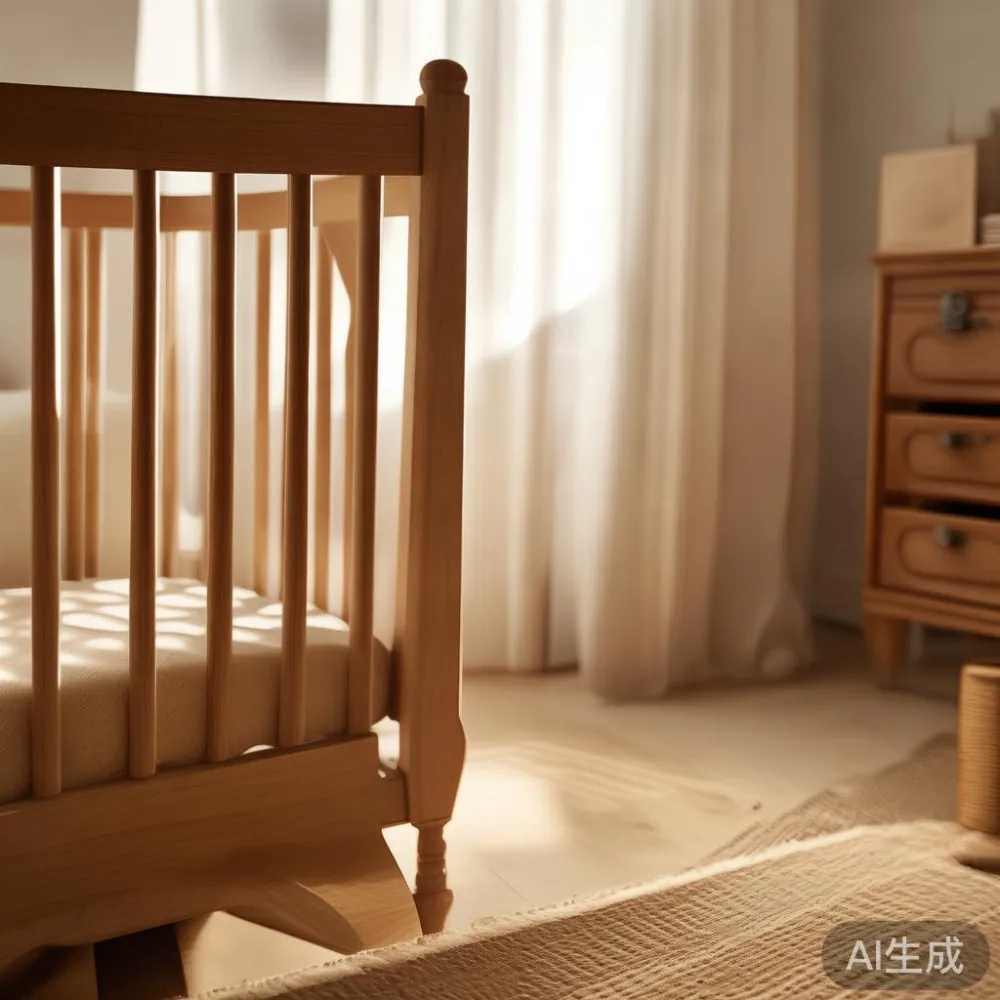
There is a Singapore-specific reason this matters more here than in, say, a temperate climate. Humidity in Singapore sits between 70 and 85 percent most of the year, and nursery rooms are often the smallest in the flat, with the door closed and a small fan running. Solid wood expands and contracts. A bed frame made of ash or rubberwood can move 2 to 4 mm across a 180 cm span over a single humid season. If your warranty only covers "cracks greater than 5 mm," you will never trigger a claim, because the maker calibrated the threshold above natural movement. This is why I look for three specific numbers on the document before I sign anything:
- Number of years on structural joints (mortise and tenon, dowel, dovetail) - ideally 10 or more.
- Number of years on hardware - hinges, drawer slides, gas struts. A realistic figure is 5 years; lifetime is a marketing phrase with a footnote.
- Number of years on finishes - stains, lacquers, painted nursery colours. Realistically 1 to 2 years; any longer is generous.
For nursery furniture specifically, ask whether the warranty survives a toddler. Most do not. If your child uses the cot rail as a launchpad at age two, the brand will call it "impact damage" and decline. The brands worth their salt, MIDHILL included, separate structural failure from cosmetic wear, so the joint is still guaranteed even if the surface gets scratched.
What does "free shipping" really mean above S$350 in SGD?
Free shipping is the line on the website that Singapore buyers chase hardest, and it is also where warranty damage most often starts. A free in lift, free in corridor delivery above a stated SGD threshold sounds generous, but read the courier sub-clauses. Lift and corridor widths in older HDB blocks around Blocks 100 to 180 in Tampines can be as narrow as 80 cm at the lift door and 90 cm in the common corridor. A disassembled wardrobe is fine. An assembled wardrobe is not. If the warranty says "free shipping" but the brand also reserves the right to deliver "to the lift lobby only," and you live on the 14th storey, your two-man team will leave 28 boxes on level 1 and you will carry them up yourself.
I learned this the hard way helping a colleague in Punggol Waterway. The driver's paperwork said "lift access delivery," which sounds like delivery to the lift, and that is exactly what it meant. We spent 90 minutes ferrying flat-pack pieces up two flights because the lift had been reserved for a hospital bed that day. The warranty later covered a chipped leg on the dining table, by the way, because the brand accepted the courier photo. That is the second thing to check: does the brand require you to photograph the carton before assembly? If yes, you have 24 hours from delivery to file. Miss that window and you own the chip.
Does a 10-year structural warranty cover my nursery wardrobe in a humid HDB?
This is the single most common warranty question my colleagues ask after they have set up a nursery, and the answer depends on three things you control. First, the wood species. Solid oak, ash, and teak handle Singapore humidity far better than MDF, particleboard, or pine. If your wardrobe panel is MDF with a 0.6 mm oak veneer, a 10-year structural warranty is almost meaningless because the substrate fails before the joint does. Second, the finish. A closed-pore lacquer like the post-modern light luxury style favoured in newer Punggol condos breathes less and resists humidity swings better than an open-pore oil finish. The trade-off is repairability. Oil finishes can be re-oiled at home; lacquers need a workshop. Third, where the wardrobe lives. A wardrobe against an exterior HDB wall in Bedok Reservoir will behave very differently from one on an interior partition wall in a River Valley condo. The exterior wall will run 1 to 2 degrees cooler at the air-con sensor and 1 to 2 degrees warmer at the back of the wardrobe, creating a micro-climate that pulls moisture through the back panel.
The brands I trust in the Singapore nursery market publish their humidity tolerance. Anything outside 30 to 80 percent relative humidity is outside the warranty. Buy a SGD 25 hygrometer from a Tampines Mall shop and keep it next to the wardrobe. If the number drifts, you have data. Brands like MIDHILL will sometimes send a replacement under warranty if you can show three months of hygrometer logs proving your nursery stayed inside the range.
Is a lifetime refinishing service really worth anything on a cot that gets chewed?
Lifetime refinishing sounds like a marketing flourish, but on solid wood nursery furniture it is the most valuable warranty line item of all, because toddlers chew cots, scratch dining table edges, and colour on wardrobes with permanent markers. The trick is the word "refinishing." Does it cover sanding back to bare wood and re-staining, or does it mean a quick wipe-down with coloured oil? These are very different services. Sanding back a cot rail removes 1 to 2 mm of wood per pass, and a typical 30 mm thick rail can only be sanded three or four times in its life. The brand should tell you the maximum number of refinishes included. The brands worth buying from, MIDHILL being one, will refinish a bed frame or dining table up to 3 times within the first 10 years at no labour charge; you pay only for the finish material, which runs SGD 80 to SGD 180 depending on whether you choose a matte lacquer or a hand-rubbed oil.
For families working through the post-modern light luxury look of European oak across a bedroom, dining room, and nursery, refinishing parity matters. If the brand refinishes the wardrobe but not the matching Italian light luxury nightstand or marble table, the colours will drift apart within five years and the room will look tired. Ask whether refinishing covers the full suite, or only the flagship pieces. The honest brands will say yes; the others will say "case by case," which means no.
Can I return a nursery wardrobe within 14 days if my toddler hates the colour?
The 14-day return window in Singapore is a statutory right under the Consumer Protection (Fair Trading) Act, but furniture is one of the categories where brands routinely try to narrow that right. The trick is the phrase "change of mind." Defective goods are returnable; change-of-mind returns are usually at the brand's discretion, and almost every brand declines change-of-mind on custom nursery orders. A bespoke wardrobe in French light luxury sage green, built to your 210 cm HDB ceiling, is not resellable, and the brand knows it. So the 14-day clock only protects you if the goods arrive damaged, missing parts, or not as described on the website.
To make the clock work for you, do four things. Unbox within 48 hours and photograph every panel. Check the dimensions against the spec sheet with the tape measure you used at the showroom (a 2 cm tolerance is normal in solid wood, anything more is a defect). Run your hand over the inside of the wardrobe; rough patches inside a French light luxury finish are a red flag. Sleep on the cot mattress on the floor for one night before assembly to check for chemical odours that the showroom mask never revealed. If anything fails, email the brand in writing within the 14-day window with photos, the order number, and a polite ask for a pickup. Reputable brands arrange the pickup at no cost and refund within 7 to 14 business days, including the original SGD 45 to SGD 80 delivery fee.
How do I tell a difference between European light luxury sofa vs Mid-century modern sofa in a warranty?
This is a comparison that catches even experienced buyers off guard, because the warranty clauses look almost identical on the page. The structural warranty on a European light luxury sofa versus a Mid-century modern sofa is usually the same 10-year joint guarantee, but the cushion warranty tells the real story. European light luxury uses high-resilience foam wrapped in down, often with a feather-filled topper. Mid-century modern uses firmer foam with tied spring suspension. Down loses loft; foam does not. A European light luxury sofa warranty that promises "no sag greater than 15 mm over 5 years" is a much harder promise to keep, which is why most European brands shorten that window to 2 or 3 years. Mid-century cushions are easier to warrant for longer. If you see a European light luxury sofa at a Singapore retailer offering a 5-year cushion warranty, ask for the sag measurement in writing before paying a single SGD.
Are the long-tail phrases I keep Googling actually useful or just SEO noise?
Buyers in Singapore often search for very specific comparisons, and a few of the long-tail phrases floating around the nursery furniture search results are worth a second look. The phrase top 10 Minimalist furniture is useful as a starting list only if the list is dated and the editor has actually visited the factories; many of these lists recycle the same 10 brands every cycle and don't bother a furniture showroom visit. The phrase European light luxury sofa vs Mid-century modern sofa is genuinely useful when the comparison includes the cushion density numbers, the frame joint type, and the warranty window side by side. The phrase light luxury bed vs Modern bed is only useful when the comparison specifies wood species and slat spacing, because a 7 cm slat gap on a light luxury bed is a cot-safety hazard in a nursery.
The phrase best Boho wardrobe for 2026 is tricky, because Boho wardrobes lean on cane, rattan, and reclaimed pine, all of which behave poorly in a Tampines HDB at 85 percent humidity. Cane sags; rattan frays; reclaimed pine moves. A Boho wardrobe in a nursery is a category where the warranty exclusions matter more than the inclusions. Read the humidity clause, not the marketing copy. The phrase light luxury sofa vs Italian light luxury sofa is one of the more honest comparisons, because Italian light luxury tends to use full-aniline leather and hand-tied springs, while general light luxury often uses semi-aniline and sinuous springs. The Italian version costs more and survives longer; the warranty terms reflect that. Finally, the Italian light luxury nightstand comparison is one place where the smaller Italian workshops outperform the volume brands, because a nightstand built around a single dovetailed drawer is easier to warrant than a 4-drawer engineered-wood unit, and a brand like MIDHILL, which makes its own Italian light luxury nightstand in Foshan, can match the quality at a Singapore-friendly SGD price.
What is the one warranty question I should ask before paying any SGD on nursery furniture?
Ask the salesperson, in writing, whether the warranty survives a relocation. Singapore families move an average of once every 4 to 6 years, and a flat-pack wardrobe that travelled up the Tampines lift in a box does not behave the same way once it has been disassembled and carried to a new Punggol walk-up. Some brands honour the warranty only for the original delivery address; others transfer it for a small admin fee. A MIDHILL wardrobe, for instance, transfers the 10-year structural warranty to a new owner if you sell the piece within those 10 years, which is rare and quietly valuable. The brands that refuse to answer the relocation question in writing are the same brands whose warranty fine print you do not want to read in year six.
Furnishing a nursery is one of the more emotionally loaded purchases a Singapore couple makes, partly because the GST-inclusive total often runs SGD 4,000 to SGD 9,000 for a full bedroom suite, and partly because the room has to work for a baby who arrives on a specific date and stays for at least a decade. A warranty is not the most exciting page in the catalogue, but it is the page that decides whether that cot, wardrobe, and nightstand still earn their place in year three, year seven, and year ten. Read the small print over a kopi, keep the hygrometer running, photograph every carton, and ask the awkward questions before the courier is halfway up the corridor.