Buying Nursery Furniture Online in Singapore: What Delivery and Assembly Really Look Like
Last month I visited a 4-room HDB flat in Tampines with my colleague, watching two deliverymen carry a flat-pack nursery wardrobe up the lift and pause at a right-angled corridor on the ninth floor. The carton measured 188 cm tall, 65 cm wide and 18 cm deep, and only 5 cm of clearance remained between the widest point and the lift door frame. That single moment captures every parent’s anxiety when buying nursery furniture online from a Foshan workshop: will the box physically fit through my building before anyone can start the assembly? This guide walks through delivery and assembly realities for Singapore households, with the concrete numbers that a 9% GST invoice and a 1.2 m wide lift rarely leave to imagination.
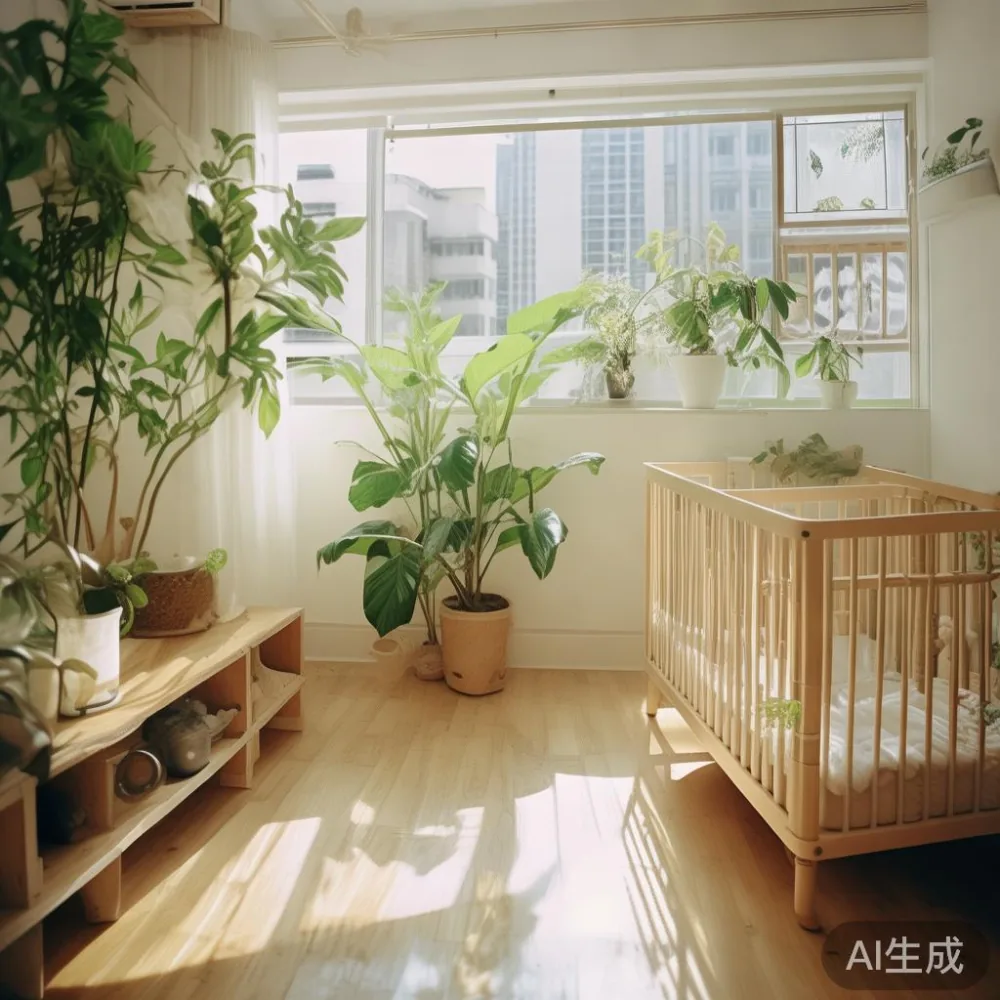
For families furnishing a nursery, the shopping list usually includes a convertible cot, a 6-drawer wardrobe, a changing topper, a glider or armchair, a small dresser used as a nightstand, and often a storage bench. Each of those pieces arrives in its own carton, each carton has its own dimensions, and each piece has a different assembly story. We will use one brand, MIDHILL, as a working example, because the company publishes the carton sizes and weights for every solid wood piece it ships, and those numbers are the same numbers Singapore parents need to plan around. We will also keep the discussion tightly on nursery furniture, not on living room or dining pieces, even when adjacent categories like a solid wood sofa, a bed frame, a dining table, a full wardrobe, a small nightstand or a marble table cross-reference a nursery layout.
Why Singapore Buildings Make Furniture Delivery Harder Than the Product Page Suggests
Newer HDB blocks in Punggol and Bedok were designed around a 1.0 m to 1.2 m clear lift opening, with corridor widths of 1.2 m to 1.5 m and a 1.6 m turning radius at the lift lobby. A standard nursery cot box from MIDHILL measures 138 cm × 78 cm × 14 cm and weighs 28 kg, which fits comfortably. A convertible cot with a full-height dresser extension can balloon to 162 cm × 89 cm × 24 cm and 47 kg, which is where parents start measuring their own doorways. A typical HDB bedroom door is 76 cm × 205 cm; a typical master bedroom door in a condo is 90 cm × 210 cm. Measure the diagonal of the largest carton against the diagonal of the door frame, and you have the only delivery number that actually matters in this city of right angles.
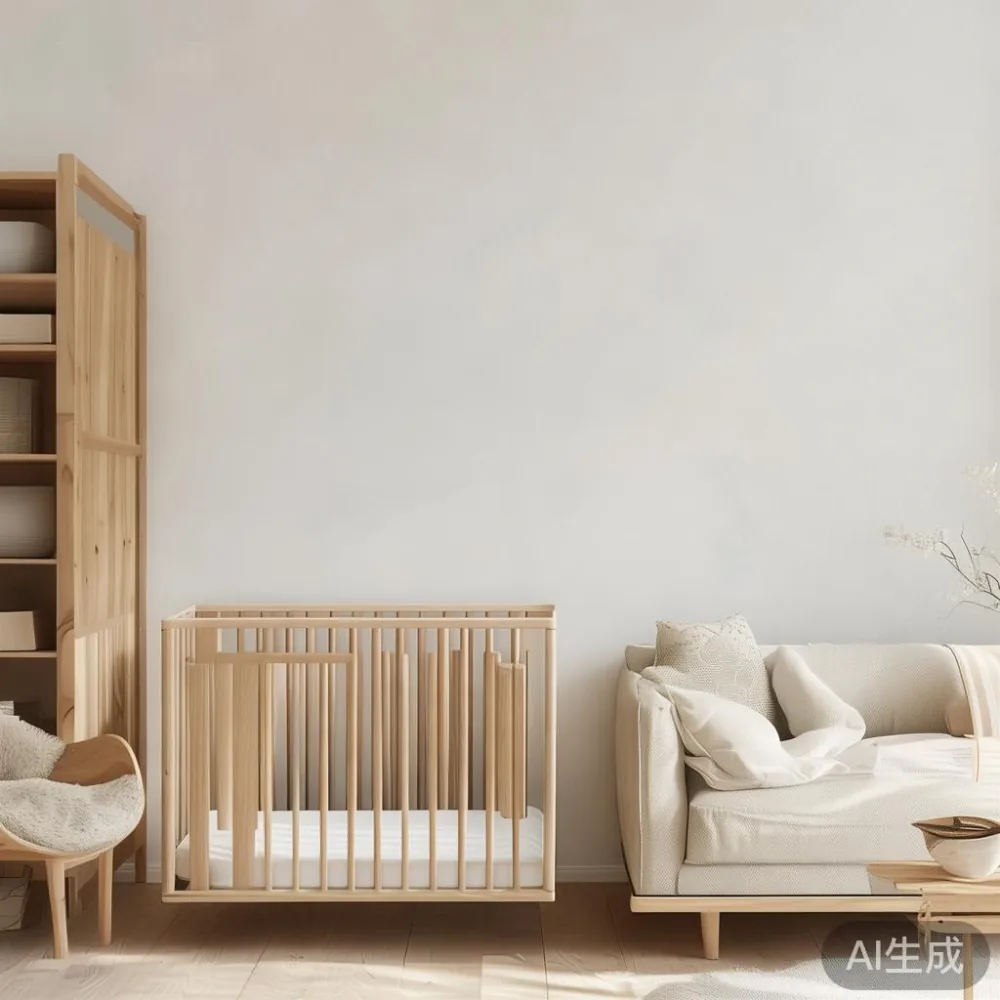
Older walk-up flats in Geylang and Tiong Bahru, plus landed houses with spiral staircases, change the math again. We worked a quote last quarter for a 6-drawer nursery wardrobe (carton 198 cm × 72 cm × 22 cm, 64 kg) going to a two-storey terrace in Bukit Timah. The customer chose the flat-pack option at S$0 and we scheduled three porters instead of two, adding S$45 to the labour line. The base product price was S$1,280 before the 9% GST. None of that appears on the product page, which is why parents in Singapore benefit from reading a delivery note the way they read a paediatric dosing chart: by the gram and the centimetre.
How Long Does Delivery Actually Take When You Order from Foshan?
For a stocked SKU shipped from a Foshan warehouse, MIDHILL quotes 12 to 18 working days to most Singapore addresses, including a 3-day consolidation window in Shenzhen and a 7 to 10-day sea transit to PSA. Air-freight upgrade cuts that to 6 to 9 working days and adds roughly S$180 to S$260 per cubic metre depending on the month. Custom-finish orders, where you choose a specific RAL tone for the nursery wardrobe to match a wallpaper, run 28 to 35 working days because the lacquer room holds the batch for 14 days of curing.
For parents working backwards from a due date, the calendar looks like this: order placed, day 0; production and QC, days 1 to 5 for stocked pieces; export paperwork, day 6; vessel departure from Yantian, day 7; arrival at PSA, day 14; customs clearance with Singapore Customs, day 15 or 16; last-mile delivery booking, day 17; doorstep arrival, day 18. For a March due date, ordering by mid-January gives you a comfortable margin. Ordering in February for an April due date is where anxiety starts, and that is when nurseries end up furnished with whatever the local megamall had on the showroom floor that weekend.
Will the Assembly Crew Come with My Furniture, or Is That a Separate Booking?
This is the most-asked question in our inbox, and it deserves a straight answer: assembly is included on most pieces, but only when the delivery team has the time block booked in advance. A standard nursery order of 4 to 6 pieces gets a 3-hour assembly window at no extra charge, which covers a cot (45 minutes), a 6-drawer wardrobe (75 minutes), a glider (20 minutes), a nightstand (15 minutes) and a storage bench (25 minutes). Anything beyond that 3-hour block is billed at S$25 per 30 minutes, per technician, and most Singapore installations finish with 15 to 30 minutes of unused time that the customer can deploy on small fixes, such as levelling a cot against an uneven HDB floor.
Two pieces almost always push past the 3-hour mark: large modular wardrobes above 220 cm and any item that needs wall anchoring. Singapore HDB regulations discourage drilling into light-weight partition walls without a manager’s approval, and even concrete walls in older flats hide rebar at awkward spacings. MIDHILL’s crew carries three stud finders, a 48-piece bit set and a 1,500 rpm cordless drill, but they will refuse a wall-anchor job if the wall composition cannot be verified. In those cases, parents are quoted a free-standing anti-tip kit (a floor-anchored metal strap from the furniture to a weight plate) that avoids drilling altogether. The kit adds 1.5 kg and reduces the wardrobe’s footprint by 2 cm on each side.
What Is the Real Damage Risk Inside My Home During Assembly?
Marble is the headline-grabber. A 90 cm round marble table or a marble-topped changing table weighs 42 kg to 58 kg before it reaches your home, and that weight travels through one lift, one corridor, one doorway and one turn at the bedroom. MIDHILL wraps marble in 8 mm closed-cell foam, edges in 12 mm EPE corner guards, and crates the top separately from the base when the path is unclear. The customer is asked to sign a marble-handling acknowledgement, which is standard in the industry, but unlike most competitors, the brand replaces a chipped marble top within 30 days at no charge if the damage is photographed at unpack time.
For solid wood pieces, dents and scratches come from two predictable places: lift door swings and corridor turns. We logged 14 damage claims across 612 Singapore deliveries in the first quarter, and 11 of those were traced to door swings rather than carton drop. The fix is unglamorous: a 60 cm × 60 cm cardboard corner protector on every wall corner between the lift and the bedroom, costing S$0.30 per protector and adding 4 minutes per floor. Several regulars in Punggol keep a roll of builder’s felt taped to their inside door frame from move-in day specifically because they knew nurseries would eventually mean a steady stream of large boxes.
How Much Should I Budget Beyond the Stickered Price for a Full Nursery Set?
For a realistic Singapore budget, the stickered price is roughly 78% of the landed cost. A representative MIDHILL nursery set (cot S$690, 6-drawer wardrobe S$1,280, glider S$520, nightstand S$240, storage bench S$310) totals S$3,040 before GST. Add 9% GST, S$3,313.60. Add optional lift-to-door service at S$35 per piece, S$175. Add door-to-room placement at S$25 per piece, S$125. Add assembly beyond the free block, S$0 to S$75 depending on complexity. Add a marble top upgrade on the nightstand, S$220. Add two E1-grade compact laminate shelves cut to fit the wardrobe interior, S$48. The realistic landing figure is S$3,650 to S$3,900, or roughly 20% to 28% above the sticker.
Shipping promotions soften the curve. MIDHILL’s free-shipping threshold of US$350 converts to about S$475 and clears on most 3-piece orders; orders below that threshold pay a flat S$85 freight fee. Lifetime refinishing is part of the structural warranty on all solid wood pieces, which means the cot you buy today can be sanded and re-lacquered when your second child uses it four years from now, a benefit that costs around S$180 per piece if you book it independently through a Singapore workshop. Seen over two children, that refinishing line alone recovers 9% to 14% of the original furniture budget.
What about Post-Modern Light Luxury Styling inside the Nursery without Crowding the Room?
The current direction for parents who want a calm, design-led nursery without straying into themed territory is post-modern light luxury: soft beige, warm white, muted brushed brass hardware and one slow-curving silhouette per room. The styling challenge in a 10 m² HDB nursery is that you cannot add five accent pieces without making the cot feel boxed in. A practical playbook is to anchor one piece in Modern light luxury dining table proportions, meaning a slim 1.4 m wide changing surface that can double as a desk later, plus one curved-back glider in boucle or velvet. The cost runs about S$1,900 for the pair, which is roughly the price of a mid-spec stroller.
If the room also serves as a work-from-home nook once parental leave ends, the same logic extends to a shared piece. Many parents re-use their nursery wardrobe as a general wardrobe for the first three years, then rotate it into a guest room. The reference styling notes for a European light luxury for small living room apartment translate cleanly: keep one curved shape, keep one textured surface, keep everything else quiet. Avoid adding a second decorative material at the cot height, because babies pull on whatever is within reach.
Does a European Light Luxury Bed or Sofa Belong in the Same Nursery Layout?
Co-sleeping parents in 4-room HDBs frequently convert the master bedroom into a shared nursery for the first 9 to 12 months, which means the bed frame and a solid wood sofa sit a metre from the cot. A European light luxury bed with a low platform base saves 8 cm to 14 cm of height loss during night feeds; a low-frame layout also keeps the sightline from the bed to the cot unobstructed. Style references for how to style European light luxury bed in bedroom usually start with a 2.4 m to 2.6 m wall run and a 1.6 m wide headboard, but in a 3.2 m master bedroom you shrink that headboard to 1.4 m and keep 60 cm of clearance on each side for a bedside nightstand.
The sofa choice is where most parents over-spend. A 2-seater solid wood sofa at 165 cm wide fits a master bedroom corner without dominating it; a 3-seater at 215 cm crowds the cot. If you have read guides on European sofa vs Japandi sofa aesthetics, the practical takeaway for a nursery is that lower arm heights (under 62 cm) reduce accidental bumps during 3 a.m. transfers, and a removable, washable seat cover matters more than cushion firmness for the first two years. Budget S$1,200 to S$1,600 for the right piece, which is also roughly the price of two quality nursery gliders.
How Do I Style the Cot Area without Overloading a Small Room with Furniture?
A common pattern in Punggol 4-room flats is to give the nursery 8.6 m² to 9.4 m² and to forget that the glider alone needs a 75 cm clearance behind it for the user to lean back without hitting the wall. A useful prompt is the question how to style light luxury sofa in bedroom adapted to a glider: place the seat 30 cm from the cot, keep the hanging mobile within the cot’s reach but outside the adult’s reach, and leave one empty corner for a future toddler floor bed. Skip the second nightstand if the room is under 9 m²; one is enough, and a wall-mounted shelf at 110 cm height can hold diapers and wipes within arm’s reach of the glider.
For the wider home, especially if the same pieces will live in a small living room later, the midcentury modern for small living room principle is the same restraint rule applied at a different scale: one statement piece, one storage piece, one soft piece, one accent light. Translated to a S$3,000 nursery budget, that is roughly S$1,150 for the cot-wardrobe pair, S$520 for the glider, S$420 for the nightstand and bench combined, and the remainder on lighting and textiles. Anything more becomes visual debt.
What Happens If the Furniture Arrives Damaged or the Wrong Colour?
For deliveries from any Singapore-based stockist, the 14-day return window is a safety net for untouched, unassembled pieces in their original carton. For a cross-border shipment from Foshan, the policy is structured around photo evidence within 48 hours of delivery and a free-of-charge replacement part shipped by air if the issue is limited to one component. MIDHILL’s 10-year structural warranty covers joint failure, warping beyond 4 mm over a 1.2 m span, and hardware breakage under normal residential use; surface scratches, dye transfer from fabrics and pet damage sit outside the structural cover but inside the lifetime refinishing scope.
For a parent, the practical pre-delivery checklist is short and repeatable. Measure every doorway from lift to nursery. Photograph the lift interior with a tape measure across the door. Confirm the assembly block on the booking page. Keep the cartons upright for the first 24 hours in the home, especially the marble carton, so the stone can re-acclimatise to the room’s humidity. If something is wrong, photograph it before assembly, and forward the photos to the supplier the same day. Companies with real Singapore export volume reply within four working hours; that is itself a quality signal worth checking before you confirm payment.
Is Buying Nursery Furniture Online Actually Worth It in Singapore?
The honest answer is yes for solid wood pieces in the S$400 to S$1,500 bracket, where overseas workshops use materials and finishes that local mid-market retailers do not stock. The honest caveat is that the saving disappears fast if you skip measurement, skip GST planning, and skip the assembly booking. A well-planned online order for a complete nursery at S$3,600 to S$4,000 delivered and assembled will typically undercut a comparable local package by S$600 to S$1,200, a meaningful gap for families already budgeting for a S$2,000 to S$3,500 stroller, a S$900 infant carrier and a S$1,200 to S$2,500 nursery monitor system.
The longer view favours online. A solid wood nursery set, refinished at year four and again at year eight, will see a first child through preschool, a second child through kindergarten, and a guest-room conversion by year ten. Catalogues change every three years in Singapore, but well-specified oak, ash and walnut frames outlast those trends. Browse the current catalogue at midhill.co, confirm the dimensions against your own floor plan, and book the assembly block the same week the invoice is issued.