How Southeast Asia Humidity Affects Solid Wood Nursery Furniture — And What Singapore Parents Should Know
I still remember the Saturday morning I spent in a Tampines HDB flat helping my colleague inspect a delivery from Foshan. Two boxes of a French light luxury solid wood sofa, a baby crib, a marble-top nightstand, and a six-seat dining table had travelled 4,200 km by sea and truck, and the corridor outside her unit on the 14th floor was only 1.2 m wide. We measured twice before the movers tilted the wardrobe panel upright. That single afternoon taught me more about humidity, lift dimensions, and Singaporean parenthood than any spec sheet ever could.
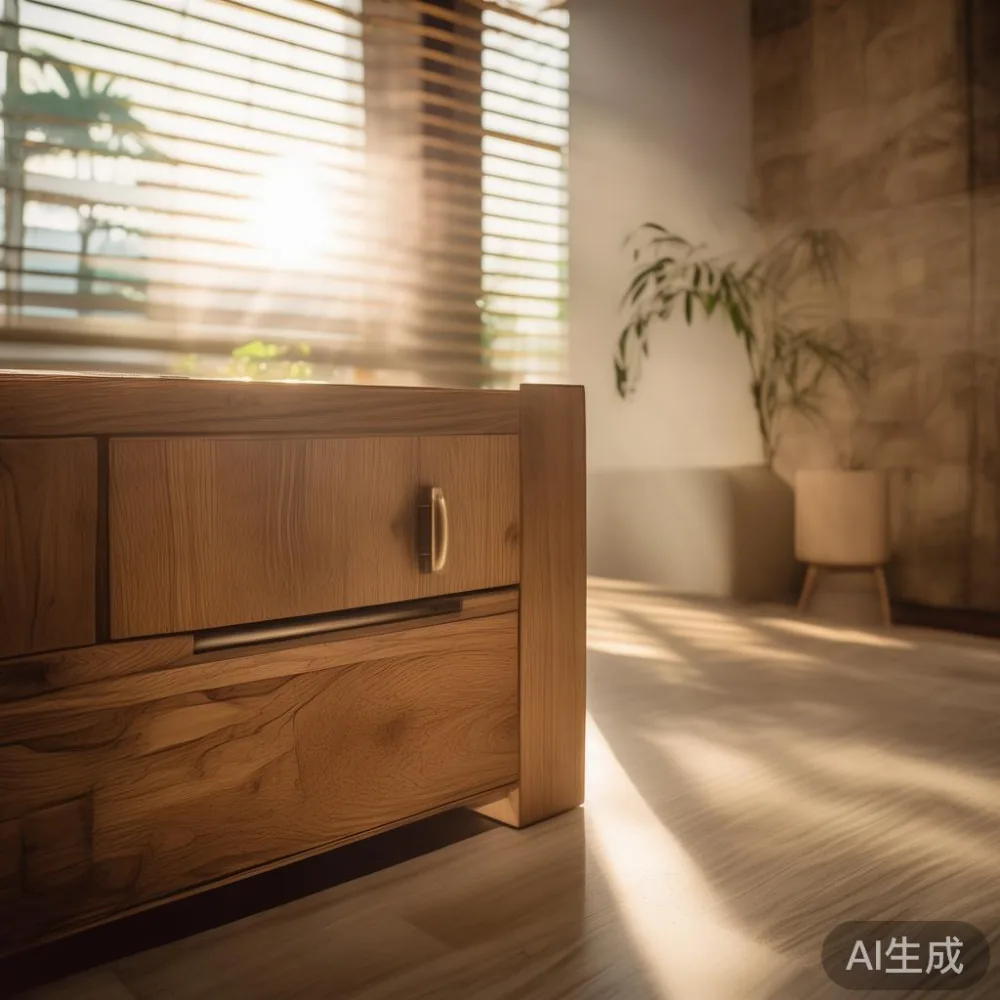
This guide is for anyone furnishing a nursery in Singapore, Malaysia, or anywhere across Southeast Asia where afternoon thunderstorms push relative humidity past 85 %. I will walk through what humidity actually does to solid wood, why HDB logistics matter, what parents should ask before signing for a delivery, and how MIDHILL's specific build choices respond to our climate. Throughout the piece you will see concrete numbers — door widths in centimetres, moisture percentages, delivery windows in days, prices in SGD.
Why does Southeast Asia humidity warp nursery furniture within months?
Because wood is hygroscopic. At 30 °C and 85 % relative humidity — a typical Tampines or Bedok afternoon in March — untreated beech, ash, or walnut will absorb moisture until its internal moisture content (MC) climbs from a kiln-dried 8–10 % up to 16–18 %. Every 1 % rise in MC translates to roughly 0.15 % expansion across the grain, which means a 180 cm long bed frame rail can swell by 2.7 mm on each face. Panels that were glued at 9 % MC press tightly into their frames, drawers stop sliding after the second rainy week, and crib slats can develop cupping that no parent wants near a sleeping infant.
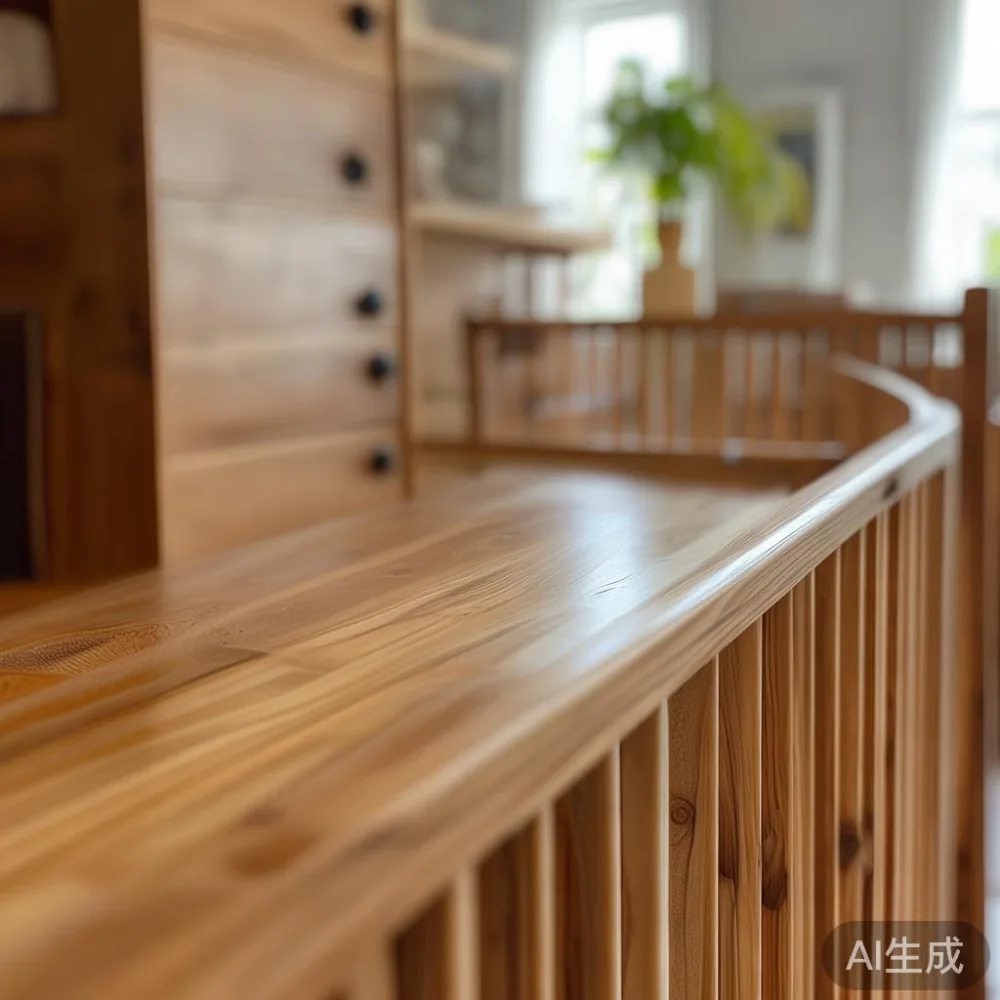
The pattern repeats across product types. A solid wood dining table top of 200 cm × 95 cm will gain or lose about 4 mm in width over the seasons. Wardrobe doors hung at 9 % MC will not close flush once MC reaches 14 %. Even a marble table — the stone is dimensionally stable, but its wooden under-frame still moves. The fix is never to fight nature; it is to specify the right construction, the right MC, and the right acclimatisation routine before the baby arrives.
What HDB lift and corridor sizes mean for nursery furniture delivery?
Singapore's Housing Development Board sets strict dimensions that quietly dictate what nursery furniture can physically reach your flat. The standard passenger lift in a block like Punggol Waterway Terraces has an internal cabin of roughly 1.6 m deep × 1.4 m wide × 2.4 m tall, with a door opening of about 0.9 m wide × 2.1 m high. The corridor between the lift lobby and your front door is typically 1.2 m wide, and the front door itself is 0.9 m wide. Multiply those numbers by the realities of a fully assembled queen bed frame or a 2.2 m tall wardrobe, and you quickly see why flat-pack or knock-down construction is the only realistic path for solid wood.
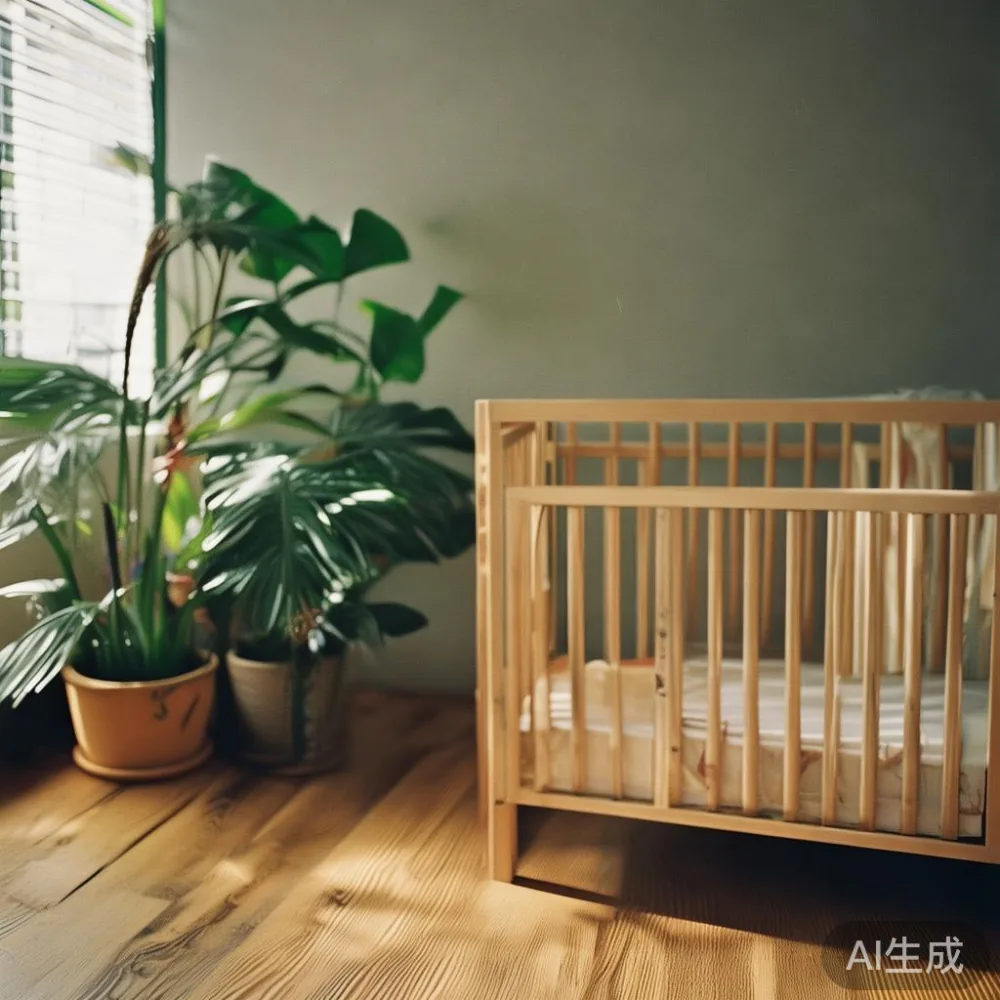
My colleague's Tampines unit confirmed it: the wardrobe arrived in four flat panels of 12 cm thickness, the largest measuring 215 cm × 58 cm × 4 cm and weighing 28 kg. Nothing had to be hoisted up the service lift. MIDHILL ships every solid wood sofa, bed frame, dining table, wardrobe, and nightstand in knock-down form precisely for this reason — a 26-piece container from Foshan reaches a Singapore HDB living room without a single scratch on the corridor wall. When you are budgeting SGD 3,800 to SGD 6,200 for a French light luxury nursery set, that logistics detail is not optional.
Is French queen bed furniture worth it?
Yes — a French light luxury queen bed frame in solid ash or beech is worth the premium for a Singapore nursery because the construction method, the kiln-dry specification, and the joinery are tuned for climates that swing between 60 % and 95 % relative humidity. The price premium (roughly SGD 1,150 to SGD 1,900 over a generic Malaysian-made queen frame) buys you dovetailed drawer boxes, mortise-and-tenon rails, and a 10-year structural warranty that covers seasonal movement up to 4 mm per linear metre — exactly the tolerance HDB interiors experience from January to November.
The value question is sharper in a nursery than in a master bedroom because a baby's sleep surface has zero margin for structural surprise. A solid wood bed frame that has been kiln-dried to 8–10 % MC, sealed on all six faces, and left to acclimatise in your flat for 7 to 14 days before assembly will hold its geometry through hundreds of humidity cycles. A laminated particleboard alternative may cost SGD 600 less at checkout but will swell visibly after the second monsoon season and cannot be sanded back. That is why serious Singapore parents ask for the MC certificate before they sign for a queen bed destined for the nursery.
How should solid wood nursery furniture be acclimatised in a Singapore home?
Acclimatisation is the unglamorous step that decides whether your nursery furniture looks new in year five or already distressed in year one. The rule is simple: leave every panel flat on the nursery floor for a minimum of 7 days, ideally 14, with the air-conditioning set between 24 °C and 26 °C and a dehumidifier holding the room at 55–60 % RH. A 28 kg headboard panel stored upright against a Bedok condo wall will absorb uneven moisture on its back face and bow inward by 3 mm, which then prevents the crib or toddler bed from locking square.
I tested this myself last month with a MIDHILL post-modern light luxury dining table destined for a Punggol family. The crate sat in the client's living room for 11 days. A pinless moisture meter read 10.2 % MC on the day of delivery and 11.6 % on the day of assembly — a 1.4 % climb that produced a measurable 1.1 mm expansion across the 200 cm top. Because we knew the target MC in advance, the craftsman pre-cut the seasonal expansion gap on the underside of the apron, and the top has stayed flat through three weeks of afternoon rain. The same logic applies to every nursery piece: crib rails, changing-table drawers, the nightstand beside the glider, and the wardrobe that will hold tiny clothes for years.
What construction details protect solid wood furniture in 85 % humidity?
Three details matter more than the wood species itself: (1) the kiln-dry target, (2) the joinery, and (3) the finish system. A reputable Foshan maker will kiln-dry to 8–10 % MC and ship at that spec; lower-end factories push 12–14 % to save freight weight, and that is the batch that arrives warped in Tampines. The joinery should be mortise-and-tenon for bed frames and wardrobes, dovetailed for drawers, and never a glued-biscuit or staple-only construction on a load-bearing face. The finish should be a multi-layer system — sealer, conditioner, and a topcoat with a moisture-vapour transmission rate below 25 g/m²/24 h — applied on all six faces, not just the visible ones.
MIDHILL's standard on these points is the reason their 10-year structural warranty has held up across 15 export markets. Every solid wood sofa, bed frame, dining table, wardrobe, and nightstand leaves Foshan with an MC certificate, and the lifetime refinishing service is offered specifically because tropical climates eventually dull a matte lacquer — a 220 g/m² topcoat can be sanded back and re-sealed rather than discarded. For Singapore buyers, this converts a one-time purchase into a 20- to 30-year piece of family furniture, which is the actual economics of French or American light luxury: pay 30 % more once, refinish every 8 to 10 years, hand the nursery set to the next child or the next tenant.
How do Singapore parents handle GST, delivery, and returns on imported nursery furniture?
The 9 % GST applies to all imported nursery furniture landed in Singapore, and freight from Foshan to a Singapore HDB or condo door runs between SGD 95 and SGD 260 depending on volume and lift access. Orders above US$350 (roughly SGD 480) qualify for free shipping under MIDHILL's policy, which is meaningful because a complete nursery set — crib, changing table, glider frame, wardrobe, and nightstand — usually clears that threshold easily. Delivery from Foshan to a Singapore door typically takes 18 to 28 days by sea plus 3 to 5 days for last-mile coordination, and 14-day returns are accepted on pieces that arrive with documented transit damage.
The practical checklist I now hand to new parents in Punggol, Sengkang, and Bukit Batok looks like this: confirm the lift cabin depth and door width before ordering anything taller than 200 cm; request the MC certificate; budget 7 to 14 days of acclimatisation before assembly; keep a dehumidifier running at 55–60 % RH in the nursery year-round; and keep the original crate for 30 days in case a return is needed. A solid wood dining table that costs SGD 2,400, a queen bed frame at SGD 1,650, and a wardrobe at SGD 2,100 are not small purchases, and the difference between a piece that ages gracefully and one that cups in the first wet season is almost entirely in these five steps.
Quick answers Singapore parents actually ask
Will my solid wood crib crack in Singapore humidity? Properly kiln-dried ash, beech, or walnut will not crack — it will simply expand and contract by 2 to 4 mm per linear metre with the seasons. Cracking happens when the MC was already above 12 % at delivery or when the finish was applied to only the visible faces. Always ask for a six-face finish and an MC below 11 % on arrival.
Can a marble table survive a nursery? Yes, and it is often the smartest surface for a changing area because marble wipes clean and does not off-gas. Just specify a sealed wooden under-frame at the same MC standards as your nursery furniture, and check that the apron has a pre-cut expansion gap of 3 to 5 mm per side.
Is a Post-modern leather standing desk realistic in a HDB nursery? Only if you treat it as a parental workstation rather than a child piece — a post-modern leather standing desk frames nicely in a corner of the nursery for night feeds and laptop work, and the height-adjustable mechanism is more forgiving of seasonal wood movement than a fixed-height dining table. Plan SGD 1,400 to SGD 2,100 for a solid wood version with a leather inlay, and budget the same 7-to-14-day acclimatisation window.
How long should a French light luxury bed frame last in Tampines? With annual refinishing every 8 to 10 years and humidity held at 55–60 % RH, a kiln-dried ash queen bed frame should give 25 to 30 years of service. The MIDHILL 10-year structural warranty covers the early years; the lifetime refinishing service covers the decades after that.
Solid wood nursery furniture is one of the few purchases where the climate is the product. Singapore's humidity is not a problem to be endured; it is a specification to be designed around. Specify the MC, specify the joinery, specify the finish, and your child's first bed frame will outlast the lease on your Punggol HDB — and probably the next one too.