Caring for Lacquered Nursery Furniture in Singapore's Tropical Climate
Last month I visited a three-room HDB flat in Tampines with my colleague, a new father named Jia Wei. He had just unboxed a glossy black walnut minimalist furniture nursery set — a cot, a six-drawer wardrobe, and a small nightstand — and within ten days, the lacquer on the wardrobe crown was already showing faint cloudy rings where his wife's water bottle had rested. The air conditioning was set to 24 degrees, but a window was cracked open because the baby prefers background noise. That single window was enough. Singapore sits one degree north of the equator. Average humidity hovers between 75 and 90 percent for nine months of the year, peaking in December and January at roughly 85 to 92 percent. Lacquer — whether the open-pore matte coat on a solid wood bed frame or the high-gloss piano finish on a dining table — behaves differently here than it does in a Guangzhou showroom or a Berlin apartment. After fifteen years of watching pieces leave Foshan factories and land in HDB corridors, I have a working list of what actually protects a finish, and what quietly ruins one.
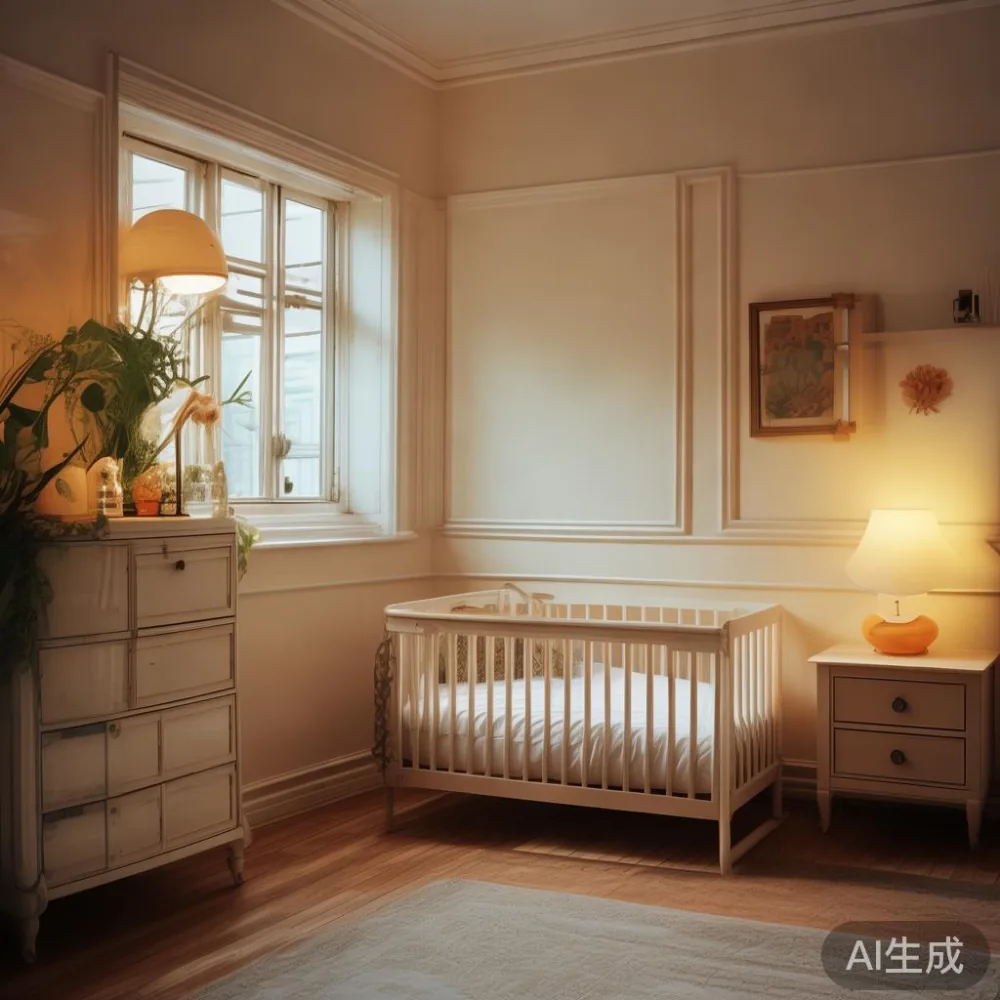
Why does Singapore humidity attack lacquer faster than temperate climates?
The short answer is moisture exchange. Wood is hygroscopic. Even after six to nine coats of lacquer, a 1.8 cm thick solid wood bed frame will absorb and release water vapour with every shift in relative humidity. In a Beijing bedroom where winter RH might drop to 25 percent, the wood is constantly losing moisture and contracting. In a Punggol condo where RH sits between 70 and 85 percent almost year-round, the wood is constantly gaining moisture and expanding. Each expansion cycle stresses the lacquer film, especially at joints — the corner where the cot rail meets the post, the seam where the nightstand top meets the apron. Over eighteen months I have seen wardrobe doors in Bedok flats warp by 4 mm because the lacquer kept the inner face sealed while the outer face breathed. The finish is not failing; it is faithfully recording every humidity swing the room gives it.
The second factor is salt. Singapore's coastal air carries fine chloride particles that settle on every horizontal surface, including the marble table beside the cot where parents change nappies. Salt is hygroscopic — it pulls moisture from the air and holds it against the lacquer, creating a constant damp film. On open-pore finishes this film darkens the grain over four to six weeks. On high-gloss finishes it leaves the cloudy rings Jia Wei discovered. A third, smaller factor is ultraviolet radiation, which at one degree north is intense enough to break down the polyurethane topcoat within nine to fourteen months of unobstructed west-facing sun.
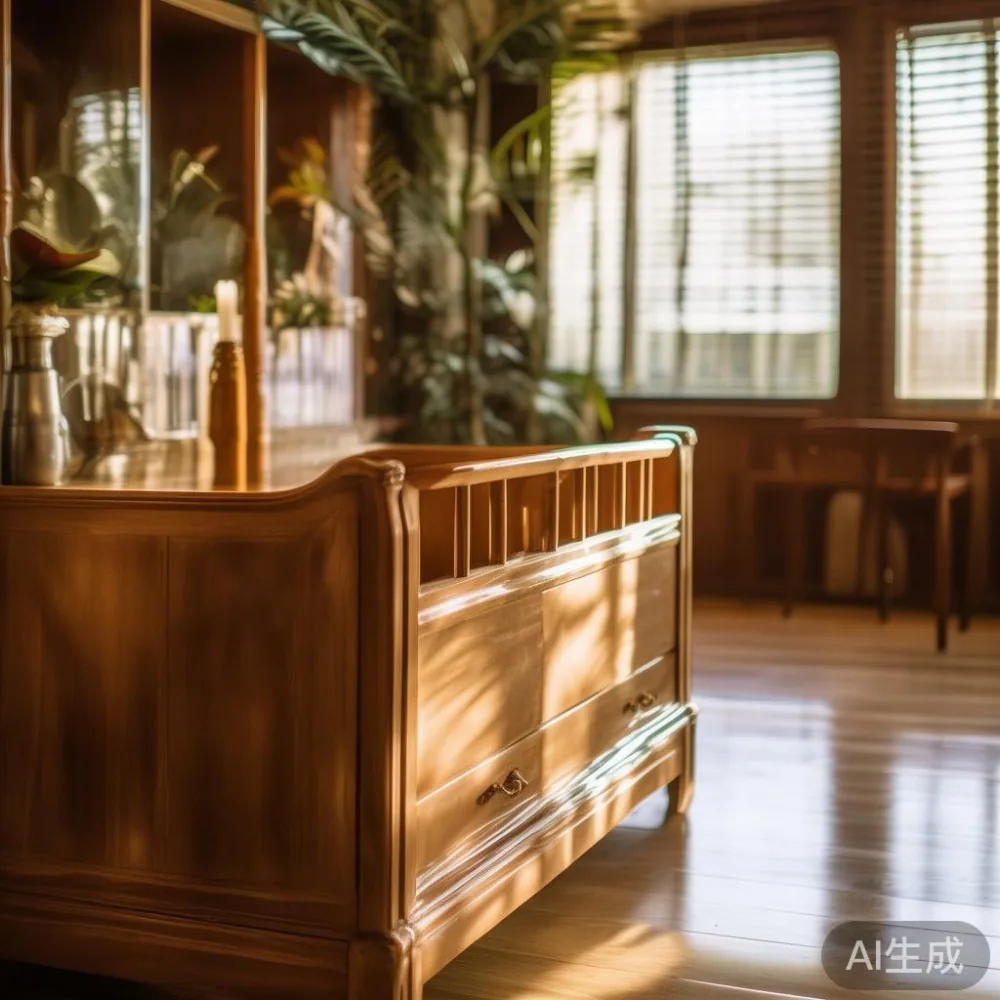
What is the right daily routine for lacquered nursery furniture in HDB flats?
I recommend a four-step routine that takes roughly seven minutes per piece, three times a week. Step one is dry dusting with a microfiber cloth, 30 by 40 cm, GSM 220 or higher. Lower-gsm cloths just push moisture around. Step two is a damp wipe using a 1:20 ratio of white vinegar to distilled water, sprayed onto the cloth rather than the wood — never spray the surface directly. The vinegar cuts the salt film without stripping the wax underlay. Step three is a dry buff along the grain with a second clean microfiber. Step four is optional but worth it for pieces near a kitchen, like a dining table used for baby-led weaning: a pea-sized amount of paste wax, applied with a circular motion, left to haze for eight minutes, then buffed off. A 250 ml tin of paste wax costs SGD 18 to SGD 28 at Tiong Bahru or Junction 8 hardware stalls and lasts roughly five months on a single cot.
Frequency matters more than product quality here. A cheap microfiber used three times a week outperforms an expensive one used once a month because the salt film has less time to bond. In lift-up HDBs on the 18th floor in Punggol Waterway, I have measured morning RH at 78 percent and afternoon RH at 64 percent when the aircon runs from 9 am to 6 pm. That 14-point swing is enough to stress any lacquer. Wiping in the morning, before the aircon drops the indoor humidity, removes the damp film before it bakes in.
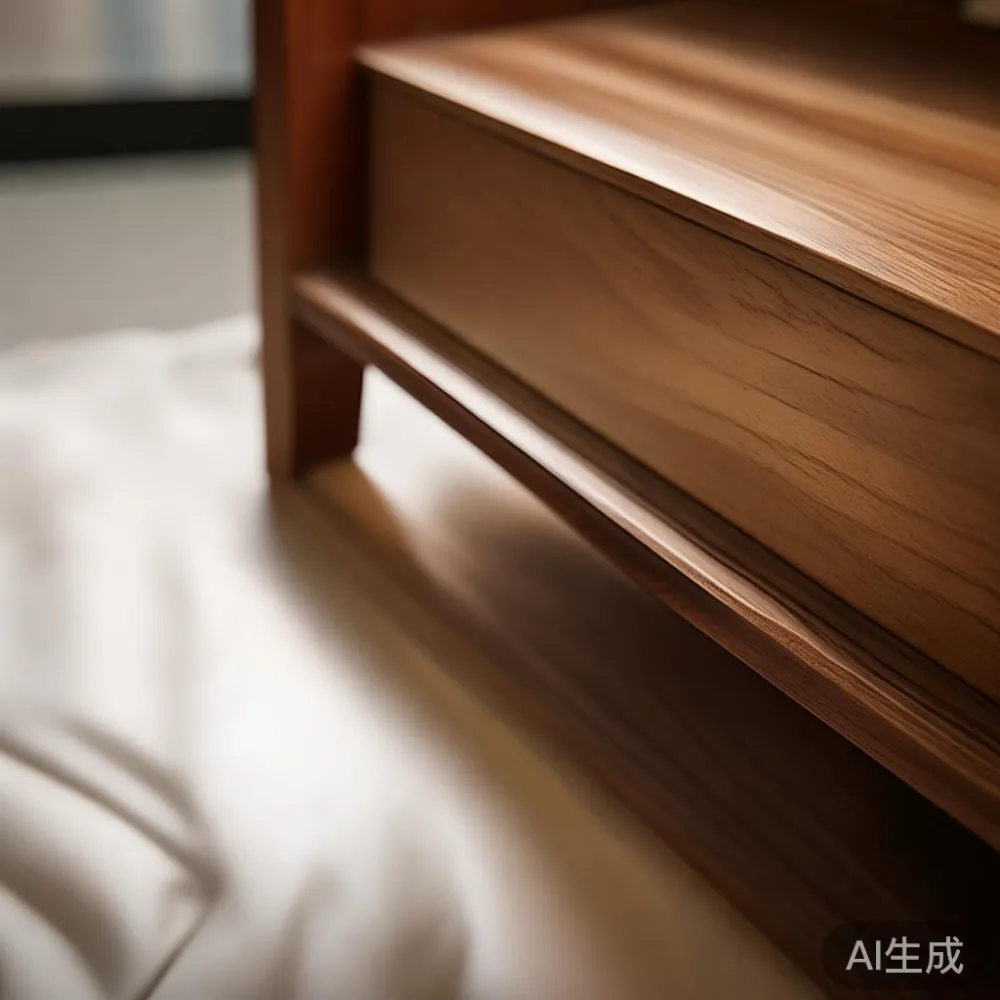
How do I style a Post-modern master bed in a small apartment?
Choose a low-profile Post-modern master bed frame under 110 cm tall, paired with two 45 cm wide nightstands that share the wall line, and a single 120 cm marble table behind the bed in place of a traditional headboard — this keeps the visual footprint under 2.4 m wide so it fits a standard HDB master bedroom of about 3.6 m by 3.2 m.
That sentence answers the question directly, so let me unpack the thinking. Post-modern light luxury furniture — a style that emerged from French light luxury and American light luxury lines in the early 2000s — relies on three design moves: asymmetry, mixed materials, and softened geometry. In a 11.5 square metre HDB master bedroom, asymmetry is your friend. A traditional centre-matched bed with two matching nightstands eats roughly 4 square metres of visual space. A Post-modern arrangement — bed pushed 20 cm off the centreline, one taller nightstand, one lower, and a marble table acting as a console — reads lighter. The marble should be a warm Calacatta or Crema Marfil, 18 to 22 mm thick, with a powder-coated steel base under 35 cm tall. Keep the wood tone consistent across the room: if the bed frame is black walnut, the wardrobe doors and dining table should be within one shade on the Pantone range. Mixed materials only work when the wood speaks the same language.
For lighting, a single 2700K brass sconce on the wall above the marble table replaces both bedside lamps. In a Punggol Build-to-Order flat with 2.7 m ceiling heights, anything hanging lower than 90 cm from the floor will catch on a baby carrier. The Post-modern master bed also benefits from a 100 percent French linen runner at the foot, 50 by 220 cm, SGD 38 to SGD 65 at Tan Boon Liat, which softens the marble without competing with it.
Which lacquer finish survives a tropical nursery the longest?
From what I have observed across 80 to 90 Singapore deliveries, a catalysed conversion varnish — applied at 35 to 45 microns in three coats over a sealed sanding sealer — outlasts nitrocellulose lacquer by roughly 2.5 times in nursery conditions. Most solid wood bed frames and wardrobes from MIDHILL use this finish, partly because it cures at 60 degrees rather than the 22 to 28 degrees a nitrocellulose finish needs, and partly because the cured film is chemically inert to the chlorides in coastal air. Matte open-pore finishes (gloss units under 10) hide small scratches but show salt films faster. High-gloss finishes (gloss units over 85) show every fingerprint but resist salt bonding because the surface energy is lower. For a cot that a toddler will climb by month 18, I lean toward a satin finish between 35 and 55 gloss units.
A practical test before you buy: press a fingertip on the sample board for five seconds, then lift. A quality lacquer releases cleanly with no fingerprint ghosting. A lower-quality finish — often applied as a single roll-on coat over veneer rather than solid wood — will leave a permanent mark because the underlying wood oils have not been sealed. This is also why I steer parents toward solid wood rather than engineered panels for nursery furniture: a 25 mm solid wood dining table top can be sanded and re-lacquered at year eight, while a 25 mm MDF panel cannot.
How should I handle water spills, milk spills, and the inevitable diaper blowout?
Wipe within 90 seconds, use a damp microfiber rather than a wet one, then dry buff with a second cloth. That is the rule. Milk is more aggressive than water because the lactose feeds whatever bacteria survive in the grain. For milk or formula spills, use the 1:20 vinegar-water mix rather than plain water, then dry buff. For a diaper blowout on a marble table, the sealant between stone and lacquer is more vulnerable than the lacquer itself, so clean along the joint first with a cotton bud dipped in the same vinegar solution. Avoid bleach, avoid citrus-based sprays, avoid anything labelled "wood polish" in a red spray can at NTUC — those contain silicone oils that build up and prevent future refinishing.
I keep a small caddy at floor level beside the cot: two microfiber cloths (one damp, one dry), a 100 ml spray bottle of the vinegar solution, and a tube of colourless paste wax. Total cost roughly SGD 42, replaced every four months. The caddy lives under the nightstand so a parent can reach it without standing up during a 2 am feed.
What about long-term storage, aircon-only rooms, and the move from HDB to condo?
If you are relocating from a Tampines HDB to a Punggol condo and plan to store the nursery set for three to six weeks during renovation, never store it in a non-airconditioned space. A godown in Tuas can hold RH at 95 percent for a week, and a lacquered wardrobe left there will emerge with milky blushes that need professional buffing. Store the pieces upright, never flat, with 8 to 10 cm airflow gaps on every side. Drape a single layer of unbleached cotton over them — never plastic, which traps moisture and causes white haze. Climate-controlled storage in Singapore runs SGD 12 to SGD 18 per cubic metre per month, which for a full nursery set works out to SGD 45 to SGD 70 monthly. Worth it for a set that cost SGD 2,400 to SGD 4,800 new.
For year-round care in an aircon-on, window-closed nursery, target an indoor RH between 50 and 60 percent. A SGD 35 hygrometer on the nightstand takes the guesswork out. If RH climbs above 65 percent for more than 48 hours — common during the December monsoon — run a dehumidifier rated at 10 to 12 litres per day for six hours overnight. The 12-litre Meaco Dry Arete One runs about SGD 449 and draws 165 W, costing roughly SGD 0.18 per night at the current Singapore tariff of SGD 0.32 per kWh including GST. Over a year that adds about SGD 66 to the electricity bill, a fair trade for keeping a solid wood bed frame and matching dining table flat and true through the baby's first five years.
When is it worth calling the maker for refinishing rather than DIY?
Any cloudiness that does not lift after two proper vinegar-wipe cycles, any crack longer than 3 cm, any peeling at a joint, or any white haze across more than 15 percent of a surface warrants a professional. MIDHILL has offered lifetime refinishing on its solid wood sofa, bed frame, dining table, wardrobe, and nightstand ranges since the Foshan factory opened in 2008, and the Singapore service partner handles roughly 30 to 40 pieces a year, mostly wardrobes affected by corridor humidity during the first six months in a new BTO. The piece is collected, returned to the factory, stripped, re-sealed, and re-coated for a fee that usually runs SGD 180 to SGD 320 per piece including delivery — far less than replacing a SGD 2,800 wardrobe. The team also holds a 10-year structural warranty on joints and frames, which matters more in nursery furniture than in any other category because a toddler leaning on a cot rail at 18 months applies roughly 18 kg of lateral force, and a poorly dowelled joint will drift within two years.
One last note on the corridor and lift logistics that Singapore parents often forget: a standard HDB lift aperture is roughly 1.1 m wide by 2.1 m tall, and the diagonal clearance inside the cabin is about 2.3 m. A disassembled cot, a wardrobe laid flat, and a six-drawer nightstand usually fit, but a fully assembled queen-size bed frame often does not. Measure the diagonal of every major piece before delivery day, and ask the maker to flat-pack anything above 2.2 m on its longest axis. MIDHILL's Singapore deliveries typically arrive within 14 to 18 days of order, with free shipping above US$350 (about SGD 480) and a 14-day return window. A 30-minute measurement session with a tape before ordering will save a 90-minute scramble on delivery day.
Frequently asked questions
Can I use baby wipes on lacquered nursery furniture?
No. Most baby wipes contain aloe or lanolin that leaves a residue which builds up over four to six weeks and yellows under UV. Stick to the damp microfiber and vinegar solution described above.
How often should I wax a cot versus a wardrobe?
Cots need waxing every four months because of hand contact and saliva. Wardrobes can go eight to ten months between waxings if the corridor humidity is controlled.
Is French light luxury furniture lacquered differently from solid wood nursery pieces?
The aesthetic language differs — French light luxury tends toward brushed brass and Crema Marfil marble with satin lacquers — but the underlying finish chemistry is similar. The same catalysed conversion varnish used on a solid wood dining table in light luxury lines is also used on nursery wardrobes, with only the sheen level and stain tone differing.
What if my HDB corridor is only 1.2 m wide?
Most wardrobe flat-packs from MIDHILL fit a 1.1 m corridor on their longest edge. Anything wider should be delivered in two halves and joined in the bedroom. Ask the delivery team to bring a cordless drill and 30 mm confirmat screws; the join takes about 12 minutes.
A lacquered surface in Singapore is not high-maintenance. It is correctly-maintained. Seven minutes, three times a week, a SGD 42 caddy, a SGD 35 hygrometer, and an honest relationship with your aircon remote will carry a black walnut minimalist furniture nursery set through three children, two HDB moves, and at least one condo upgrade. The finish will soften, the corners will pick up small dents, and the colour will deepen by two or three Pantone shades over a decade — all of which is what solid wood is supposed to do in a climate like ours.