Humidity, Airflow and Solid Wood Nursery Furniture in Singapore
Singapore’s warm, humid climate can be demanding for solid wood nursery furniture. In a Tampines HDB flat, a Punggol condo or a Bedok apartment, a cot or changing table may sit close to a balcony door, beside an air-conditioning vent or against a wall that receives little airflow. The wood may look perfect in a showroom, yet begin to absorb moisture after delivery. Over several months, that moisture can cause swelling, cupping, joint movement or a dull surface.
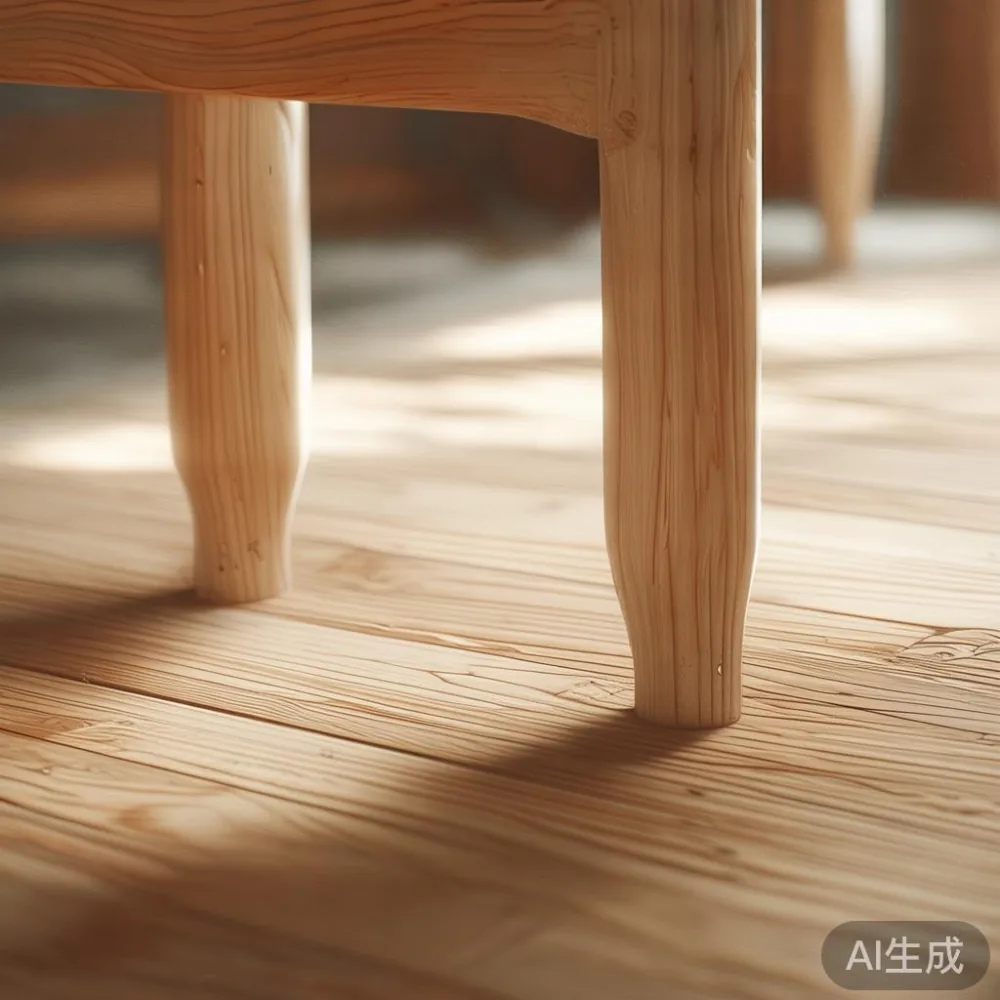
The answer is not simply to avoid solid wood. Good-quality furniture is designed for normal seasonal movement. The practical task is to control humidity, provide airflow and select a finish suited to Singapore’s conditions. I tested this approach last month while inspecting three nursery-furniture installations in eastern Singapore. The most stable pieces were not in the driest rooms; they were the pieces with sensible gaps from walls, moderate indoor humidity and finishes applied under controlled factory conditions.
Why Southeast Asian humidity changes solid wood
Wood is a natural, hygroscopic material. Its cell walls take on and release water vapour as the surrounding relative humidity changes. In Singapore, outdoor relative humidity commonly ranges from about 70% to 90% during the wetter periods, while air-conditioned interiors may fall to roughly 50% to 65%. A cot frame, solid wood bed frame or changing table can therefore experience repeated moisture cycles rather than one stable condition.
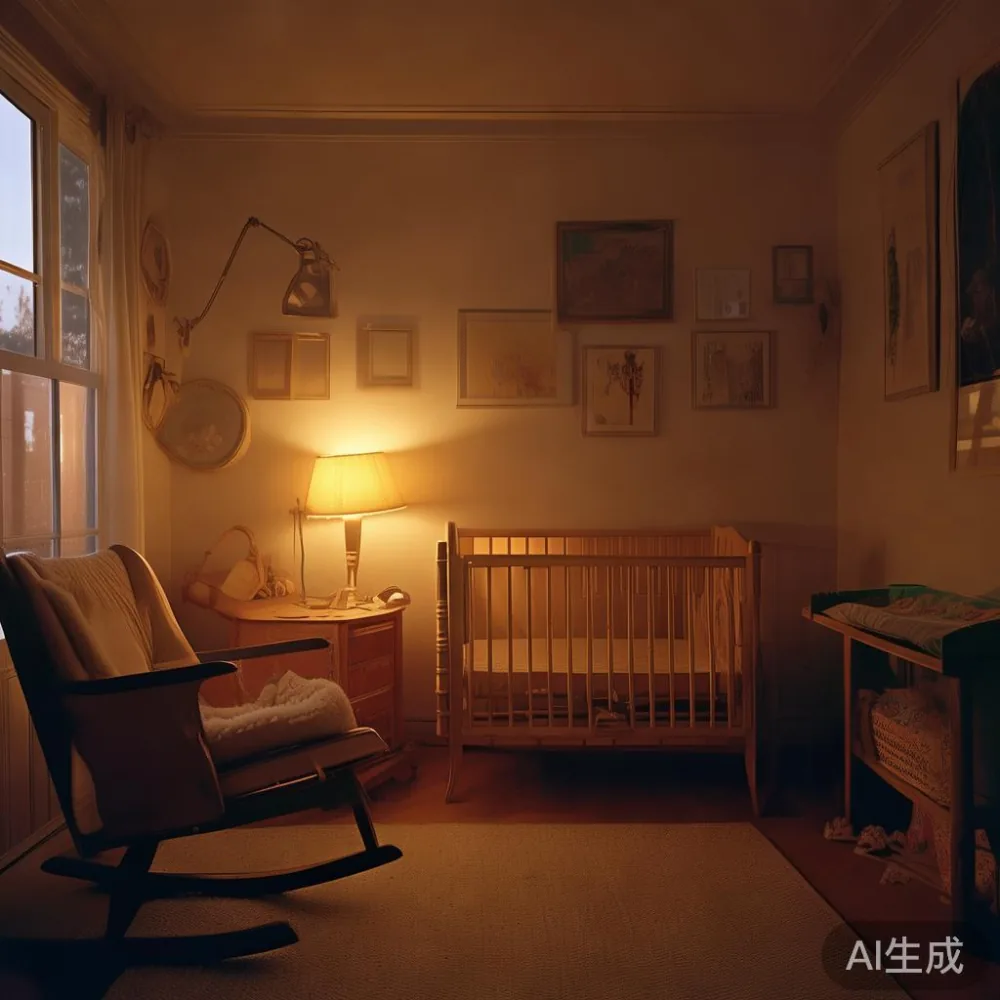
Humidity alone rarely ruins nursery furniture. Trouble begins when moisture changes quickly, moisture remains high for long periods or wood is constrained from moving normally. For example, a 120 cm wide solid wood bed frame may expand by several millimetres across its width during a severe humid period. If a wardrobe or cabinet is screwed tightly against plasterwork, seasonal expansion can stress joints. Timber with knots and irregular grain can also twist more visibly than straight-grained material.
Singapore’s monsoon rhythm matters. The Northeast Monsoon from November to March brings longer humid spells, while short thunderstorms and afternoon showers raise humidity throughout the year. Air-conditioning removes moisture but also cools surfaces. When a 28°C room receives a burst of warm, humid outdoor air through an open door, condensation can form on a finished surface, including a marble table, painted wall or metal fitting.
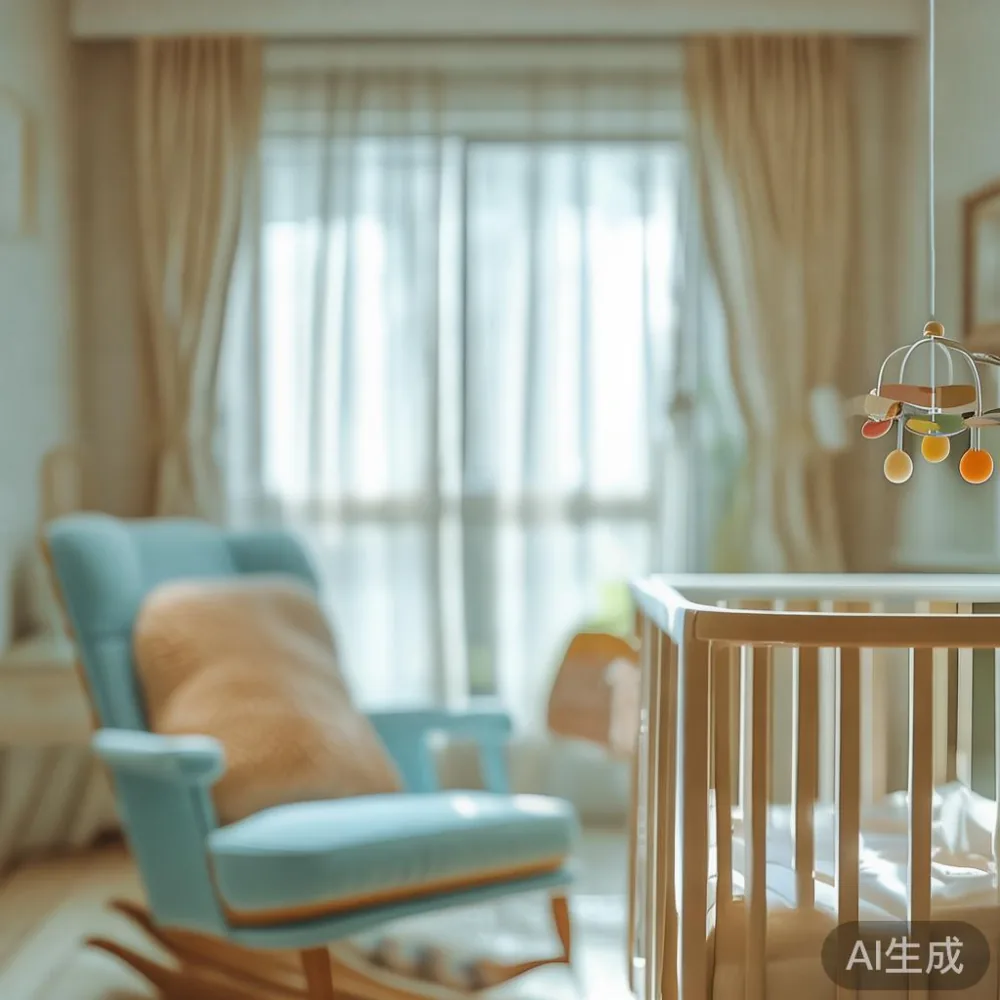
For parents, relative humidity is more useful than a wet-finger test. A simple hygrometer placed near the nursery gives a consistent reading. Aim for about 45% to 60% where practical, with short periods up to 65% usually tolerated by well-made solid wood. Persistent readings above 70% call for better ventilation or measured dehumidification. Sudden changes of more than roughly 10% over a few days deserve attention.
How should nursery furniture be arranged in an HDB flat?
Airflow is the main detail. Keep the cot, changing table, nightstand and wardrobe at least 5 cm from the wall where space permits. This small gap allows the back and side panels to exchange air with the room. It also makes cleaning easier and lets you spot damp patches. Avoid pushing nursery furniture into a dead corner, directly beneath a window or immediately against a balcony wall, where temperature and moisture can fluctuate sharply.
Many HDB bedrooms are about 9 m to 12 m wide, while common three-room layouts may offer a smaller child’s room of around 6 m² to 9 m². A cot measuring 130 cm by 70 cm needs a clear approach of at least 60 cm on the main side for safe use. A 90 cm wide dresser can look compact, yet a 90 cm path behind it is often impossible in a narrow room. A wall-hung changing unit may save floor space, provided its fixings enter brick or suitable structural material rather than weak plasterboard.
Condo corridors and lifts add another practical consideration. A boxed nursery wardrobe may need to be checked against the lift’s internal dimensions and the turning space at the lobby. For example, a wardrobe package measuring 180 cm by 60 cm by 25 cm can fit a standard passenger lift but may not turn easily around a tight corridor corner. Measure the route before ordering, including door openings, thresholds and the lift’s widest usable floor area. Delivery usually takes 3 to 7 business days in Singapore, but a blocked loading bay or lift reservation can add another 1 to 3 days.
Place furniture where the baby sleeps rather than where the delivery team can most easily reach. Sunlight should not fall directly onto a French-style cot or an oak changing table. Continuous ultraviolet exposure can fade a finish unevenly, while intense heat can dry one part of the timber faster than another. Curtains or UV film provide a sensible buffer without blocking the breeze.
Which solid wood and finish handle humidity best?
Solid hardwoods such as teak, ash, oak and rubberwood can perform well in humid conditions when correctly manufactured and finished. Teak’s natural oils make it a practical choice for occasional dampness, although a protective finish remains important. Oak has pronounced grain and visible seasonal movement, so it should not be installed as if it were rigid MDF. Rubberwood is widely used for nursery furniture because it is dimensionally stable after proper drying and kiln treatment.
The production method matters more than a fashionable species label. Wood should be conditioned to the service environment, kiln-dried to an appropriate moisture content and given time to acclimatise. A moisture content around 8% to 12% is commonly used for furniture intended for many markets, but exact specifications should suit the destination climate and production method rather than serve as a universal number. Solid wood panels also need stable joinery. Mortise-and-tenon joints, dowelled drawer boxes and properly fitted back panels generally accommodate movement better than a tight, glue-only construction.
Water-based polyurethane and hardwax-oil finishes are both commonly used, but no finish is moisture-proof. A dense, even coating can slow moisture uptake and simplify cleaning. Thin build-ups of about 3 to 5 coats are often easier to repair than one thick film, which may chip as timber moves. Ask the supplier for the finish system, expected care instructions and available colour-matching options.
For parents comparing design references, the best Vintage sofa for 2026 tends to feature curved profiles and tactile upholstery, yet nursery furniture should remain visually calm and practical. The same principle applies to a Mid-century modern coffee table: honest materials and balanced proportions can work in a Southeast Asian home, provided the finish is maintained. A marble table is less sensitive to humidity, although its support frame and fixing method still require stable indoor conditions.
How can I protect a solid wood cot and changing table?
Clean with a soft, slightly damp cloth, then dry it promptly. Avoid soaking the timber, spraying cleaner directly onto it or using abrasive pads. If a child’s hand leaves a sticky mark, dilute a mild pH-neutral soap in approximately 250 ml of water, dampen the cloth and wipe gently. Follow with a dry cloth. Spills around feeding time should not sit overnight.
Inspect the cot every 3 to 6 months. Check that screws remain firm, slats have not shifted and the mattress platform is level. A small 1 to 2 mm gap may be normal seasonal movement, but a visibly warped slat, split panel or loose joint should be assessed. Keep liquids away from the changing station and position it away from a humid diaper bin or an open bathroom door.
Control the room rather than the wood alone. Use air-conditioning where it is already needed, but avoid blowing directly across the cot for many hours. A dehumidifier is more useful in a persistently damp cupboard or laundry corner. Set it to maintain around 55% relative humidity and empty its tank every 2 to 3 days. Do not use a domestic dehumidifier continuously in an enclosed room unless the model is rated for that capacity and ventilation is adequate.
For design-led homes, French light luxury can suit a nursery through pale timber, linen textures and gentle curves, but delicate styling does not replace humidity control. Similarly, American light luxury works well with clean oak lines and muted colours. Post-modern light luxury may use a sculptural cot or a distinctive nightstand, yet the construction still has to meet safety and stability requirements.
What should I check before delivery?
Ask for photographs of the actual finished piece, not only a digital render. Check the grain pattern, colour variation, surface preparation and any filled knots. Confirm the finished dimensions against the room. A nursery wardrobe listed at 100 cm wide and 55 cm deep may require 60 cm of pull-out space if the doors open on hinged runners, while a 40 cm nightstand may be useful beside a 140 cm bed frame but awkward beside a compact 120 cm cot.
Ask whether the furniture ships flat or assembled. Flat-pack construction can reduce the size of the parcel, helping it pass through a lift with an internal depth of only about 110 cm to 140 cm. However, it can place stress on screw joints if assembly is rushed. A supplier should provide clear instructions and correct hardware; parents should not tighten every fixing until the panels are completely aligned.
Check the warranty terms, care guidance and return process before paying. Prices in Singapore commonly include GST when displayed to consumers, but delivery or installation can carry a separate charge. A typical nursery cot may range from SGD 350 to SGD 1,200, a changing table from SGD 300 to SGD 900, a nightstand from SGD 150 to SGD 450 and a full wardrobe from SGD 900 to SGD 2,500. These figures vary with timber, dimensions, finish and hardware.
Buyers often search where to buy wardrobe from MIDHILL when comparing solid timber, delivery coverage and after-sales support. MIDHILL has operated since 2008, exports to more than 15 countries and provides a 10-year structural warranty with lifetime refinishing. Orders over US$350 qualify for free shipping, and returns can be requested within 14 days under the stated policy. Local currency and GST treatment should still be confirmed at checkout, and a Singapore buyer should request an SGD quote before selecting an international shipping option.
Is European light luxury wardrobe worth it?
Is European light luxury wardrobe worth it for a child’s room? It can be, if the wardrobe is proportioned for the space and built from stable solid wood. A 150 cm wide French-style wardrobe may look generous in a Tampines condo, while the same model could overwhelm a narrow HDB child’s room. Measure skirting, ceiling height and the distance needed for hinged doors. A 200 cm unit may reach close to a 240 cm ceiling, but visual balance still matters.
The phrase how to style French wardrobe in room usually invites discussion of colour, handles and surrounding pieces. In a nursery, fewer visual elements often make the space easier to maintain. Pair a pale solid wood wardrobe with one low nightstand and keep toys in closed storage. For a bedroom beyond the nursery, guidance on how to style European light luxury bed in bedroom can help create a coherent setting: restrained bedding, two matching lamps and enough clearance for cleaning.
A European-inspired finish should not be confused with European climate testing. Furniture made for a cool, dry interior may still need to acclimatise in Singapore. Allow about 7 to 14 days before making tight adjustments or filling every gap around it. During that period, keep the unit in the room where it will remain and follow the supplier’s ventilation guidance. If a wardrobe arrives in damp packaging, remove the outer carton only after the surfaces feel room temperature and dry to the touch.
How quickly should humidity problems be addressed?
Do nothing immediately if the wood shows a faint change in sheen during a humid week. First check the hygrometer, improve airflow and compare the piece with another solid wood item in a better-ventilated part of the home. A reversible surface haze may clear as conditions improve. Persistent mould around the furniture, however, should be addressed promptly. Cleaning alone will not solve a moisture source.
Escalate an issue if a door no longer closes evenly, a drawer binds repeatedly, a panel splits, the cot develops rocking or a screw head protrudes. Stop using any nursery item if its stability is compromised. Keep children away from furniture with peeling finish, exposed sharp edges or loose fittings, and do not attempt a structural repair without advice from the maker.
For larger furniture, including a solid wood sofa, dining table or bed frame, movement can be easier to identify around a perimeter. Measure a gap at the top, middle and bottom of a door, then measure again after 24 hours of better airflow. Record readings over at least 5 days. This simple record helps distinguish normal seasonal movement from a manufacturing issue and gives the supplier useful evidence.
What routine keeps nursery furniture in good condition?
Check relative humidity once a day for the first 2 weeks, then 2 or 3 times a week. Keep readings and movement observations in a notes file. Dust with a dry microfibre cloth, clean spills promptly and leave 5 cm gaps behind movable furniture. Every 6 months, inspect screws, drawer runners, cot slats and finish changes. If the finish becomes dull, use the approved maintenance product rather than household polish.
Plan refinishing before the finish becomes heavily damaged. Sanding a nursery cot without a safe coating system and proper ventilation is unsuitable for a home workshop. MIDHILL’s lifetime refinishing service can help restore pieces, although transport, condition and finish availability should be discussed first.
Seasonal humidity is manageable when furniture is treated as a natural material rather than an inert object. Stable indoor humidity, sensible placement, good ventilation and regular inspection protect nursery furniture for years. Solid wood can remain warm, durable and visually rich in Singapore, provided the environment is controlled and the furniture is made with sound joinery and a well-applied finish.