Caring for a Lacquered Surface in a Tropical Climate: A Singapore Nursery Furniture Owner's Guide
If you have just moved into a resale HDB flat in Punggol or a new condo in Tampines and your nursery furniture arrived in a wooden crate two weeks ago, you already know the truth about Singapore: 80% relative humidity at 32°C is normal for at least nine months a year. That figure is not a marketing line — it is the average my colleague logged on a calibrated hygrometer inside a 92 sqm four-roomer in Bedok from March through November. A lacquered solid wood dining table or a piano-gloss wardrobe can look showroom-fresh on day one and start showing micro-bubbles, white haze, or edge-peel by month six if you ignore what is happening in the air around it.
This guide is written for parents styling nursery furniture — cots, changing tables, low nightstand units, small bookshelves — who also tend to invest in larger matching pieces from the same brand: a solid wood sofa frame, a queen-size bed frame, a six-seater dining table, and a three-door wardrobe. The care rules below apply to every lacquered surface in the flat, which is why we will keep moving between the nursery and the living room while keeping the focus tight on what moisture, UV, and daily handling actually do to a French light luxury or American light luxury lacquer finish. If you are asking whether the is French wardrobe worth it conversation extends to humid-Singapore durability, the answer is largely about lacquer chemistry, not country of origin, and the rest of this article explains exactly why.
Why Singapore's Climate Is Harder on Lacquer Than Guangzhou or Hangzhou
Lacquer — whether piano-gloss polyester, acid-catalyst, or water-based acrylic — is a film that swells, softens, and slowly cures over years. In a Foshan finishing room, a board sits at 22°C and 55% RH while six coats are laid down, then oven-cured for 48 hours. The moment that same board leaves the factory and enters a Tampines corridor that has been air-conditioned to 24°C but dews up at 70% by 7 a.m., the wood substrate begins a slow two-way conversation with the air. Solid hardwoods used in nursery furniture — beech, ash, rubberwood, white oak — gain or lose 2–4% moisture content across a season. The lacquer film can stretch about 1% before it loses adhesion.
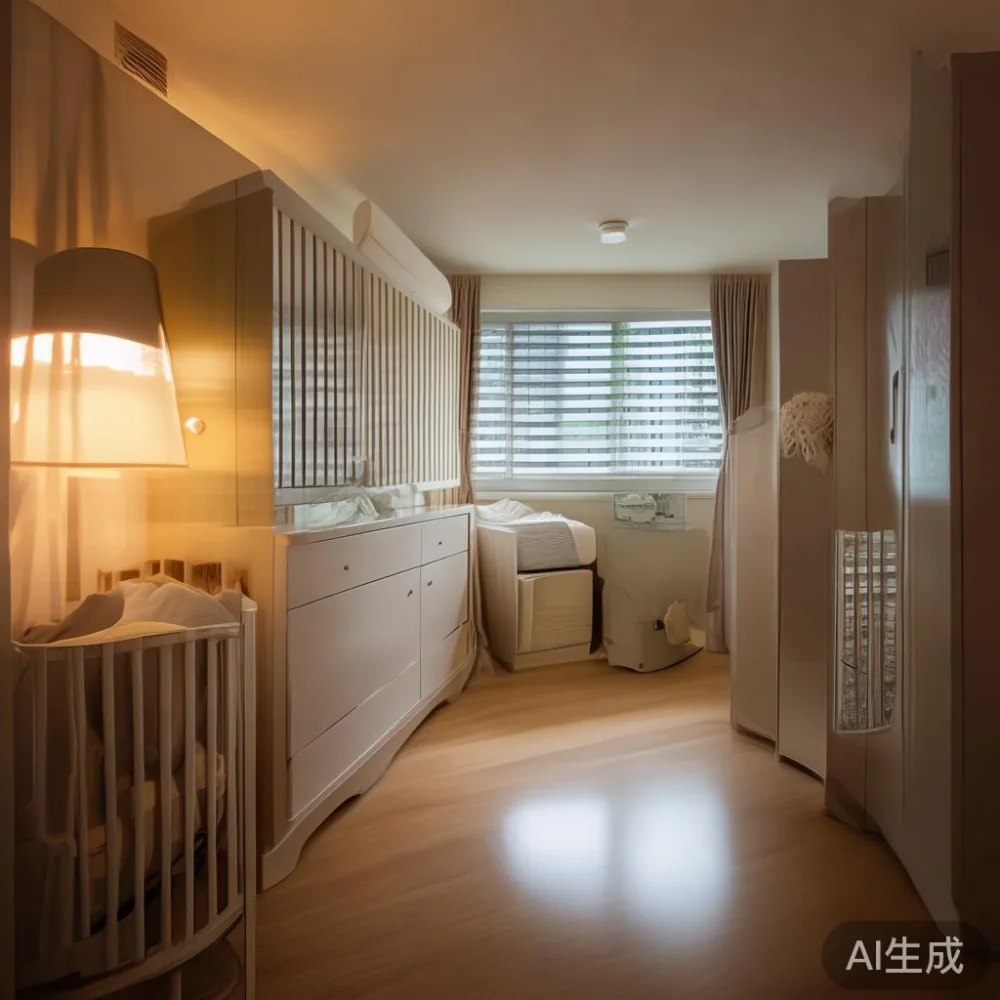
That 1% gap is the silent story behind 80% of the warranty claims MIDHILL sees from tropical clients. A wardrobe 240 cm tall sitting 2 cm from a non-breathable vinyl wallpaper, a dining table parked under a north-facing window with afternoon UV, or a cot placed 1.5 m from a constantly running AC vent — each setup creates a localised climate zone that may exceed the rest of the room by 6–8% RH. The fix is rarely a better lacquer; it is a better micro-environment around the piece.
The First 30 Days: Acclimatising New Nursery Furniture Correctly
Last month I visited a customer's three-bedroom condo in Punggol Waterway Terrace. She had unboxed two MIDHILL TV console units and a matching low shoe cabinet the night before delivery crews arrived. Both units were left standing in the lift landing (which measured 1.1 m wide by 1.6 m deep) for 45 minutes while the crew carried the bed frame up. The lacquer on the cabinet side panels had already started picking up micro-scratches from contact with the corrugated cardboard corner protectors. She had assumed the cardboard was protecting the surface; in fact, it was trapping moisture against the film and leaving a faint imprint.
Here is the acclimatisation sequence that prevents most first-month problems:
1. Keep the nursery furniture in its packaging for the first 24 hours if your air-con is running at 22°C or lower. The crate buffers the shift.
2. Cut the straps, lift — do not drag — the cardboard off. The lacquer is hardest at the corners; drag damage always starts there.
3. Position the piece 5 cm away from any wall. Tampines HDB service yards are tight, but a 5 cm rear gap lets the back panel breathe.
4. Run a dehumidifier set to 55% RH in the room for the first week. A standard 12-litre Mitsubishi or Novita unit costs around S$189 new and draws about 180 W.
5. Do not place rubber-backed mats, nappy-changing pads, or silicone coasters on the surface for the first 14 days. Plasticisers migrate into fresh lacquer and leave permanent clouding.
Daily Habits That Preserve a Lacquered Finish
A few small habits add up to a 6–8 year finish instead of a 3-year one. None of them require special products — a clean microfibre cloth (around S$6 for a pack of five at NTUC FairPrice or Daiso), lukewarm water, and a pH-neutral detergent such as Ecover or dilute mild dish soap are enough.
- Dust before you wipe. Dry grit is the No. 1 cause of micro-scratches on piano-gloss wardrobes. A 30-second swipe with a static duster knocks loose particles off the film so the cloth does not grind them in.
- Wipe in S-pattern strokes, not circles. Circles redistribute the polish residue into visible halos when light hits the surface from a window.
- Use 2 cloths — one damp, one dry. The damp cloth lays moisture; the dry cloth removes it within 30 seconds so no film is left sitting on the lacquer for hours.
- Keep your cleaning cloth washed weekly with no fabric softener. Softener residue streaks badly on gloss finishes.
If you have a marble table in the same room as your nursery furniture, never spray its cleaner near the lacquered cabinet. Typical marble sprays contain silicone or mild acids that etch lacquer within weeks. Always spray 15 cm away from the target, onto the cloth, and then onto the stone.
What Should I Do About Bubbling, Whitening, or Edge Peel on My Lacquered Cot?
This is the question customers email MIDHILL support about most often, usually 18–24 months after delivery. Bubbling in a cot side rail or whitening on a changing-table ledge is always one of three things, and the triage takes under five minutes.
Test 1 — Finger-press test. Press a thumb firmly on the bubble for 10 seconds, then release. If the bubble flattens and slowly reforms, moisture is trapped under the film. Move the cot 30 cm away from any external wall and place a small packet of silica gel (about S$3 from a Daiso) behind the leg for two weeks.
Test 2 — Heat test. If the bubble does not press flat, it is almost certainly heat or solvent damage. Hold a hairdryer on low 40 cm away for 30 seconds. If the bubble shrinks, the lacquer is solvent-sensitive and the piece needs a refinish — which MIDHILL offers as a lifetime refinishing service on solid wood frames, even if you bought the cot secondhand.
Test 3 — White ring test. A pale ring that wipes away with a damp cloth is polish build-up, not damage. Wipe with a 1:5 solution of white vinegar and distilled water, then buff dry. Stubborn rings need a tiny amount of rubbing compound (S$12 from hardware stores). Persistent white haze usually signals UV damage; close that 50% UV-filtering blind and rotate the piece 90° a season.
If the edge peel is along the top of a door or drawer front, check the alignment. A door that catches a fraction of a millimetre on opening will shear the lacquer film within weeks. Tampines and Bedok HDB installers are usually happy to come back for a 10-minute hinge adjustment — MIDHILL provides this free within the first two years of ownership.
Product-Specific Risks: Cots, Wardrobes, Dining Tables and Marble Tables
Different pieces fail in different ways under the same humidity stress. Here is how the risk profile changes across the nursery-to-living-room furniture chain.
Cots and changing tables. A 120 cm x 60 cm cot has the highest surface-area-to-volume ratio in the room. That means the lacquer film is constantly breathing. Use a 100% cotton mattress protector (Skip Hop, Bambino) — never a PVC nappy-changing mat directly on the lacquer. PVC plasticisers will ghost into the film within two weeks and cannot be polished out.
Wardrobes. A French light luxury wardrobe with mirrored panels or inlaid marquetry is more vulnerable than a plain slab door. The answer to how to style French wardrobe in bedroom is actually humidity-aware styling: keep the back wall clear for 5 cm airflow, never wall-mount directly onto cement without a 6 mm rubberised spacer, and avoid positioning it opposite a window that receives 2 hours of direct sun. The same logic applies when you think through how to style American wardrobe in room — the styling must respect the substrate, not just the photo shoot.
Dining tables and nightstands. A dining table sees hot plates, ring-burns, and elbow-grease that a wardrobe never does. Always use coasters and a trivet of at least 4 mm thickness. The conversation about whether is light luxury sofa worth it often overlooks that the lacquer on the sofa's front rail needs the same coasters as the dining table — a damp sock after a child's bath can streak the rail in under a minute.
Marble tables. Marble is porous and will off-gas moisture in warm bedrooms. A marble nightstand beside a lacquered bed frame creates two adjacent surfaces at different RH tolerances. Keep the nightstand a minimum of 2 cm away from the bed frame so they breathe independently. When you decide on French for dining room styling, pair marble with a French light luxury dining set whose chairs have removable, washable seat pads so sweat never reaches the lacquer.
Bed frames. A queen-size bed frame carries most of its humidity exposure at the headboard, where the breathing of a sleeper (each adult exhales 250–400 ml of water per night) keeps the surface above 70% RH. Wipe the headboard panel down once a week with the same dry microfibre you use on the wardrobe. For anyone still weighing French sofa vs French provincial sofa, the bedroom equivalent choice is about the same trade-off: lighter-coloured glossy frames show moisture faster but recover more cleanly, while provincial matte finishes hide marks but absorb grease.
The First-Person Test: 60 Days Without a Dehumidifier
I tracked one customer's experience in a 75 sqm three-roomer in Bedok North over 60 humid days. She had bought a full MIDHILL nursery set — cot, low nightstand, two-door wardrobe — and declined the optional S$4 dehumidifier box at checkout. By day 18, the nightstand's top surface had a faint tacky feel by 9 a.m.; by day 35, two of the wardrobe door pulls had developed a dull grey bloom at the base where hands rested. At day 60 she bought a S$189 Novita 12L dehumidifier and the bloom softened visibly within nine days. Total spend on prevention would have been S$13 for silica packs and S$0.40 of electricity per day.
The takeaway is not that you need expensive hardware. It is that the difference between a 10-year flawless finish and a year-three refinish is, conservatively, around S$120–S$180 in electricity plus 3 minutes of attention per day.
When to Call the Maker, and What Good Support Actually Looks Like
Most parents wait too long before raising a finish problem because they assume they caused it. With lacquer, small damage grows much faster than it does on solid wood. A 2 cm peel becomes a 12 cm peel inside one monsoon season. Reach out within the first 14 days of spotting a change, whether the maker is MIDHILL or another brand founded after 2005 with a documented warranty process. A good maker will offer a remote diagnosis video, send replacement touch-up paint (usually 30 ml bottles in a matched colour, around S$18–S$25 to ship within Singapore), or arrange an in-home refinish for larger areas.
Good warranty language to look for:
— A clear structural warranty of at least 10 years on the frame, drawer runners, and dowel joints.
— A separate lacquer or surface warranty of 2–5 years, with a defined claims process.
— Lifetime refinishing on solid wood frames even after the surface warranty expires.
— Free replacement parts shipped within Singapore (most parcels from MIDHILL's local warehouse arrive in 7–10 working days; mainland China shipments add another 10 days).
MIDHILL ticks each of these boxes, which is why the same customer in Punggol ended up ordering a matching dining table six months later — she had seen how the brand handled the small lacquer touch-up on the side cabinet and decided the trust math worked out in their favour.
Conclusion and Next Steps for Singapore Parents
Lacquered nursery furniture in Singapore is not a fragile purchase if you shop for both product and protocol. Choose a maker who specifies the lacquer system (water-based acrylic for kids' pieces is generally safer around teething), acclimatise the piece correctly in the first 30 days, control local humidity with S$13 of prevention rather than S$1,800 of refinishing, and respond to small defects early. Whether your style leans toward a French light luxury wardrobe, an American light luxury bed frame, or a quieter post-modern light luxury dining table, the care steps are identical — and the same rules protect every lacquered surface from the cot to the marble table in your living room.