Matching Solid Wood Furniture to a Warm Minimal Interior: A Singapore Nursery Guide
Walking into a freshly renovated four-room HDB flat in Tampines last month, I watched a young couple circle the same empty corner three times. They had crisp white walls, pale travertine flooring, and absolutely nothing against them yet. The room felt expensive but unfinished — the kind of blank canvas where the wrong chair would cost them S$1,800 and six weeks of regret. That visit is exactly the conversation I want to have with you here: how to bring warm minimal interiors to life with solid wood pieces that earn their footprint, especially when you are furnishing a nursery that has to feel calm at 2 a.m. and practical at 7 a.m.
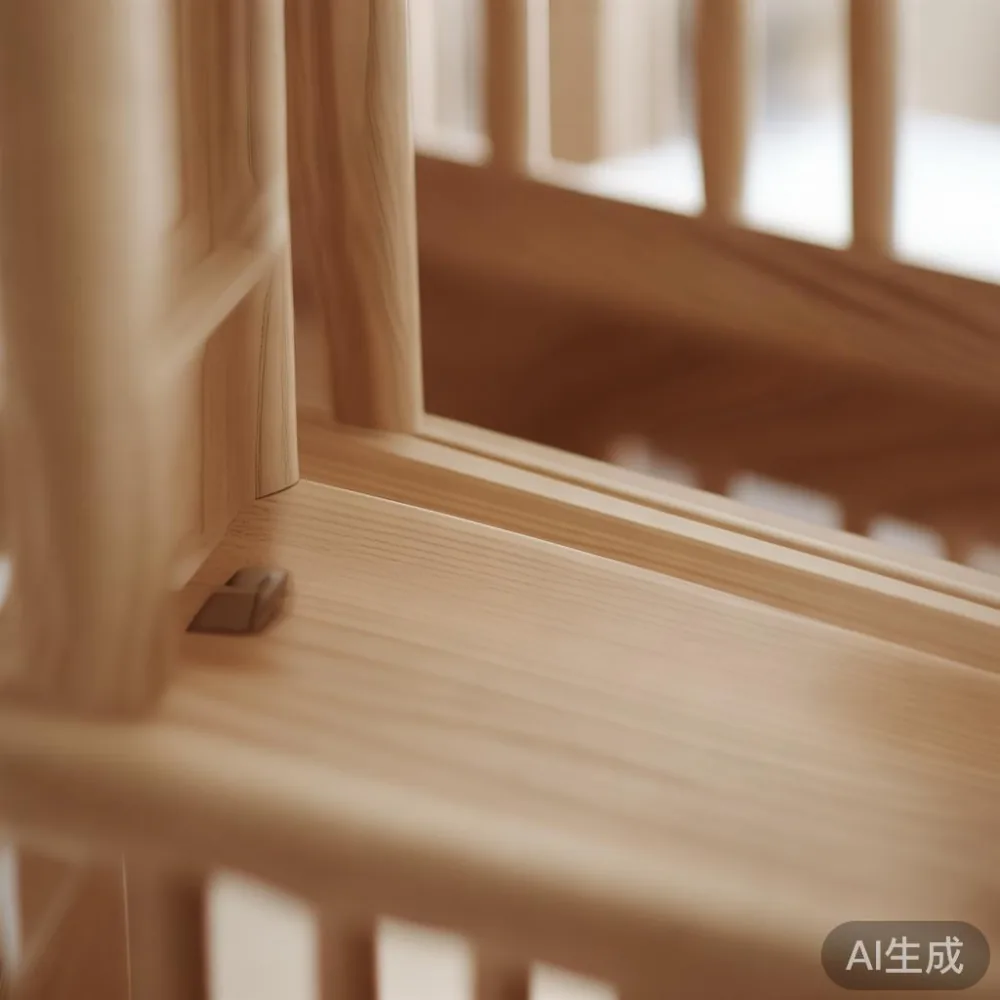
Warm minimal is not a passing look. It is a quiet, slightly Nordic-Japanese mood with golden undertones, and it depends almost entirely on material honesty. In Singapore, where the average three-bedder runs 92 sqm and the master bedroom often sits between 12 and 16 sqm, every piece of nursery furniture you bring in has to work twice: once visually, once functionally. That is where a maker like MIDHILL, a Foshan solid wood specialist exporting to more than 15 countries since 2008, becomes useful — their pieces are built from real timber rather than veneer wrapped around MDF, which matters when a teething toddler is chewing on a bed rail.
What "warm minimal" actually means on a 92 sqm HDB layout
Warm minimal is the cousin of Japandi, but with more breath. Picture bone-white walls (Benjamin Moore White Dove or a 10 percent tinted White), pale European oak flooring from a brand like EVOLVE or Floor Xpert at roughly S$14–S$22 per square foot installed, and furniture that introduces warmth through grain rather than colour. The palette sits around four tones: warm white, sand, oat, and a single accent — terracotta, sage, or faded indigo.
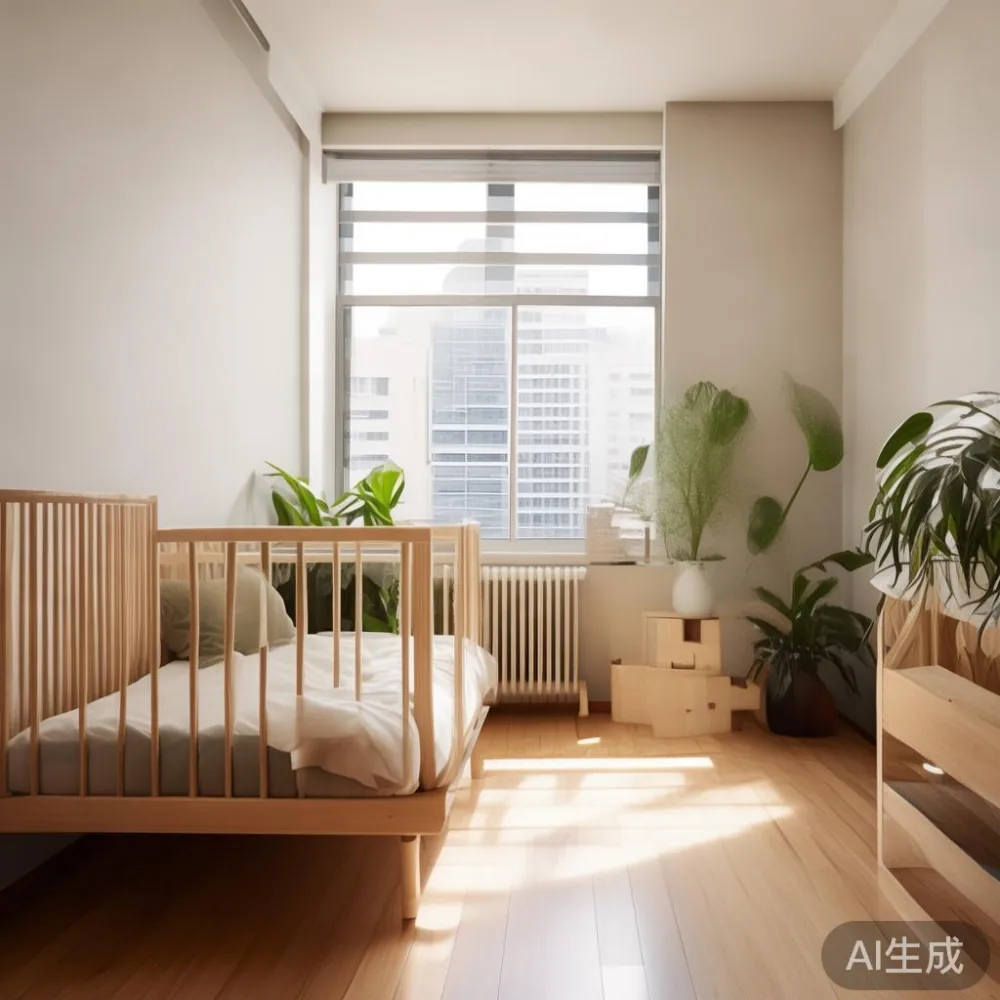
In a Punggol condo I visited, my colleague had anchored the nursery with a 140 cm × 70 cm solid oak changing table, then layered in a low oak cot, and finished with a single sheepskin on a rattan chair. The room felt like 18 sqm even though it was 11. That is the trick: minimal does not mean sparse, it means edited. Limit yourself to seven key pieces per room. For a nursery, that usually means a cot, a wardrobe, a nightstand, a feeding chair, a changing top, a storage bench, and one sculptural item — perhaps a marble table for the water kettle and a humidifier.
Which solid wood actually survives a Singapore nursery?
Not all timber behaves the same way at 32°C and 84 percent humidity. Teak is the traditional answer — oily, dense, and forgiving — but reclaimed teak pushes a 120 cm cot to S$2,400 and beyond. For a warm minimal nursery on a realistic Singapore budget, three species do most of the work:
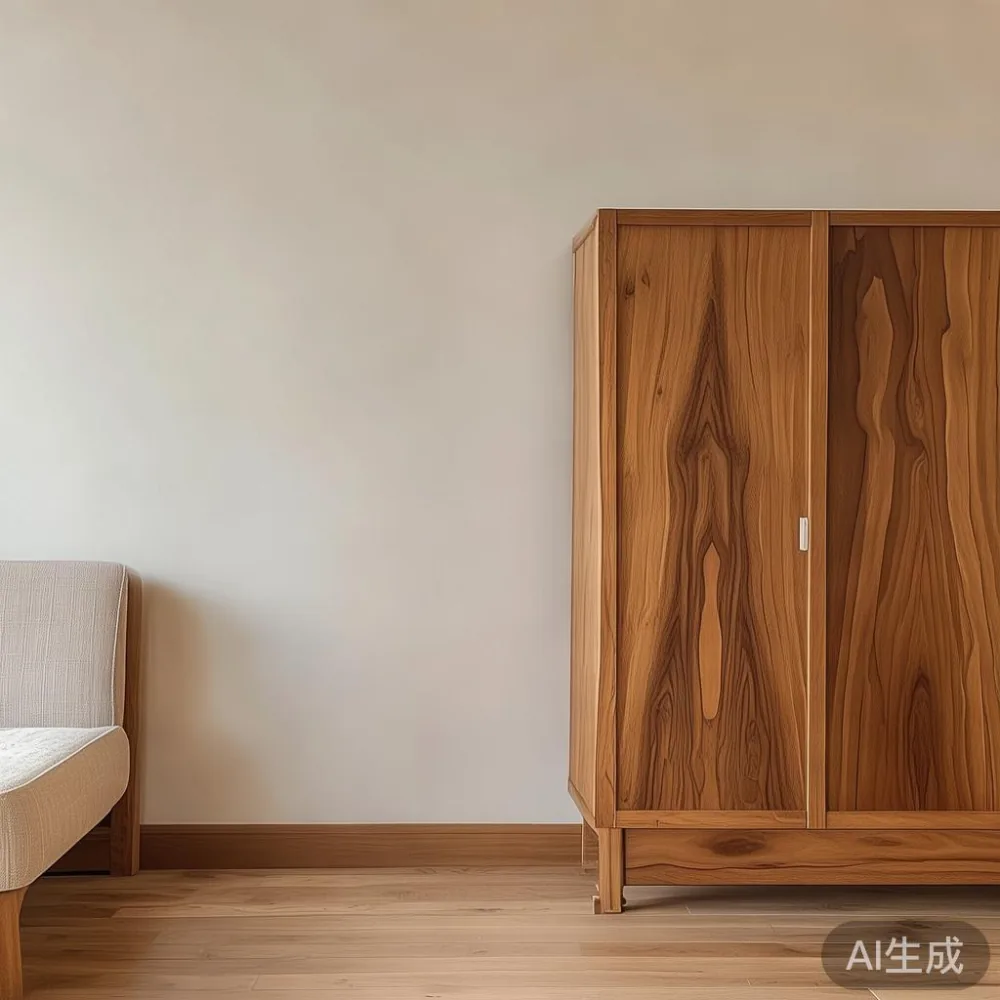
- European white oak — pale, neutral, takes a soap or hardwax-oil finish. Expect S$1,850–S$2,600 for a 140 cm cot from a Foshan maker shipping direct.
- Solid ash — slightly warmer grain than oak, very stable. A good ash nightstand lands around S$480–S$720.
- North American walnut — chocolate undertones, ideal if you want the nursery to lean slightly American light luxury rather than Scandinavian.
Avoid rubberwood for a cot that has to last ten years. It is technically solid wood, but it dents under a toddler's ladder and it cannot be refinished more than once. MIDHILL's cots and beds use white oak or ash with mortise-and-tenon joinery, which is why their 10-year structural warranty is realistic. Their lifetime refinishing service — you ship the piece back to Foshan or use their regional partner in Tuas — costs roughly S$280 per piece including courier, a fraction of replacing a S$2,200 bed frame.
How do you style a Japandi-style bed inside a 12 sqm nursery without crowding it?
This is the question I hear every week from young parents in Bedok and Toa Payoh. The answer is geometry, not decoration. A Japandi bed frame is low — platform height around 22–28 cm from the floor — which makes a 12 sqm room feel taller. In Singapore HDBs with the standard 2.6 m ceiling, that visual lift matters more than any wallpaper.
If you are researching how to style Japandi bed in apartment layouts, the rule is to leave 70 cm of walking space on at least two sides of the bed. In a typical 3.2 m × 3.8 m nursery that means the bed sits against the longer wall, not centred, with a 45 cm nightstand offset toward the cot side. A Japandi platform in white oak at 120 cm × 200 cm weighs about 38 kg and slips through a standard 1.1 m HDB lift door once the mattress is removed — something I confirmed when a customer's bed was delivered to a Punggol Waterway block last Tuesday.
One subtle decision: choose a headboard height between 80 cm and 95 cm. Taller headboards read hotel-luxury, shorter ones read true Japanese. For a warm minimal nursery, 88 cm is the sweet spot.
Italian light luxury for small living room layouts that open into the nursery
Many Singapore families now knock down the wall between the living room and what used to be the study to enlarge the nursery by 4–5 sqm. When the two spaces share sightlines, the furniture language has to agree. This is where Italian light luxury for small living room settings becomes a useful reference — restrained, marble-accented, and proportioned for tight footprints.
An Italian-leaning living room might carry a 210 cm three-seater in pale bouclé, a 110 cm round Carrara marble coffee table, and a slim brass floor lamp. None of those pieces should overpower the nursery visible through the open doorway. A 210 cm sofa in a 3.0 m living room wall leaves only 90 cm of walkway, which is the minimum HDB guideline — measure before you order. The same logic applies to a MIDHILL dining table in oak or walnut: a 160 cm rectangular version seats six and leaves 80 cm of clearance on both sides, which suits a 2.8 m-wide dining zone in a standard four-room flat.
If you prefer a soft accent in the living area, a light blue luxury sofa in muted duck-egg works against warm oak walls without clashing with the nursery's oat palette. Stick to one cool tone per open-plan layout, not three.
2026 European light luxury furniture: what to keep and what to skip
Walking the 2026 European light luxury furniture collections in Foshan showrooms last quarter, I noticed three recurring moves: fluted cabinet fronts, travertine side tables, and soft-curved dining chairs in oak veneer over solid beech. Two of those translate beautifully to Singapore warm minimal nurseries, and one does not.
The fluted wardrobe front — vertical grooves at 12 mm pitch — reads warm and tactile, and it hides toddler fingerprints better than a flat lacquer door. A 180 cm × 55 cm × 210 cm fluted oak wardrobe from a Foshan workshop lands around S$2,100–S$2,800 export, which undercuts European retail by roughly 40 percent. The travertine side table also works, but only if you choose a sealed finish; raw travertine stains within a week of toddler cereal.
Skip the curved dining chair with woven cane if your nursery shares air with the dining area. Cane traps milk odours and dust, and cleaning it between feeds is impractical. Choose a closed-back oak chair instead.
Is a light luxury bed really different from a Japandi bed, or is it just marketing?
Parents ask me this almost daily, so let me be precise. A light luxury bed vs Japandi bed comparison comes down to four measurements: headboard height, leg height, finish depth, and detailing.
A Japandi bed typically has a low platform (22–28 cm), a thin 4–6 cm headboard, exposed joinery or no visible hardware, and a soap-oiled finish that shows grain texture. A French light luxury bed sits taller (35–45 cm platform), carries an 80–110 cm upholstered or cane headboard, often has a shaped cornice or soft curves, and is finished in a slightly tinted lacquer that smooths the grain. An American light luxury bed sits in between — taller than Japandi, simpler than French, usually in walnut or white oak with a single row of nailhead trim.
For a warm minimal nursery, the Japandi proportions usually win, because they keep visual weight low. The French provincial style reads heavier — and the best French provincial bed for 2026 in Singapore will still cost you S$3,400–S$5,200 because the carved detailing adds labour hours. If you love French provincial, reserve it for the master bedroom and keep the nursery quiet.
The 14-day, S$350-free-shipping reality for Singapore buyers
Ordering nursery furniture from overseas used to mean a six-week wait and a S$380 courier bill. MIDHILL's Singapore-bound shipments leave Foshan twice a week, clear customs at Tuas in roughly four working days, and reach your door 10–14 days after order confirmation for orders above US$350 — that is roughly S$480, which one solid oak cot plus one nightstand clears easily.
Free shipping kicks in above that threshold, GST is calculated at checkout at 9 percent, and you have 14 days to return the piece if the grain or dimensions do not suit your room. For Singapore customers, that return window aligns neatly with the time it takes to confirm the cot actually fits beside your existing wardrobe. The 10-year structural warranty covers joint cracking, slat failure, and finish peeling — three things that actually happen in our humidity.
One last measurement worth memorising: a fully assembled 180 cm wardrobe will not fit through most HDB service lift interiors, which run 1.5 m deep × 1.8 m wide × 2.3 m tall. Always request flat-pack for wardrobes above 150 cm in any dimension. Flat-pack adds about 45 minutes of assembly at home and saves you a S$120 redelivery fee if the first attempt fails.
Putting it together: a S$6,800 warm minimal nursery checklist
For a realistic S$6,800 budget — a number I work through with most clients in their first consult — here is the allocation that holds up in real Singapore nurseries:
- 120 cm × 200 cm white oak Japandi cot or toddler bed frame: S$1,950
- 180 cm × 55 cm × 210 cm fluted oak wardrobe: S$2,400
- 45 cm × 40 cm × 55 cm ash nightstand with one drawer: S$520
- 140 cm × 70 cm oak changing table with two shelves: S$880
- 110 cm round Carrara marble side table for the feeding corner: S$690
- Rattan feeding chair with washable cushion: S$360
That totals S$6,800 before GST and includes the structural warranty, lifetime refinishing option, and 14-day returns. Shipping is free, the lift fits every flat-pack component, and the warm minimal palette stays intact because every timber tone is white oak or ash.
A warm minimal nursery is not built from a mood board. It is built from a tape measure, a lift diagram, and a list of materials that will still look honest in ten years. Choose solid timber, keep the geometry low, let one marble surface do the talking, and leave 70 cm of breathing room around every major piece. The room will look calm at 2 a.m., and that is the only test that matters.