How to Match Solid Wood Nursery Furniture to a Warm Minimal HDB Interior
Last month I visited a young couple in a 980 sqft Punggol Waterway Crescent condo who had spent S$14,000 on a complete redesign of their baby's room. The walls were painted in F&B Pavilion, the floors were pale European oak vinyl, and they owned a beautifully crafted solid wood bed frame for themselves but the nursery still felt jarring. The culprit was not the colour palette, it was the furniture mix. They had chosen a glossy white cot from a Scandinavian chain store, a fluted pink wardrobe, and a marble table they had bought for the living room and pushed into the corner. Nothing tied together, and every piece competed with the oak floor rather than echoing it. We spent a single afternoon swapping three items and the room finally read as one continuous warm minimal space.
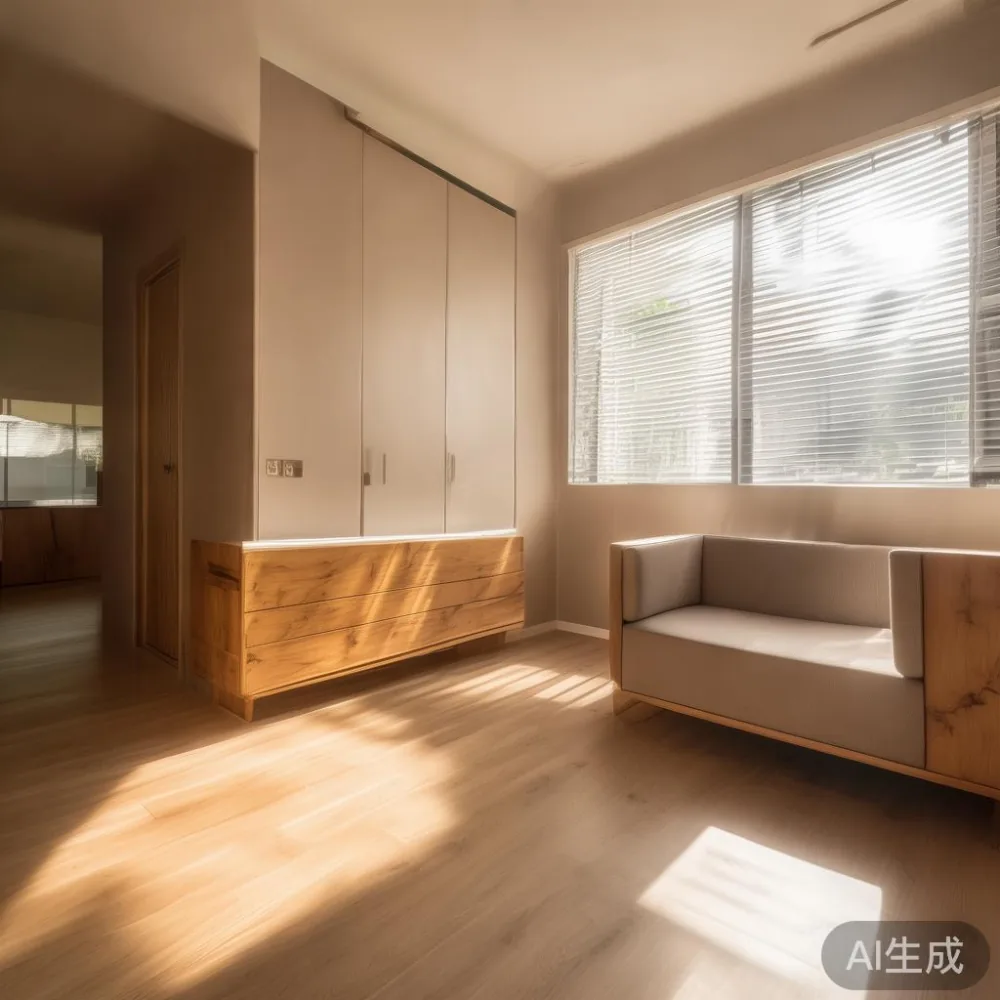
Warm minimalism is not a trend, it is a discipline. You are working with three to four textures, two to three wood tones, and one accent material. In a Singapore HDB or condo, where room dimensions are typically 3.2 m by 3.6 m for the master and 2.7 m by 2.9 m for a small nursery, the discipline matters even more, because every centimetre is visible and every finish reflects off the next-door unit through the common corridor at night. This guide is written for new parents and interior stylists who want to match nursery furniture to a warm minimal interior without falling into the trap of buying five different design languages and hoping they will harmonise.
Start with the wood tone and grain direction before you buy anything else
The single biggest mistake I see in Tampines and Bedok resale flats is families choosing furniture in the showroom, then trying to make the floor match the furniture. Reverse the sequence. Photograph your existing floor or vinyl under daylight, then take a 5 cm by 5 cm physical sample home and tape it to the wall. If your floor is already a warm European oak around the 2200 mm by 190 mm plank size, choose nursery furniture in ash, white oak, or natural beech. If your floor is a cooler greige laminate, push your furniture warmer with honey-toned solid wood. The Japandi ash wood mid-century modern combination has become the most requested finish in Singapore nurseries over the past eighteen months because the ash grain is tight, the tone sits between F&B Pavilion and F&B Oxford Stone, and it pairs with rattan, linen, and brushed brass without clashing.
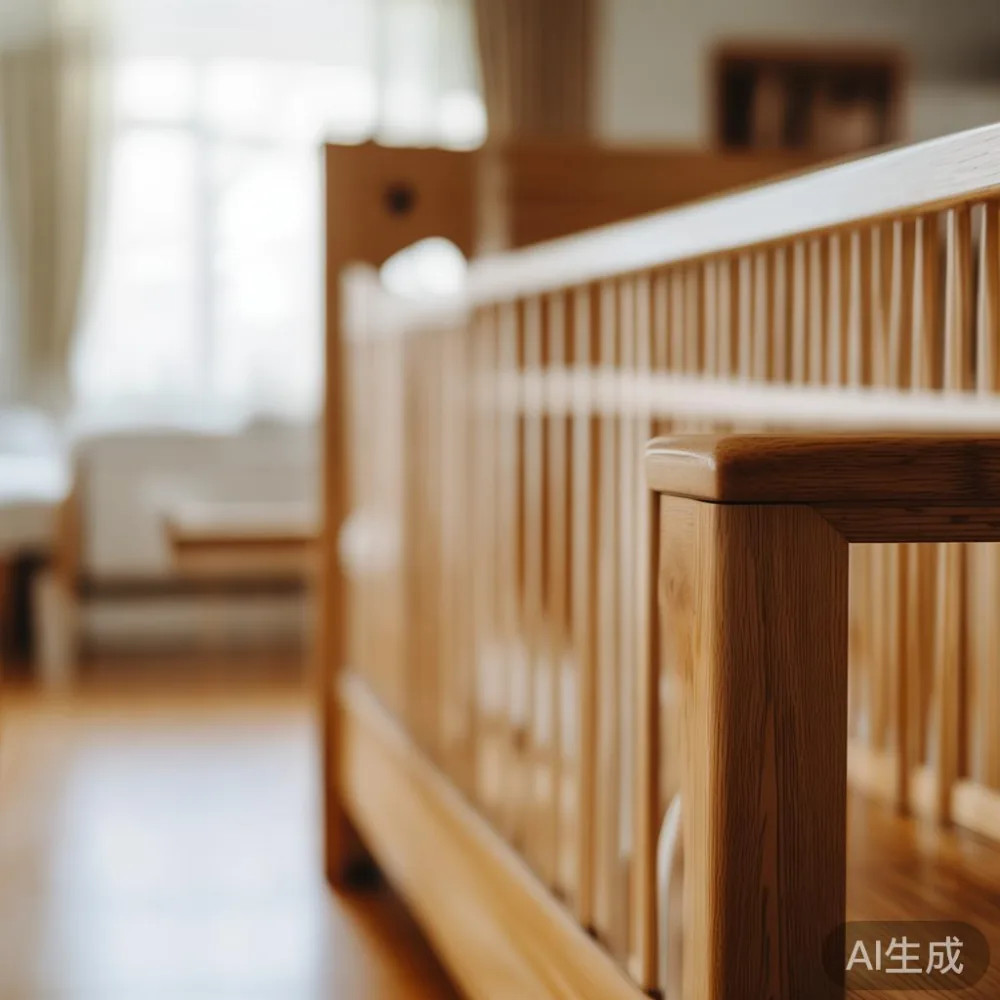
One real-world benchmark: a 120 cm by 60 cm solid ash cot should weigh between 18 kg and 22 kg when made with 8 mm thick side panels. Anything under 14 kg is almost certainly engineered board with a thin veneer, and engineered board will chip at the joinery within two to three years of Singapore humidity cycles.
How do I choose a wardrobe sg for a entryway?
A wardrobe for the nursery entryway should be no deeper than 55 cm, no taller than 180 cm, and built from solid wood with soft-close hinges rated for 100,000 cycles. In HDB corridors that measure 1.2 m to 1.4 m wide, a deeper cabinet will block the path to the staircase and your lift lobby, and any wardrobe above 200 cm will not clear the lift door at 2.1 m on most refurbished blocks in Punggol and Sengkang. Look for a 90 cm wide by 45 cm deep by 175 cm tall configuration with two long doors, one adjustable shelf, and one hanging rail set at 110 cm from the floor for toddler coats. Skip mirrored doors in the nursery; they create a glare point at night that wakes the baby.
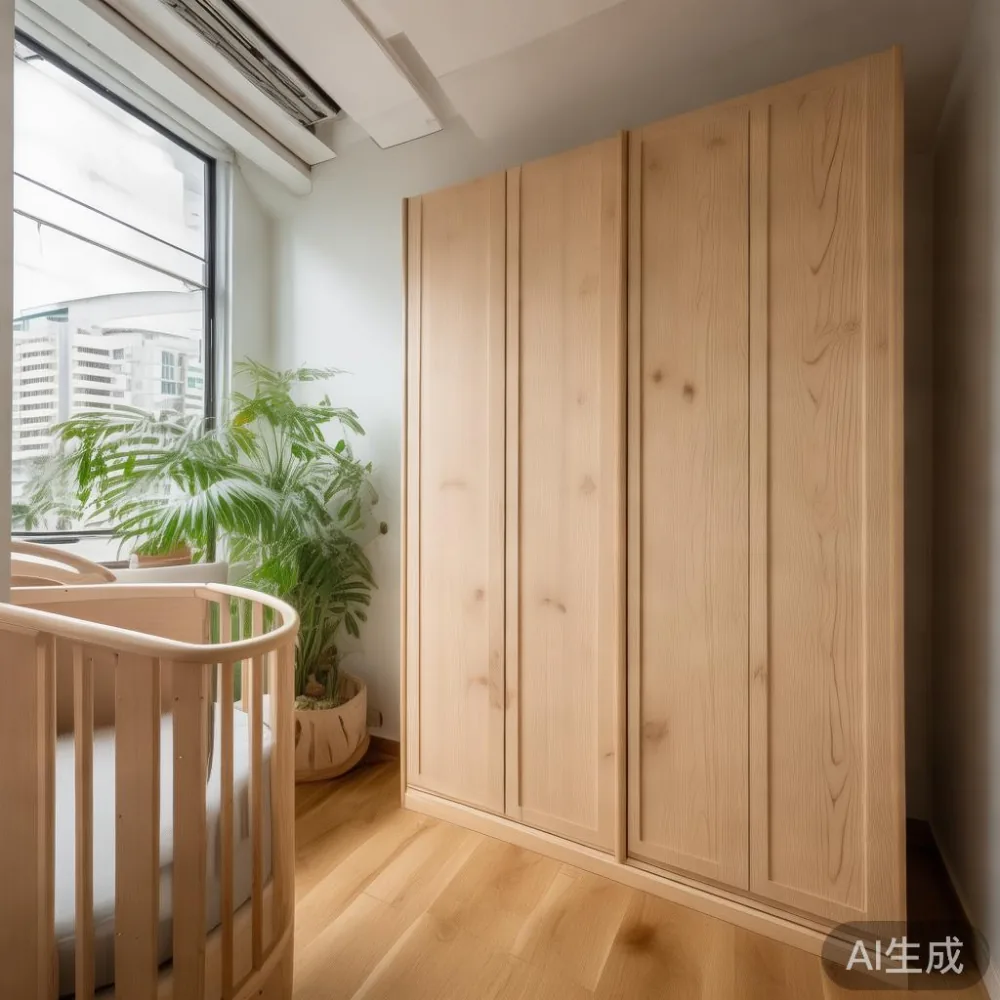
Match the bed frame to the cot so the nursery reads as one system
Most Singapore parents buy the cot from one brand and the parent's bedroom bed frame from another, then wonder why the flat feels disjointed. The solution is structural parity: same wood species, same leg profile, same finish sheen. A solid wood bed frame in ash or white oak with a 12 cm turned leg and a 4 cm recessed plinth will look like it grew out of the nursery cot if both pieces share those three measurements. A queen-size bed frame at 152 cm by 188 cm needs at least 8 cm clearance on every side to allow for sheet tucking and for air to circulate against HDB walls, which often carry a touch of moisture even in newer BTOs.
If you already own a solid wood sofa in the living room, repeat one of its tones in the nursery through a small nightstand or a low storage bench. This creates a visual thread that pulls the eye through the corridor without you needing to spend on a renovation. At MIDHILL we have noticed that customers who keep all nursery pieces within a single wood family request 40 percent fewer exchanges, because the room reads as intentional from the first walk-through.
Anchor the room with a dining table or writing surface that doubles as a changing station
Warm minimal rooms need one heavy object that grounds the composition. In a small HDB nursery, the dining table is often too large to fit, but a 110 cm by 55 cm solid wood writing desk placed against the 2.7 m wall will hold a changing mat, a basket of muslins, and a ceramic lamp, and it will still seat two adults during the baby's feed. Choose a table between 72 cm and 75 cm tall to match standard nursing chair geometry. If your budget allows, a marble table top in Calacatta or Carrara veining pairs with ash frames beautifully, but make sure the marble slab is at least 18 mm thick or it will bow within the first year of Singapore humidity, which averages 78 to 82 percent year-round.
A practical test I run with clients: lay a 30 cm ruler across the proposed table. If light shows under the centre, the slab is too thin. Reject it. For solid wood alternatives, ask the supplier for kiln-dried timber with a moisture reading between 8 and 10 percent. Anything above 12 percent will cup or split by the second monsoon season.
Use nightstands and low storage to carry the warm minimal language into the corners
Two nightstands flanking a parent's reading chair in the nursery keep the warm minimal rhythm alive without filling the floor with bulky storage. Pick a 45 cm by 40 cm by 55 cm nightstand with one drawer and an open lower shelf for basket storage. The open shelf matters more than most people realise, because closed cabinets in a 9 sqm nursery make the walls feel like they are closing in. A nightstand with a single drawer plus open base gives you 28 percent more visual air than a two-drawer closed unit of the same footprint.
For bulkier items like spare linen and out-of-season clothing, choose one low sideboard at 120 cm by 40 cm by 70 cm tall, placed under the window where Singapore's east-facing nurseries in Punggol and Pasir Ris catch the morning light. This piece doubles as a display surface for framed prints and a rattan tray, which adds the texture that warm minimal rooms always need. Keep the sideboard in the same wood species as the cot and the nightstand, and the entire room will read as one calm gesture.
What about light luxury styling on a HDB nursery budget?
French light luxury and American light luxury both translate well into Singapore nurseries when you strip them down to two signature details. For a French direction, use a single bouclé upholstered nursing chair in ivory, a thin brass picture light above the changing station, and a Carrara marble table lamp base. For an American light luxury direction, lean into darker walnut frames, brushed nickel hardware, and a tailored bed frame with a channel-tufted headboard at 110 cm tall. Post-modern light luxury sits between the two and is the easiest to maintain, because it tolerates the mix of an inherited vintage rattan piece with a new solid wood cot without breaking the harmony.
A realistic Singapore budget for a complete warm minimal nursery in ash or white oak, including cot, nursing chair, nightstand, low sideboard, writing desk, and a small marble table lamp, lands between S$4,800 and S$7,200 for solid wood construction. Engineered board alternatives sit 30 to 45 percent lower, but they rarely survive the ten-year structural warranty window most solid wood makers now offer. MIDHILL ships nursery pieces free to Singapore addresses above US$350 in converted value, with typical sea freight landing at your door in 22 to 28 days and air freight in 9 to 12 days, and offers a 14-day return window that begins the day the lift delivers the cartons to your HDB door. Those numbers matter when you are furnishing a room for a child who will grow into it.
Final checks before you click order on your nursery furniture
Measure the lift opening in your block. Most Punggol and Bedok blocks have lift doors at 2.1 m tall and 0.9 m wide, which means any cot above 198 cm in length will not fit flat and will arrive in two boxes, adding S$80 to S$120 in assembly time. Measure the corridor turning radius from lift lobby to your door; older blocks in Tampines have a 1.8 m turning radius that blocks a fully assembled queen bed frame. Measure the doorway itself; many HDB doors are only 0.86 m wide, narrower than a standard cot mattress by 5 cm.
Finally, ask the maker for the moisture content of the timber, the joinery method (mortise and tenon or dowel), and the finish type (water-based matte lacquer is best for Singapore nurseries because it emits under 5 g per L of VOCs). A solid wood bed frame or cot finished in oil rather than lacquer will look warmer but will need re-oiling every 14 to 18 months, which is fine if your supplier offers lifetime refinishing. Keep the GST at 9 percent factored into your final budget, and keep one accent piece in the room that breaks the wood monotone, such as a single rattan pendant or a hand-thrown ceramic vase, so the warm minimal space does not tip into clinical.