Nursery Furniture in Singapore: A 5-Year Cost Comparison of Veneer and Solid Wood
Choosing nursery furniture for a Singapore home is rarely a question of appearance alone. A cot, changing table, wardrobe, or small chair must fit through the lift, turn within the corridor, survive damp humidity, and remain useful after the child outgrows the room. Veneer can offer an attractive initial price, while solid wood usually carries higher material and labour costs. Over 5 years, however, the cheaper purchase is not always the cheaper nursery arrangement.
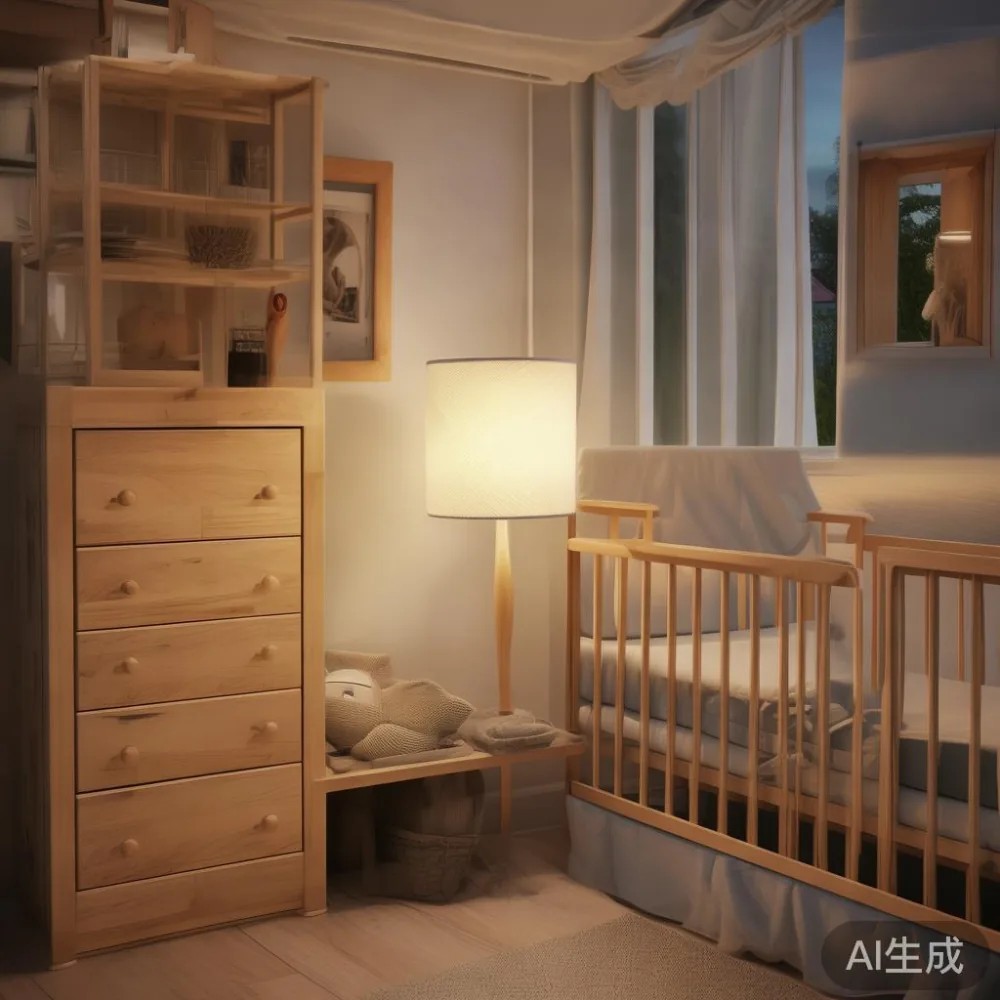
This comparison uses realistic Singapore dollars, including GST where relevant, and considers a 3-door children's wardrobe, a 120 cm cot base cabinet with drawer, a 90 cm bedside table, and a 70 cm upholstered nursery chair. The figures are planning estimates rather than quotations: timber grade, finishes, hardware, delivery access, and installation can change the final amount. A 10-year structural warranty and lifetime refinishing service can also alter the long-term calculation.
What does veneer cost compared with solid wood over 5 years?
For a typical HDB flat in Tampines, Bedok, or Punggol, the practical comparison looks like this:
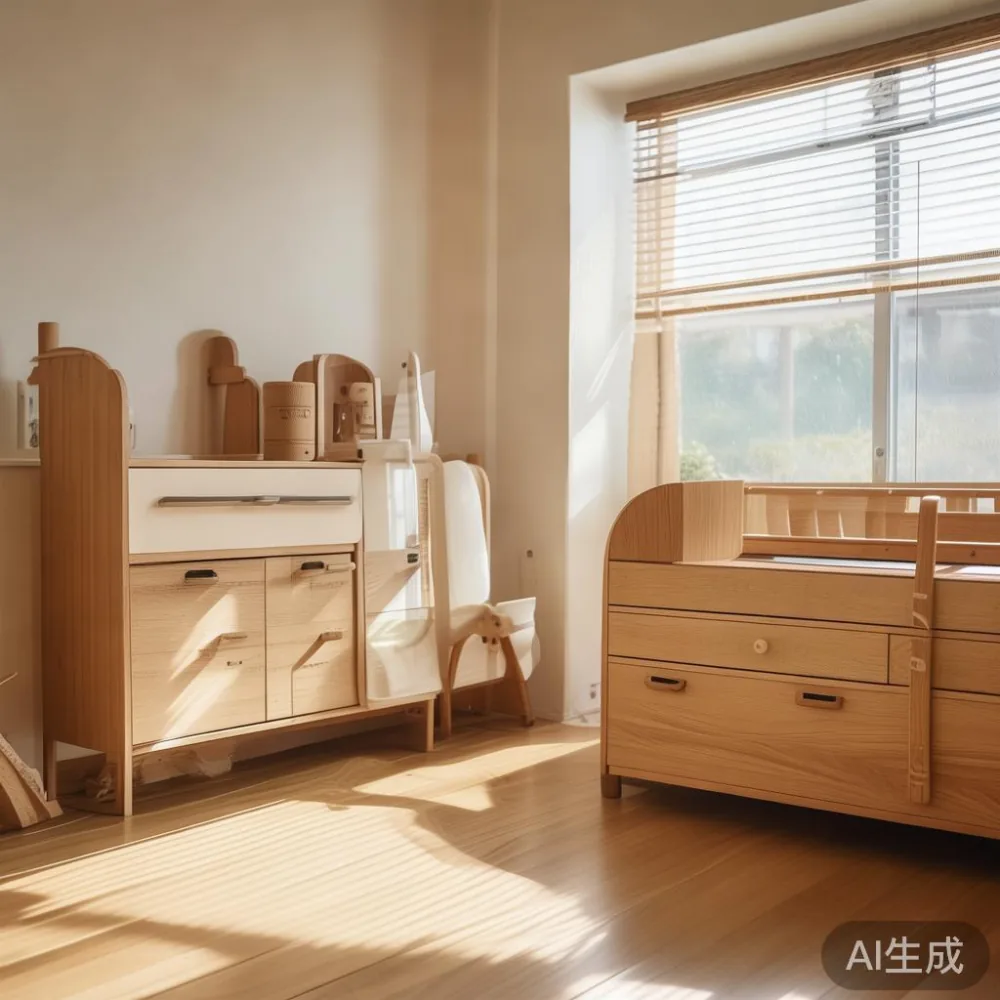
Veneer package: a 3-door wardrobe at SGD 1,180, a 120 cm cot base cabinet at SGD 420, a 90 cm nightstand at SGD 180, and a 70 cm chair at SGD 260. The furniture total is SGD 2,040. At Singapore's standard 9% GST rate, the total is approximately SGD 2,224, before delivery or installation.
Solid wood package: a comparable wardrobe at SGD 2,480, a cot base cabinet at SGD 860, a nightstand at SGD 340, and a chair at SGD 520. The furniture total is SGD 4,200, or about SGD 4,578 including GST. Solid wood begins roughly SGD 2,354 higher for this set, before access charges.
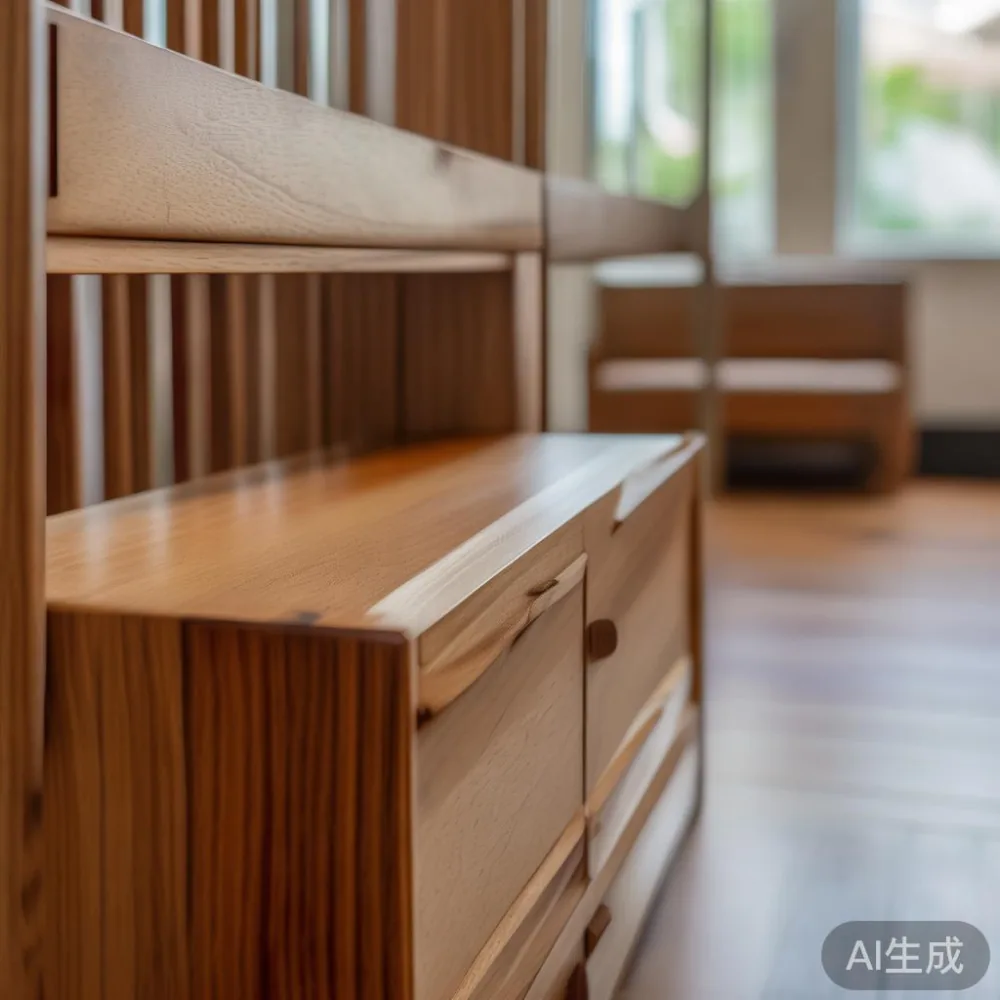
The 5-year figures depend on how the furniture is used. A wardrobe may need 2 hinge adjustments, 1 drawer repair, and partial refinishing in year 4. The cot cabinet might receive 1 replacement bumper and a wipe-down every 6 months. The nightstand can pick up scratches during the first 18 months. A veneer piece may need edge repair or a replacement panel, while solid wood can usually be sanded and refinished without changing its dimensions.
Veneer is not automatically weak. A well-made cabinet can be stable if its panels, joints, back boards, and edge banding are properly engineered. The cost difference usually reflects the thickness and grade of timber, the number of solid components, the finish system, and the labour involved. A thin decorative veneer over a low-cost panel should not be compared with a 20-25 mm solid timber case.
How much should a Singapore family budget for delivery and access?
In a standard HDB block, a furniture lift with an internal door of about 90 cm width and a 100-110 cm depth may accept a wardrobe flat-packed but not fully assembled. A corridor landing of 150 cm gives more turning room than a narrow 110 cm recess. In a condo, the loading bay and service lift may be larger, yet the route to the nursery can include a 75 cm door and a 90 cm bend.
For the example package, budget SGD 80-SGD 160 for a normal HDB delivery if the pieces are flat-packed. Add SGD 120-SGD 280 if the wardrobe requires carrying up stairs or dismantling. A condo service-lift booking may add SGD 30-SGD 80, and a timed loading fee can add SGD 40-SGD 120. Ask the supplier for the packed dimensions, carton count, and lift measurements before ordering; a 180 cm tall wardrobe carton may not fit through a 90 cm opening even if the actual cabinet would fit after assembly.
Allow 7-14 delivery days for Singapore orders, plus 1-3 days for a made-to-order finish. Some standard nursery furniture can arrive within 5-7 days, but a custom colour or special timber may take 14-21 days. The delivery cost is part of the 5-year comparison because a damaged lift wall, a returned cabinet, or a failed doorstep fit creates expenses beyond the invoice.
A local family should measure the route, not only the room. A 60 cm wide cot frame can pass through many doors, but a 120 cm cabinet with protruding handles may need its doors removed. Keep at least 10 cm of clearance around a wardrobe for opening drawers, and place the cot away from direct air-conditioning airflow and afternoon sun.
Which material handles humidity, scratches, and children better?
Singapore's warm, humid climate makes finish quality important. Relative humidity commonly changes through the day, and a poorly sealed panel can swell, crack, or develop mould at its edges. Solid wood expands and contracts with moisture, but a stable timber and a suitable finish allow small movements. Veneer does not move like a solid timber panel in the same way, yet its adhesive lines and edge treatment still need careful inspection.
For a child's wardrobe, look for a stable hardwood such as beech, ash, oak, or rubberwood depending on the design. Confirm whether the drawers, side panels, shelves, and legs are solid wood or only veneered. A mixed construction can be practical: solid wood drawer fronts and a well-engineered carcass may perform well at a more moderate price than an all-solid piece.
Scratch resistance depends on the coating. A hard-wearing water-based finish may be easier to repair than a very soft oiled surface. Ask for the finish name, sheen level, and repair instructions. A nursery furniture supplier should be able to explain how to clean spills within 30 minutes and how to treat a mark during the first year.
Children also create loading changes. A cot base cabinet with a 35 kg child temporarily placed on the worktop is not the same as a normal desk use, so the top should be rated for at least 40-50 kg. Drawer runners should support 15-25 kg per drawer. A wardrobe shelf carrying 12 folded blankets is modest; a shelf carrying 25 kg of books or toys needs stronger supports.
For an adjacent adult bedroom, parents may be comparing a solid wood sofa, bed frame, dining table, wardrobe, nightstand, or marble table. Those larger products need their own access and maintenance assessment. The nursery decision should still focus on safe surfaces, rounded edges, stable storage, and a finish that can be maintained without replacing a whole room.
What is the 5-year repair and replacement allowance?
Here is a conservative allowance for the four-piece nursery packages above. It includes minor repairs, finish work, and one replacement component where relevant, but not major water damage or accidental structural failure.
For the veneer package, allow SGD 260-SGD 520 over 5 years. A drawer repair might cost SGD 45-SGD 110; replacing 2 cabinet edge strips might cost SGD 70-SGD 160; refinishing one visible panel might cost SGD 90-SGD 180. Add SGD 55-SGD 90 for hardware and consumables. If a veneer panel is badly peeled, a full replacement can add SGD 220-SGD 450, depending on whether the cabinet can be repaired in place.
For the solid wood package, allow SGD 120-SGD 300 over 5 years. A drawer runner replacement might cost SGD 35-SGD 75, and a hinge adjustment or replacement can cost SGD 20-SGD 60 per unit. Sanding and refinishing 2 nursery pieces might cost SGD 80-SGD 160. Solid timber can often accept localized repairs, which is one reason it may be practical for long-term use.
These figures make the approximate 5-year totals:
Veneer: SGD 2,224 including GST, plus SGD 260-SGD 520 maintenance, plus SGD 100-SGD 260 delivery and access, giving about SGD 2,584-SGD 3,004.
Solid wood: SGD 4,578 including GST, plus SGD 120-SGD 300 maintenance, plus SGD 100-SGD 260 delivery and access, giving about SGD 4,798-SGD 5,138.
Solid wood remains more expensive in this example, but its purchase price buys more repair flexibility. If the veneer cabinet requires replacement in year 3, the comparison changes. A replacement wardrobe or drawer unit could cost SGD 500-SGD 1,000 after removal and delivery, pushing veneer closer to solid wood over 5 years.
How do light-luxury styles fit a Singapore nursery?
Light luxury can work well in nursery furniture when the room remains calm rather than overfilled. A cream solid wood bed frame, pale oak wardrobe, or upholstered chair with simple moulding creates a French light luxury mood. French provincial details are usually represented by curved edges, restrained profiles, linen textures, and warm timber tones rather than heavy carving.
If a living room or adjoining bedroom is being considered, a search for how to style French provincial sofa in room can help with scale, fabric, and balance. A 180-210 cm sofa needs at least 75 cm of circulation space in front and 30 cm beside a side table. For French sofas for sale, compare the frame material, seat density, and removable cover before focusing on the silhouette. These larger pieces should not distract from the practical nursery layout.
American light luxury often uses cleaner lines, darker finishes, and stronger visual contrast. Post-modern light luxury can pair simple shapes with mixed materials. In a child-friendly room, the safer approach is to keep the cot, wardrobe, and nightstand visually quiet and let colour come from textiles and wall finishes. A marble table should remain outside the child's reach because its weight and brittle surface are not ideal for an active nursery.
For a search related to top 10 Nordic furniture ideas, use the list as a style reference rather than a quality ranking. Light oak, pale ash, whitewash, and simple storage forms can make a small HDB bedroom feel larger. Measure every piece: a Nordic-inspired wardrobe may look compact but still require a 95-110 cm route through the corridor.
Can a solid wood wardrobe and bed frame last beyond the nursery stage?
Often, yes, if the dimensions and finish suit the child and the room. A 140-150 cm bed frame can move from a child's room to a teen's room. A 90-120 cm wardrobe can become a linen cabinet or later a dressing wardrobe. A nightstand at 45-60 cm high can serve beside a reading chair. The best long-term nursery pieces have straight edges, replaceable hardware, adjustable shelves, and finishes that can be renewed.
For parents researching how to choose Italian light luxury bed, the material and safety details matter more than a label. Check the headboard height, guardrail requirements, mattress clearance, and whether the bed can be separated into two sections for a narrow HDB room. An Italian-inspired solid wood bed frame may use elegant details, but it still needs a stable mattress platform and safe gaps. Do not place a decorative crib insert where a child could climb or become trapped.
A Japandi-style wardrobe can suit a Punggol or Bedok bedroom when pale timber meets simple black or brushed-metal hardware. If you are learning how to style Japandi wardrobe in apartment, keep the colour palette to 2-3 main finishes and leave 60-90 cm of open floor area near the doors. A wardrobe should not sit directly against a damp bathroom wall or under a leaking window.
For storage planning, allow 90 cm of wardrobe width for hanging clothes, 45-55 cm for folded items, and 25-35 cm for shoes and toys. A cot base cabinet should have a changing top at 85-95 cm high, with a secure anti-tip arrangement. The wall anchor, screws, and fixing method should be confirmed before the child is placed nearby.
How should you compare a MIDHILL bed with other room pieces?
Last month I visited a Singapore family in Bedok to inspect a nursery project assembled for a child who was about 18 months old. The room was in an HDB flat with an 85 cm lift door and a narrow corridor landing. The family initially considered a low-cost veneer wardrobe, but a carton measuring 42 x 198 x 12 cm could not turn at the landing. We replaced it with flat-packed solid wood components, each carton weighing under 18 kg. The packed pieces fitted through the lift, and the wardrobe was assembled inside the bedroom over roughly 3 hours.
My colleague then tested the changing drawer with 12 kg of tools and checked the cot frame for side-to-side movement at the joints. The drawer had a slight scrape, which we corrected by adjusting the runner by 4 mm. After 6 months, the finish showed 2 small marks near the toy shelf. These were sanded and recoated without replacing the panel. That experience reinforced that product quality, route planning, and after-sales care affect the real 5-year cost.
When comparing a MIDHILL bed or another solid wood bed frame, request the packed carton dimensions, assembled weight, mattress size, and delivery lead time. A 120 x 200 cm bed frame may weigh 55-85 kg, so a standard lift may need a two-person carry. A solid wood sofa or dining table can have an even larger carton and should be measured against the lift door, corridor width, and turning radius before payment.
A Modern light luxury TV console may be useful in a living area, but it should not be forced into the nursery. If it is selected for an adjoining room, check whether the console has a 110-140 cm top, 3-5 cm wall clearance, and cable openings that can be covered safely. A marble table adds visual contrast but weighs 70-150 kg depending on size; it needs a planned installation crew and a level floor.
What should you inspect before paying for nursery furniture?
Ask for the wood species or veneer facing, core material, thickness, finish, hardware, and warranty in writing. Inspect every visible surface under daylight and under a 400-lux lamp. Look for a straight joint, closed seams, smooth transitions, and doors that align within 2-3 mm. Open each drawer 10 times and check that it remains level after closing.
For safety, confirm that cot rails meet current local requirements, corners are rounded, and the changing unit can be fixed to the wall. Avoid placing loose cushions, cords, or small parts within the child's reach. A nursery furniture layout should leave a 60 cm pathway from the door where possible, with 75-90 cm near the cot for dressing and cleaning.
Cost control comes from matching the material to the job. Solid wood is often sensible for drawer boxes, cot rails, wardrobe frames, and bedside tables that receive frequent touch. A well-engineered veneered back or less visible panel may be reasonable if the edges are sealed and the supplier provides a clear repair policy. The goal is not to label every room all-solid; it is to avoid paying for a weak component that fails in year 3.
For a Singapore buyer, a sensible planning rule is to reserve about SGD 3,000 for a moderate veneer nursery set and about SGD 5,000 for a solid wood set, then add 10-15% for access, assembly, and unforeseen repairs. Keep the receipt, care instructions, hardware spares, and finish samples for at least 10 years. That record can make future refinishing faster and reduce the risk of replacing usable nursery furniture.
Which 5-year option gives better value for a Singapore family?
Veneer can suit a temporary nursery, a rental flat, or a room where the furniture will be replaced after 2-3 years. Its 5-year case is stronger when the initial budget is limited, the panels stay inside, and the supplier offers replacement doors or panels. Solid wood makes more sense when the furniture will remain in the home through a child's baby, toddler, and school years, especially for a cot base, wardrobe, nightstand, and frequently touched surfaces.
In the example, veneer is about SGD 1,424 less at purchase and about SGD 1,794-SGD 2,554 less over 5 years after estimated maintenance and delivery. Solid wood costs more, yet it provides more opportunities for local refinishing and component repair. For an HDB family, the access constraints can matter as much as the material: a flat-packed design with cartons below 18 kg may save more than an attractive full-size unit that needs stair carrying.
For a condo, a service lift and loading bay may reduce carrying costs, but confirm charges, reservation windows, and route measurements. GST should appear clearly on the quotation, and returns should be confirmed before delivery. A 14-day return period is useful for checking colour and fit, but furniture must be unused and protected in its original packaging.
Choose according to the child's room, the family's budget, and the expected 5-year life of each piece. Solid wood is a long-term material option, not a guarantee against every mark or moisture incident. Veneer is a construction option, not automatically a inferior one. The strongest purchase is the one with sound measurements, suitable components, safe installation, realistic maintenance costs, and a supplier able to support the furniture after delivery.