Nursery Furniture Over Five Years: Veneer vs Solid Wood Cost Comparison
Choosing nursery furniture for a Singapore family is rarely a purchase about appearance alone. A crib, changing table, wardrobe, or child-sized desk must fit through a lift, negotiate a corridor, tolerate humid weather, and still look considered in an HDB flat or condominium. Over 5 years, veneer can appear economical, while solid wood usually carries a higher purchase price but may create lower ownership costs. The useful question is not which material looks more expensive on day 1, but which one delivers predictable value as your child grows.
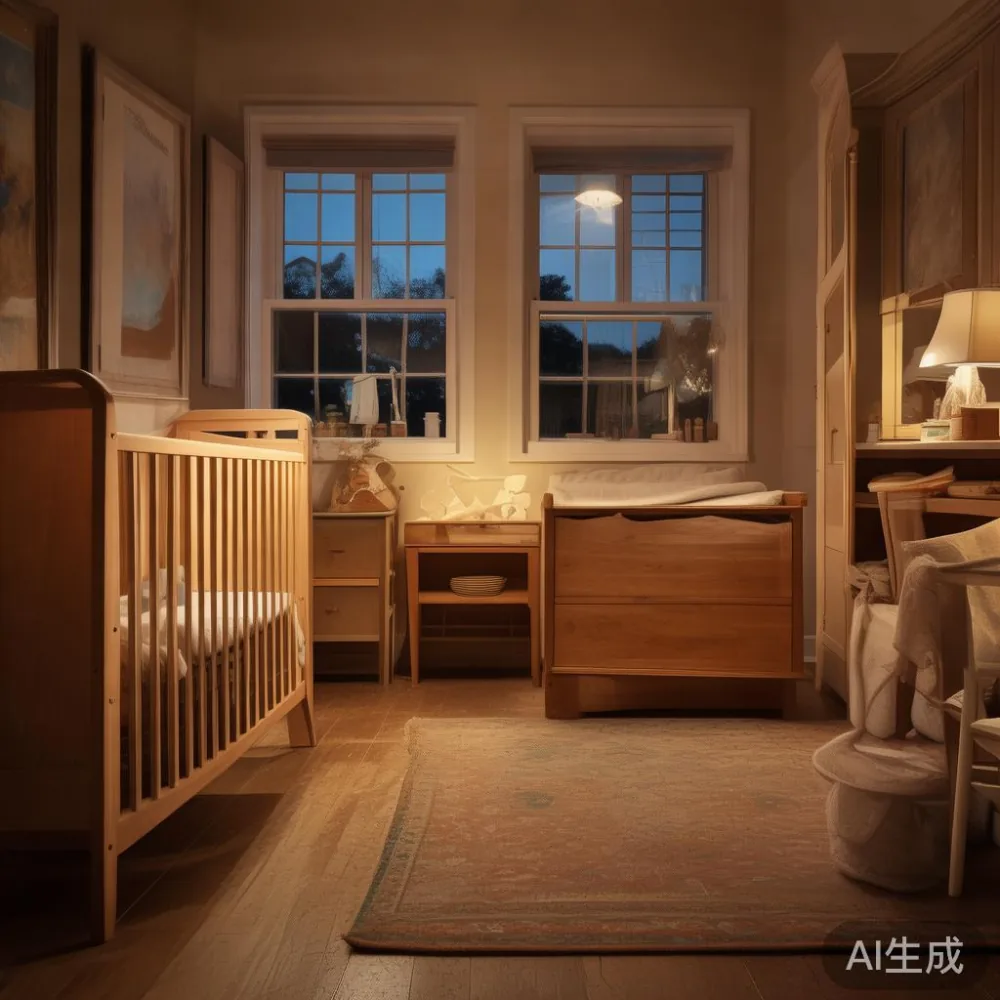
For households in Tampines, Bedok, and Punggol, the calculation also has to include delivery, GST, replacement parts, repair work, and the number of times a piece must be moved. MIDHILL, a Foshan solid wood furniture maker established in 2008 and exporting to more than 15 countries, offers a 10-year structural warranty, lifetime refinishing, free shipping above US$350, and 14-day returns. Those terms matter when comparing a nursery wardrobe or changing table that may be relocated within the home.
What does veneer actually mean?
Veneer is a thin layer of real timber, commonly around 0.3–1.0 cm thick, bonded to a panel core such as MDF, plywood, or particle board. A 180 cm wide nursery wardrobe may use several veneered boards, with edges, rails, and drawer components often made from different materials. Solid wood is cut directly from logs or laminated from solid timber strips. A 120 cm bed frame may contain oak, ash, beech, rubberwood, or another species, with different parts potentially using different grades.
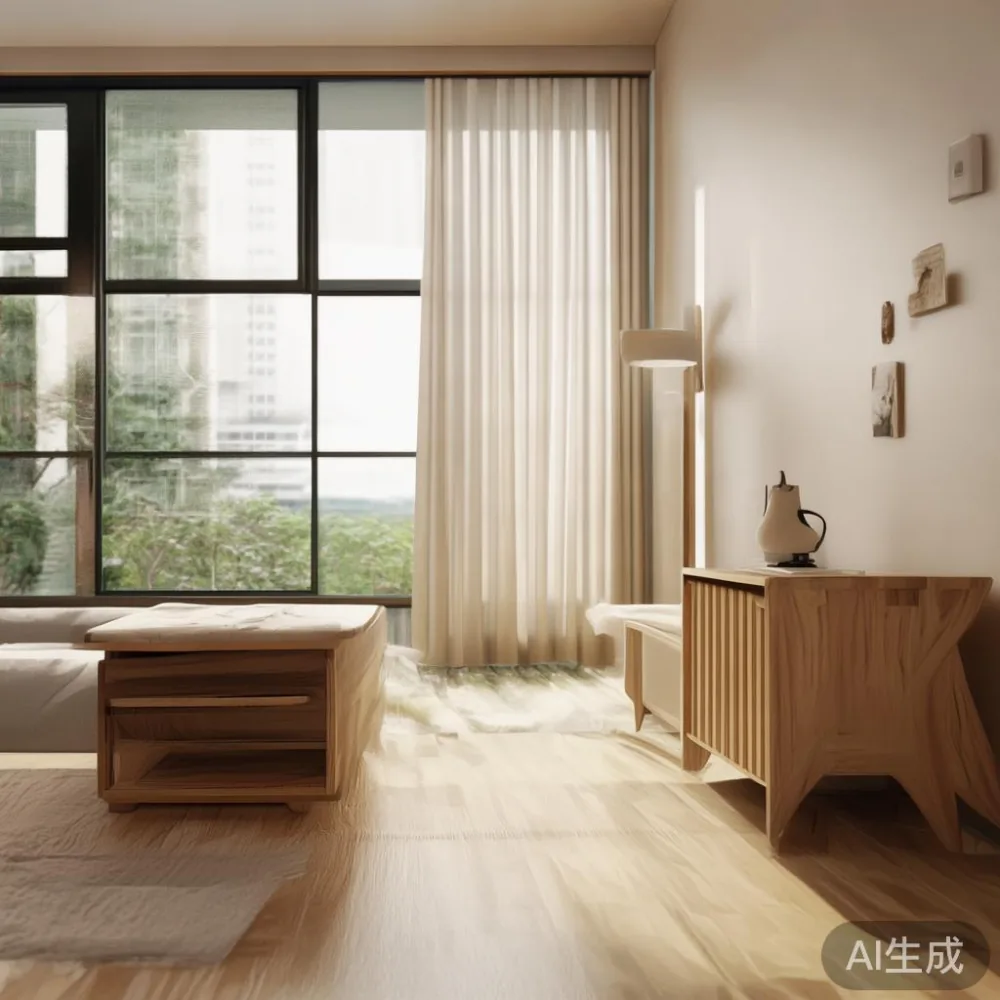
The word “wood” can therefore hide several price structures. A veneered wardrobe may sell for SGD 680, while a comparable solid wood wardrobe may cost SGD 1,350. The difference of SGD 670 is visible immediately, but the veneer product may weigh 48 kg against 62 kg for solid wood. That extra 14 kg can affect delivery, lifting through a narrow lift, and moving the wardrobe from a bedroom to a study.
Veneer has sensible advantages. It can produce smooth, consistent faces, and large panels are often lighter and less vulnerable to warping than thick solid boards. It can imitate an expensive timber appearance at a controlled cost. Solid wood, however, can be planed, sanded, filled, and refinished locally. For a nursery dresser with drawer fronts, this can matter when a child pulls, spills, or bumps the furniture.
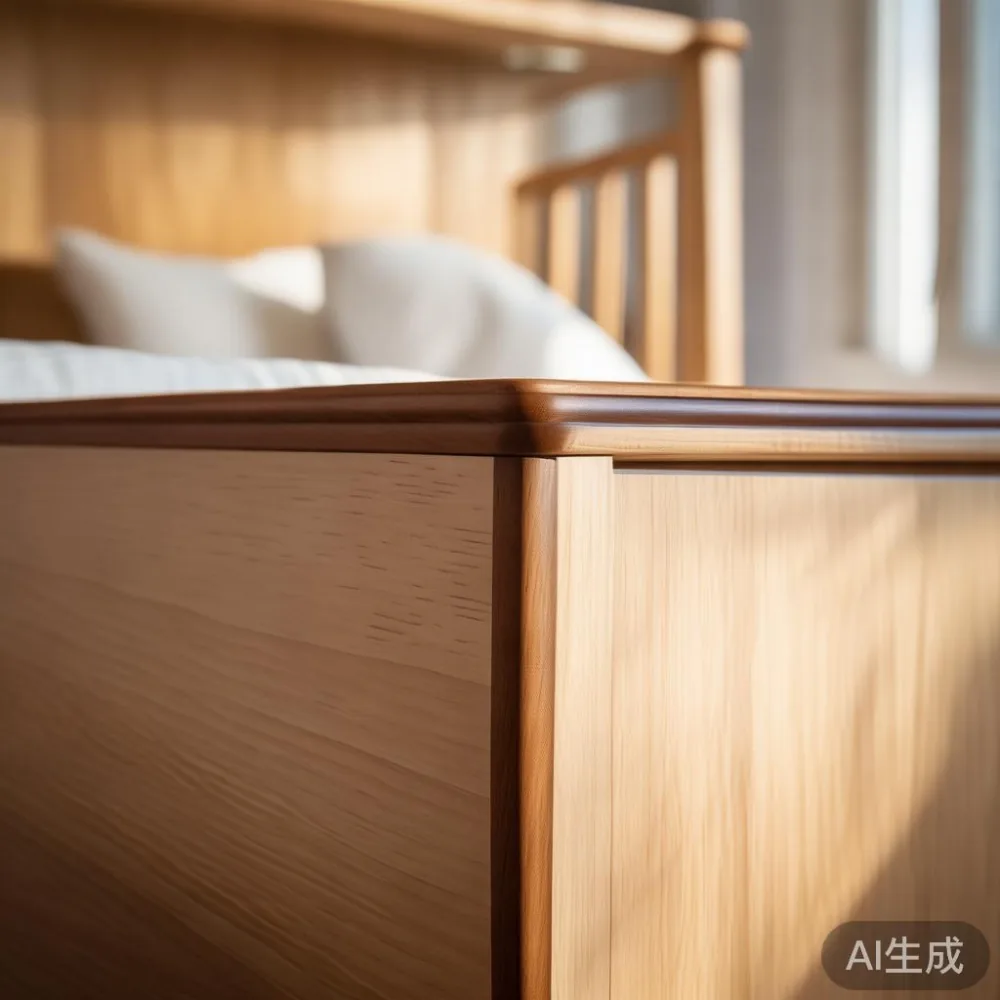
For families searching for Scandinavian for dining room styling, the material distinction is especially easy to overlook because pale veneers and pale solid woods can look similar in a showroom photograph. Actual performance becomes clearer when you inspect the drawer underside, the panel edge, the joinery, and the movement of the doors.
How much does each option cost over 5 years?
Let us compare 2 realistic nursery-furniture sets for a Singapore home. The first set consists of a 140 cm nursery bed frame, a 90 cm changing table with 2 drawers, a 60 cm nightstand, and a 120 cm nursery wardrobe. The second uses a 120 cm child’s bed frame, a 75 cm nursery dresser, a 45 cm bedside table, and a 100 cm wardrobe.
A mid-priced veneer package might cost SGD 1,080 including GST. A solid wood package from a similar visual standard might cost SGD 1,920 including GST. That is an initial difference of SGD 840, or SGD 168 per year across 5 years. This is not a universal selling price; it is a working example that allows us to compare likely maintenance and replacement costs.
| Cost item | Veneer example | Solid wood example |
|---|---|---|
| Initial set, including GST | SGD 1,080 | SGD 1,920 |
| Expected delivery and installation | SGD 90 | SGD 140 |
| 5-year refinishing provision | SGD 80 | SGD 160 |
| Expected repair or replacement reserve | SGD 220 | SGD 90 |
| 5-year total | SGD 1,470 | SGD 2,310 |
The veneer set reaches SGD 1,470 over 5 years, while the solid wood set reaches SGD 2,310. The gap narrows from SGD 840 at purchase to SGD 840 at the end in this example because the solid wood set carries higher delivery and refinishing costs but lower anticipated repair costs. The result changes if a veneered wardrobe’s back panel bows, its particle-board drawer joint fails in year 3, and replacement work costs SGD 260. The veneer total then becomes SGD 1,710, leaving a 5-year difference of SGD 600.
This comparison also assumes the furniture stays in one Singapore home. Moving it can add SGD 80–180 per trip, depending on access, staircases, and whether the lift operator must reserve a service window. A 42 cm corridor may require turning one end of a 140 cm nursery bed frame; check the diagonal clearances before ordering rather than relying on the product’s longest dimension.
Is solid wood really more expensive to maintain?
Not necessarily. Veneer can be inexpensive to maintain when the panels remain sealed and the furniture is handled carefully. A wipe with a damp cloth and immediate drying may be enough, with no oiling needed. The risk appears at exposed edges, joints, and drilled holes. If moisture reaches the core, swelling may lift the veneer layer, and a full board replacement may be needed instead of a small repair.
Solid wood generally accepts refinishing more readily, although species and finish matter. A nursery nightstand might need 2–3 hours of surface preparation and 2 coats of finish, with a typical local bench-top repair budget of SGD 40–90. Refinishing a complete wardrobe can cost SGD 180–450 because the doors, drawer fronts, and interior may need separate attention. Ask the maker what “refinishing” covers: surface scratches, water marks, structural joint repairs, or replacement timber are not the same service.
Last month I visited my colleague’s 3-bedroom HDB flat in Bedok and examined a 6-year-old child’s bed frame. One side had visible paint transfer from a marker pen. The owner sent photographs to the supplier, and the frame was refinished without replacing the timber. A second piece, a low veneer nightstand from a discount marketplace, had already lost its finish at the edge of a drawer. Its particle-board corner could not be repaired cleanly and had to be replaced for SGD 135. That first-hand comparison showed why edge construction deserves more attention than the timber species printed on the box.
Which material handles Singapore humidity and a child’s room better?
Singapore’s high humidity makes stable construction important. Relative humidity in many flats ranges from roughly 55% to 80%, and air-conditioned bedrooms can experience daily moisture changes of 10–20%. Solid wood expands and contracts as moisture changes, but reputable construction allows controlled movement. Veneered panels can also perform well if the core, adhesive, face veneer, and edge sealing are properly specified.
The practical danger is not simply “wood versus plywood.” It is an unsealed edge or a mixed-material joint in a room that receives frequent spills. For a nursery changing table, inspect the underside of the top, the end grain, drawer runners, and back panel. Solid timber end grain may still need sealing. A high-quality veneered changing table with plywood drawer boxes may outperform a poorly finished solid wood alternative.
Weight is another consideration. A solid oak nursery bed frame may weigh 38 kg, while a similar veneered frame weighs 27 kg. Heavier timber can feel stable and may resist tipping, but 38 kg is less convenient for a parent carrying it down 8 flights after a service-lift breakdown. The 140 cm length is also awkward even when the frame weighs only 27 kg.
Before ordering, measure the lift door, lift interior, landing, corridor turns, and bedroom doorway. A standard HDB lift may have a door opening near 70–90 cm, but the usable depth and turning circle can be smaller. For a condo, the loading bay and private lift booking may take 3–10 days; confirm access with the building manager and include the waiting time in the delivery estimate.
What if the nursery furniture becomes a child’s bedroom furniture?
A 5-year period usually spans a dramatic change. A newborn crib may become a toddler bed, then a study seat, and perhaps a reading chair for an older child. The wardrobe may eventually store school uniforms, art materials, and sports equipment. This is where solid wood can earn part of its higher initial cost by remaining repairable and adaptable.
A well-made solid wood bed frame can sometimes have its guardrail removed and lengthened as the child grows. Adjustable mattress support costs SGD 60–160 in labour and components, though the manufacturer must confirm that the frame was designed for conversion. Veneer wardrobes may need new shelf pins, drawer runners, or door hinges, which are accessible components. If the carcass itself is damaged, however, patch repair can look inconsistent because newly matched veneer is difficult to source.
Design language should also age well. A French provincial dining table may be too ornate for a nursery, but its carved details show how finish quality and joinery affect long-term appearance. In the child’s room, restrained proportions, rounded corners, and durable hardware usually matter more than heavy carving. An American light luxury approach can pair pale oak, warm ivory walls, and clean-lined storage without making the room feel precious.
For a growing wardrobe, compare capacity in cubic centimetres rather than just looking at door width. A 100 cm wardrobe may offer 0.72 m³ of usable internal space, while a 120 cm model offers 0.92 m³. The 120 cm version uses about 16% more floor area but can reduce the need to replace it later. That potential second purchase should be included in the 5-year calculation.
Is a solid wood sofa or dining table relevant to a nursery project?
A nursery project often expands beyond the child’s bedroom. A family may need a solid wood sofa, a dining table, or a marble table elsewhere in the flat, and these pieces can affect the total budget for a move. The comparison remains relevant because delivery access and long-term care apply across the home.
A solid wood sofa may cost SGD 2,600 and require SGD 120–220 for delivery through a condominium corridor. A fabric-upholstered alternative may cost SGD 1,480 but cannot be refinished like timber. A marble table may add SGD 300–700 in delivery because the slab needs careful handling, edge protection, and insured transport. Neither material choice erases those logistics costs.
For an apartment, Mid-century modern for apartment layouts often uses compact footprints, raised storage, and visually light finishes. In designer Mid-century modern furniture, veneers have long been used for curved forms because slicing thin timber creates stable, repeatable shapes. Solid wood can suit rectilinear, durable pieces such as a dining table, while a marble table may provide a strong visual centre in a compact flat.
If you are planning light luxury for dining room schemes, a solid wood dining table offers repair options, but a marble top offers a different kind of permanence. Marble is not repairable by sanding in the way timber is; chips usually require specialist filling or replacement. Choose according to use: timber for warmth and repairability, marble for pattern and a formal light-luxury finish.
How do you compare a 5-year total cost fairly?
Start with the delivered price including GST. Record each item’s dimensions in centimetres, weight in kilograms, timber species, core material, finish type, joinery, and warranty. Then add realistic costs: delivery, installation, floor protection, relocation, refinishing, and likely hardware replacement. Divide the 5-year total by 5 to compare annual ownership cost, but also consider the age and condition of each piece at year 5.
For example, consider 3 candidates for a 120 cm wardrobe:
- Option A: veneered MDF, SGD 520 including GST, 41 kg, 5-year estimated total SGD 700, no structural warranty stated, 14-day returns only.
- Option B: solid rubberwood, SGD 860 including GST, 54 kg, 5-year estimated total SGD 1,070, 10-year structural warranty, lifetime refinishing.
- Option C: solid oak with dovetail drawer boxes, SGD 1,240 including GST, 61 kg, 5-year estimated total SGD 1,490, 10-year structural warranty, lifetime refinishing.
Option B costs 2.5 times Option A at purchase, yet its estimated 5-year total is only SGD 370 higher because it includes repair support and refinishing. Option C may be worth the extra SGD 420 if the family expects the wardrobe to become a study or guest-room cupboard for at least 10 years.
When checking a solid wood bed frame, ask whether “solid wood” applies to the entire frame or only visible parts. Drawer sides, backs, and partitions are often different materials. For a dining table, verify whether the top is solid timber and whether the base is solid wood or plywood. For a nightstand, a solid top over a reliable engineered carcass may offer a sensible balance.
Can a 5-year comparison change your decorating plans?
Yes. Material cost can determine whether a room uses one larger storage unit or 2 smaller pieces, and whether the family chooses a fixed white finish or natural timber that can be refinished when tastes change. Light-luxury design does not require an extravagant room; it depends on proportion, texture, restrained colour, and well-made objects.
If you are researching the best Japandi wardrobe for 2026, examine adjustable shelving, drawer depth, soft-close hardware, ventilation, and whether the finish can be maintained. A Japandi-style wardrobe with pale timber and clean lines can suit a Tampines HDB bedroom, yet the installation dimensions remain critical. A 150 cm unit may look elegant but cannot be tilted into a 78 cm lift opening without risking the frame or lift door.
Use the 5-year figure to separate needs from preferences. If the child’s wardrobe will hold hanging clothes and school equipment, allocate more height to a rail and adjustable shelf. If a piece is temporary, a lower-cost veneer may be reasonable. If the furniture is intended to stay through a move, a second child, or a home-office conversion, solid wood offers more repair and refinishing opportunities.
What should you ask before ordering nursery furniture?
Ask for the delivered dimensions, not only the product dimensions. Request packed weight and the number of cartons. Confirm the lift and corridor measurement method, delivery lead time, and whether stair or service-lift charges apply. A typical Singapore delivery estimate is 5–10 days after stock confirmation, while made-to-order nursery furniture can require 4–8 weeks.
Also ask what is covered by the structural warranty, how claims are processed, and whether refinishing includes labour. Confirm the return window, assembly requirements, and the treatment of visible timber grain, small knots, and colour variation. For a solid wood sofa, bed frame, dining table, wardrobe, nightstand, or marble table, retain the care instructions and spare hardware in one folder.
On the other hand, ask what makes the veneer option competitive. A well-built plywood core with sealed edges, functioning drawer boxes, and replaceable hardware can provide good service at lower upfront cost. The mistake is paying a premium for the word “solid” without knowing where solid timber is used, or saving money without knowing what a future repair will involve.
Which option offers the better 5-year value?
For a frequently used nursery wardrobe, changing table, and bed frame that will remain through a child’s growth, solid wood often provides the stronger 5-year value when the supplier supports structural repairs and refinishing. In the example above, it cost more at purchase but avoided higher repair reserves and retained more future usefulness.
Veneer can still be the practical choice for lower-risk items, temporary storage, or homes with very reliable indoor conditions. The deciding factor is construction, not the material label alone. Inspect edges, joints, drawer boxes, and back panels; calculate a delivered 5-year cost; and make sure the piece can enter your Singapore home safely.
A sound decision ends with a number, a measurement, and a maintenance plan. For a family in Bedok, Tampines, or Punggol, those 3 checks can prevent both budget surprises and damaged walls, doors, and furniture during delivery. MIDHILL’s relevant support terms give solid wood buyers useful protection, but the best fit still depends on the room, the child, and the years ahead.