How to Match Solid Wood Furniture to a Warm Minimal Interior in a Singapore HDB
I visited a resale 4-room HDB in Tampines last month with my colleague, who had just taken over the unit from her parents. The previous owners had left a heavy, dark rosewood dining table that visually swallowed the living room. After two days of measuring, sanding, and re-staining at the MIDHILL workshop, the same piece went back in as a pale oak dining table with tapered legs, and the entire flat read lighter, calmer, and noticeably warmer. That single swap taught me more about warm minimal interiors than any moodboard ever could.
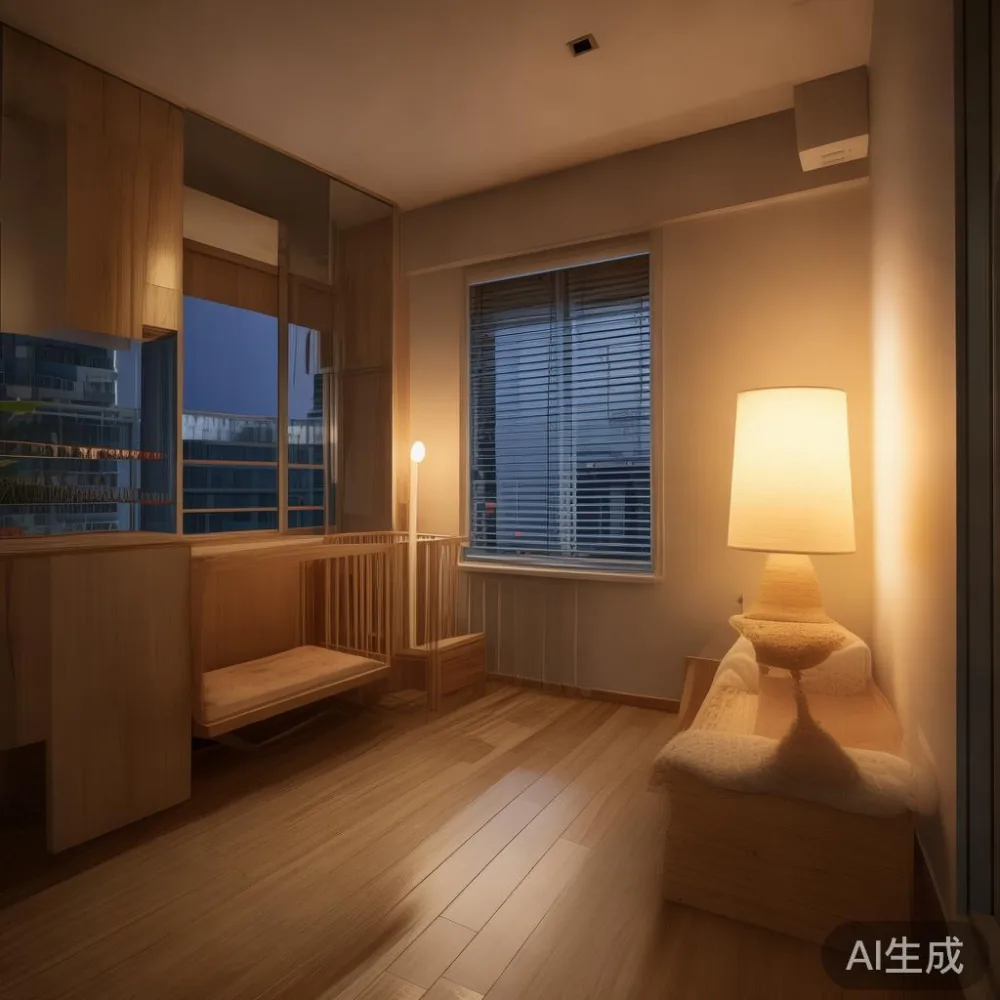
Warm minimalism is the space Singapore homeowners keep asking for, especially in HDB flats and condos from Bedok to Punggol where square footage is tight and the tropical light is strong. The walls lean cream, the floors lean natural, the furniture has clean lines, and the wood tones do the emotional work. Done well, a 90 sqm BTO can feel like a 110 sqm apartment with personality. Done poorly, it looks like a furniture showroom with no soul.
What exactly is a warm minimal interior?
A warm minimal interior is a room that holds three things at once: restraint in the number of objects, softness in the materials, and a single temperature of light. Cool minimalism leans white, black, and chrome. Warm minimalism leans off-white, sand, beige, taupe, honey oak, ash, and walnut. The silhouettes stay clean — think a low-profile solid wood sofa with a rectangular bench seat, a bed frame with a 6 cm recessed plinth, a dining table with a 4 cm top and tapered legs — but the surfaces are tactile rather than glossy.
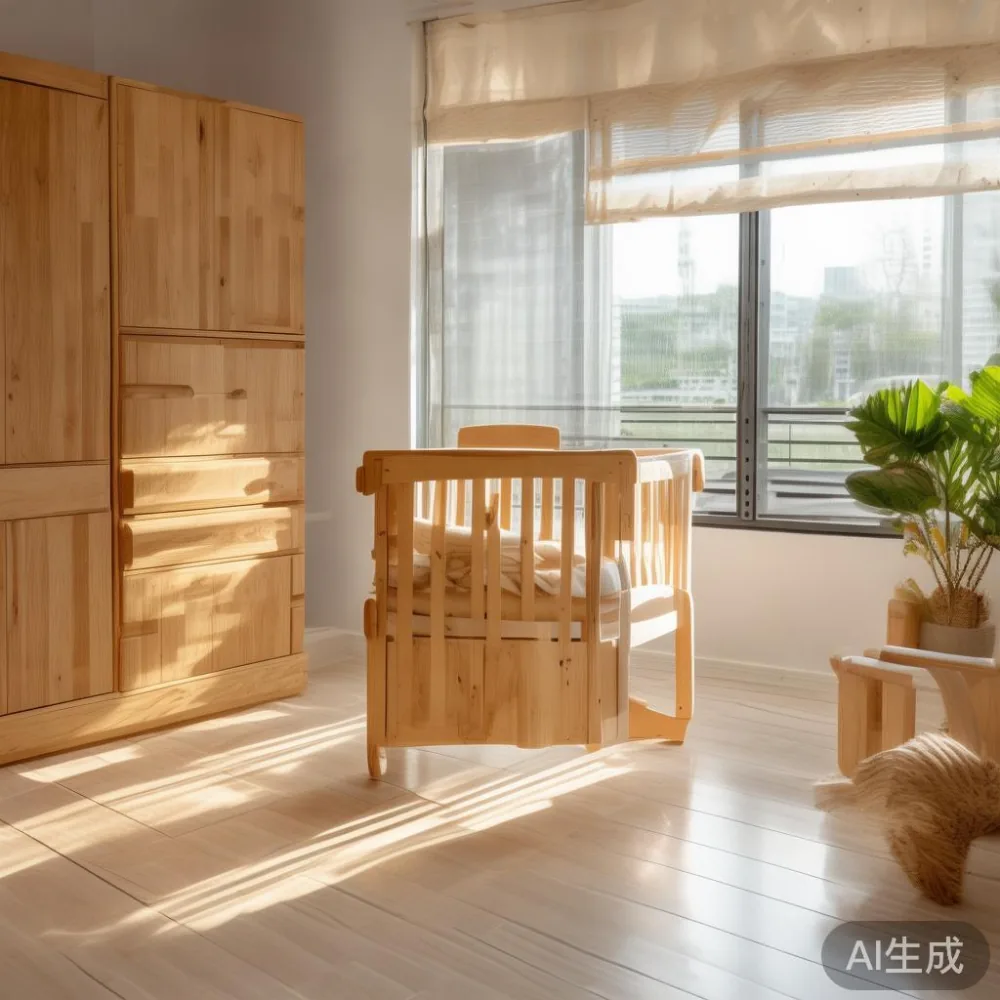
In Singapore terms, this style handles our humidity and our light surprisingly well. Pale woods reflect the harsh afternoon sun rather than absorbing it. Rounded edges soften the acoustics of a hard, tiled HDB. And because everything is wood-led, you can swap cushion covers, throws, and rugs when the season changes without touching the bones of the room.
Which solid wood pieces anchor a warm minimal HDB the best?
I rank anchor pieces by how long they stay in the room. A bed frame, a dining table, and a wardrobe move with you to the next home. A sofa and nightstand are often replaced. So the three anchor pieces deserve the biggest budget.
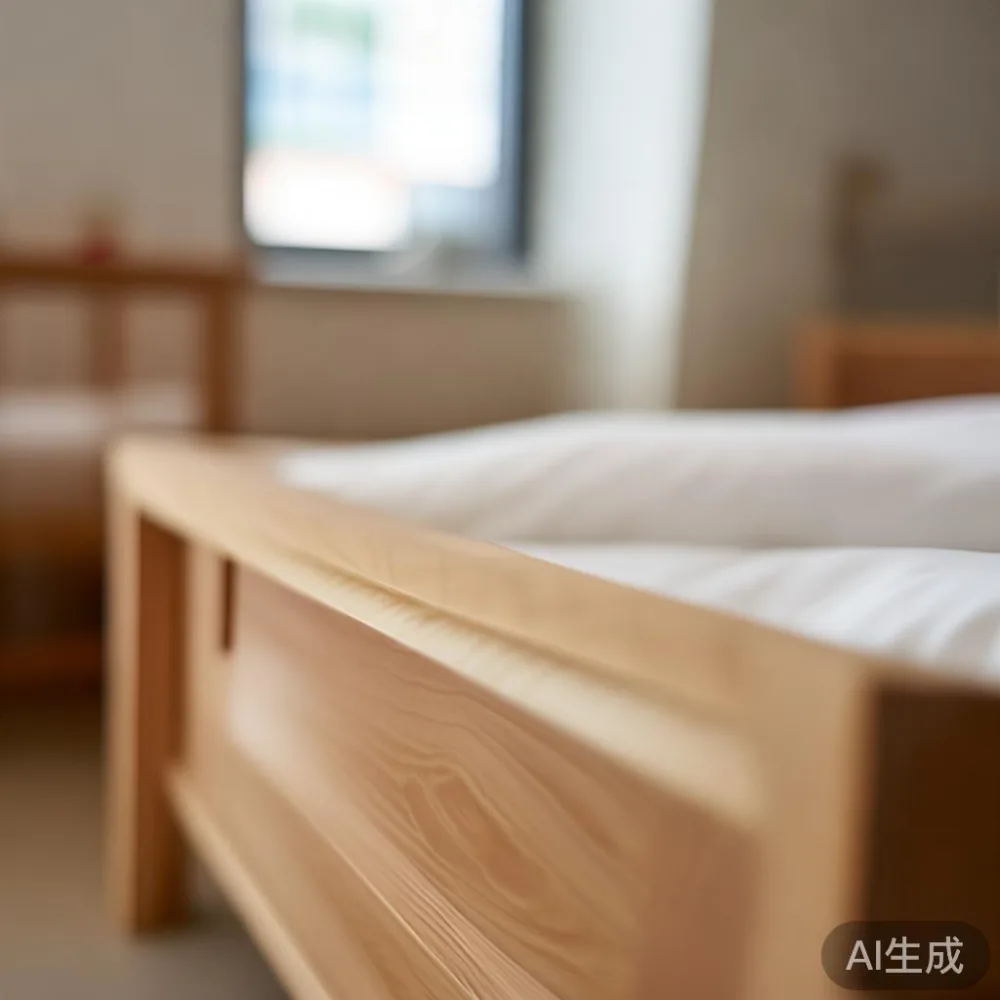
For the bedroom, an ash or white oak bed frame in queen (152 cm x 188 cm) or king (183 cm x 198 cm) works in 90% of HDB master rooms. The clearance underneath should be at least 12 cm so a robot vacuum can pass, and the headboard should sit between 95 cm and 110 cm tall — high enough to lean on, low enough to keep the ceiling visible. MIDHILL ships bed frames flat-packed with corner braces pre-drilled, which matters when your lift opening is 80 cm wide and your corridor is 1.2 m.
For the dining area, a rectangular 140 cm x 80 cm table seats four comfortably and slips through a standard 90 cm HDB door. Round tables lose about 15 cm of usable surface versus a rectangle of the same width, so I rarely recommend them under 110 cm diameter. Pair the dining table with chairs that have a seat height of 45 cm and a table apron of 65 cm to 68 cm. Marble tables are popular right now, but for families with children under five I push back toward solid wood — marble tops chip at the corners and the repair is expensive.
For storage, a 3-door wardrobe in 180 cm x 200 cm fits most HDB bedrooms. A 4-door slider in 240 cm x 220 cm swallows two adults' worth of clothes and looks like a wall, not furniture, which is the warm minimal sweet spot. Nightstands should be 45 cm to 50 cm tall, level with your mattress top, and no deeper than 40 cm so the door can still open behind them.
How do I care for a outdoor patio in humid weather?
Wipe your patio furniture down with a dry microfiber cloth every week, treat any exposed wood with a teak oil or hardwax oil every three to four months, and cover or store cushions indoors when the afternoon storm hits, because Singapore's average humidity of 78 to 82 percent will swell exposed end-grain within a single wet season if left untreated.
That answer comes straight from my own patio routine in Punggol. I keep two outdoor teak stools and a small folding oak table on the balcony. Every Sunday I wipe them down. Every quarter I oil them. The cost of a 250 ml tin of hardwax oil is around SGD 18 to SGD 28, and one tin covers both pieces four times over. The savings over five years, versus replacing the set, are roughly SGD 600.
What wood tones read as "warm minimal" rather than "Scandi cold"?
Scandi cold uses whitewashed pine, birch, and pale maple with grey undertones. Warm minimal uses honey oak, natural ash, light walnut, and pale teak. The difference is a shift of about 200 to 400 Kelvin in the perceived colour temperature of the wood.
Honey oak carries yellow-orange undertones. It pairs with off-white walls (think Benjamin Moore OC-17 or Nippon Paint code 36GY 88/026) and brushed brass hardware. Natural ash has a pink-beige undertone and is the safest choice if your HDB floor is already a grey-washed laminate. Light walnut skews darker and reads almost chocolate in raking light, so I only use it on one piece per room — usually the wardrobe — to ground the space without darkening it. Pale teak handles our humidity best of all four and is the natural pick if you are ordering a dining table that will sit near the service yard door.
When I worked on my colleague's Tampines flat, we paired a pale oak dining table with an ash bed frame in the master and a walnut wardrobe as the only dark surface in the room. The total wood count was three species, all within 200 Kelvin of each other on screen, and the room read as one continuous warm tone.
How do light-luxury styles actually translate to a Singapore HDB?
Light luxury is a positioning, not a checklist. French light luxury leans on curved silhouettes, cabriole-adjacent legs, and a single marble accent. American light luxury leans on generous proportions, soft edges, and brass detailing. Post-modern light luxury leans on geometry, asymmetry, and mixed materials.
For a 90 sqm HDB, French light luxury is the hardest to pull off because the curves need breathing room. A marble table with a curved apron and a 2 cm chamfered edge can work as a coffee table, but I would not put a French-style solid wood sofa in a BTO living room under 3.2 m wall length. American light luxury fits HDBs the best because the proportions are slightly larger than Scandi and the silhouettes still read clean. A 220 cm three-seater with rolled arms in washed linen, paired with a 110 cm x 60 cm oak coffee table, is American light luxury without trying. Post-modern light luxury is the most forgiving — a geometric nightstand, a hexagonal marble side table, a wardrobe with a vertical fluted panel — and it survives trend cycles longer than the other two.
MIDHILL's showroom in Foshan groups these three buckets on separate floors, which makes the comparison easier when you are buying sight-unseen from Singapore. You can request a swatch pack of three finishes for SGD 25, refundable against an order, and keep the pack for future reference.
How do I get pieces through the lift and corridor without damage?
Measure your lift door, your lift car, and the corridor turn before you order. Most Singapore HDB passenger lifts are 1.1 m wide x 2.1 m tall at the door and 1.4 m deep x 1.8 m wide inside. A queen-size bed frame in a flat-pack box of about 165 cm x 28 cm x 22 cm will fit through every standard lift, but a fully assembled king frame of 198 cm will not.
Service lifts in newer condos at Punggol and Sengkang are larger, often 1.6 m wide x 2.4 m tall, but they book out two weeks ahead during weekends. Delivery windows from Foshan to Singapore are 25 to 35 days by sea, or 7 to 10 days by air for an added SGD 280 to SGD 450 per piece. Customs clearance adds three to five working days. From order to flat, plan 35 to 45 days for sea freight, 12 to 18 days for air.
Flat-pack is the practical answer for most HDB corridors, where the turn from lift lobby to front door is often a 90-degree corner with a 1.2 m clearance. MIDHILL flat-packs every bed frame, dining table, wardrobe, and nightstand above 120 cm in any dimension. The largest box for a 4-door wardrobe is around 230 cm x 60 cm x 22 cm, and the heaviest single panel is 38 kg — manageable for two movers. On-site assembly is included for orders over US$350 equivalent, which covers most SGD 500+ pieces, and the team brings corner braces, a cordless drill, and floor protectors.
What does a warm minimal HDB actually cost in SGD?
Budget honestly, in three tiers.
Entry tier, around SGD 4,500 to SGD 7,000 for a full three-bedroom set: an ash bed frame in queen (SGD 1,400 to 1,900), a 140 cm oak dining table with four chairs (SGD 1,800 to 2,400), a 3-door wardrobe (SGD 1,000 to 1,500), two nightstands (SGD 400 to 600 for the pair). This tier works if you are renting out the flat or staging it for sale.
Mid tier, around SGD 9,000 to SGD 14,000: add a solid wood sofa in a performance linen (SGD 2,800 to 4,200 for a 220 cm three-seater), upgrade the dining table to a 160 cm x 85 cm piece with a thicker 4 cm top (SGD 2,200 to 3,000), add a marble table for the entryway (SGD 900 to 1,400), and replace the nightstands with two-drawer versions with soft-close runners (SGD 700 to 1,000 for the pair). This is the tier most young couples in Punggol and Bedok land on.
Upper tier, around SGD 18,000 to SGD 26,000: a king-size bed frame with an upholstered headboard (SGD 3,200 to 4,800), a 180 cm x 95 cm dining table in light walnut (SGD 3,500 to 5,000) with six chairs, a 4-door wardrobe with fluted panels (SGD 4,000 to 6,000), a marble coffee table (SGD 1,800 to 2,600), two bedside tables with marble tops (SGD 1,200 to 1,800), and a solid wood entry bench (SGD 800 to 1,200).
GST of 9 percent applies on the landed SGD price, including shipping. Free shipping kicks in above US$350 (about SGD 470) per order, which most mid and upper tier pieces clear on their own. Returns within 14 days are accepted on unused pieces in original packing; bespoke finishes are non-returnable, so always order a swatch first.
How do I keep warm minimal furniture looking new for the next ten years?
A ten-year structural warranty covers the joinery, the drawer runners, and the frame. Your job is to cover the finish, the climate, and the small knocks.
Keep the room between 22 and 28 degrees Celsius with relative humidity between 40 and 65 percent. Singapore runs higher than both, so a dehumidifier set to 55 percent in the bedroom extends the life of an oak bed frame by three to five years. Rotate the wardrobe doors every six months so the same edge does not take all the wear. Oil the dining table every four months with a food-safe hardwax oil — a 500 ml tin costs SGD 28 to SGD 38 and covers a 160 cm table eight to ten times. Vacuum the solid wood sofa cushions monthly and flip them every three months to even out the compression.
MIDHILL offers lifetime refinishing on solid wood pieces for a small service fee — currently SGD 180 to SGD 320 per piece depending on size — which means the pale oak dining table my colleague put into her Tampines flat can be re-stained to walnut in 2032 if her taste shifts. That single promise is why I lean solid wood for anchor pieces in HDBs: the room can change three times before the furniture has to.
Is nursery furniture from the same warm minimal family?
Yes, and that is one of the reasons warm minimal works so well for young families in Singapore. Nursery furniture built from the same solid wood, the same pale finishes, and the same clean silhouettes carries visually from the master bedroom into the nursery without a jarring break. A convertible cot in ash, a matching changing table with a 90 cm x 60 cm footprint, a low open wardrobe 120 cm tall, and a small reading chair in the same washed linen as the living room sofa keep the whole flat on one temperature.
For nursery furniture specifically, look for convertible pieces — a cot that becomes a toddler bed at around age two, a changing table that becomes a six-drawer dresser at around age three — so the spend is amortised over six to eight years rather than eighteen months. The cot mattress height should adjust in three positions: 50 cm for newborns, 35 cm at six months, and 20 cm once the child can pull to stand. Solid wood cots in ash or beech handle the daily humidity swings of a Singapore nursery far better than MDF with a veneer, which tends to swell at the corners within two wet seasons.
When the same warm minimal vocabulary runs from the living room through the master bedroom and into the nursery furniture, the whole flat reads as one decision rather than three, and that continuity is the single biggest upgrade you can give a resale HDB without touching a wall.