Nursery Furniture in Singapore: What I Wish I Knew Before Buying for My HDB
How much nursery furniture actually fits in a Singapore HDB bedroom?
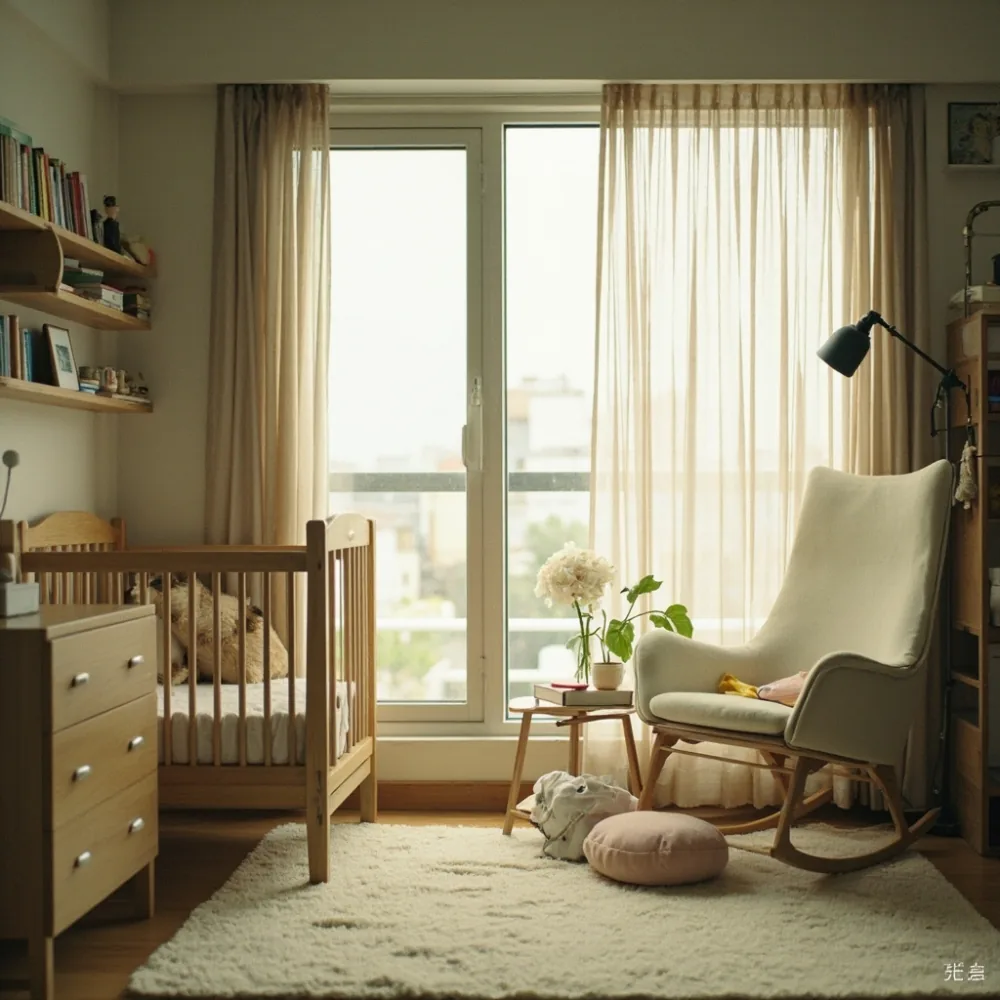
Measuring your room before you fall in love
Standard HDB and condo dimensions you should know
Most Singapore parents I speak with underestimate how little usable floor space they really have once the bed, wardrobe, and air-con unit are accounted for. A typical 3-room HDB master bedroom is about 9 sqm, and a 4-room HDB is closer to 12 sqm. Once you place a queen bed against the wall, a wardrobe, and a small nursing corner, you are often left with a 1.8 m by 1.8 m patch for the cot, dresser, and a feeding chair.
Before anything else, tape out the footprint on the floor. Use masking tape to mark the cot, the dresser, and the space you need to walk around them. You want at least 60 cm of clearance on the side where you will be leaning in to pick up the baby at night, and ideally 90 cm at the foot so you can kneel to strap the dressing to the dresser safely.
- 3-room HDB master bedroom: roughly 3 m by 3 m, plan for compact pieces under 110 cm long
- 4-room HDB master bedroom: roughly 3.3 m by 3.6 m, a full-size convertible cot fits if the dresser is shallow
- Condo common bedroom: often 2.7 m by 3 m, measure the wardrobe swing before you commit
- Lift access corridors in Tiong Bahru, Queenstown, and Toa Payoh tend to be tight, so flat-pack depth under 25 cm saves a headache
Small space furniture is not just about shrinking dimensions. It is about pieces that do double duty. A dresser that becomes a changing table, a cot that converts to a toddler bed, and a nursing chair that rocks a toddler on floor both before nap time. These are the items that earn their footprint in a Singapore nursery.
Does humidity actually ruin solid wood nursery furniture in Singapore?
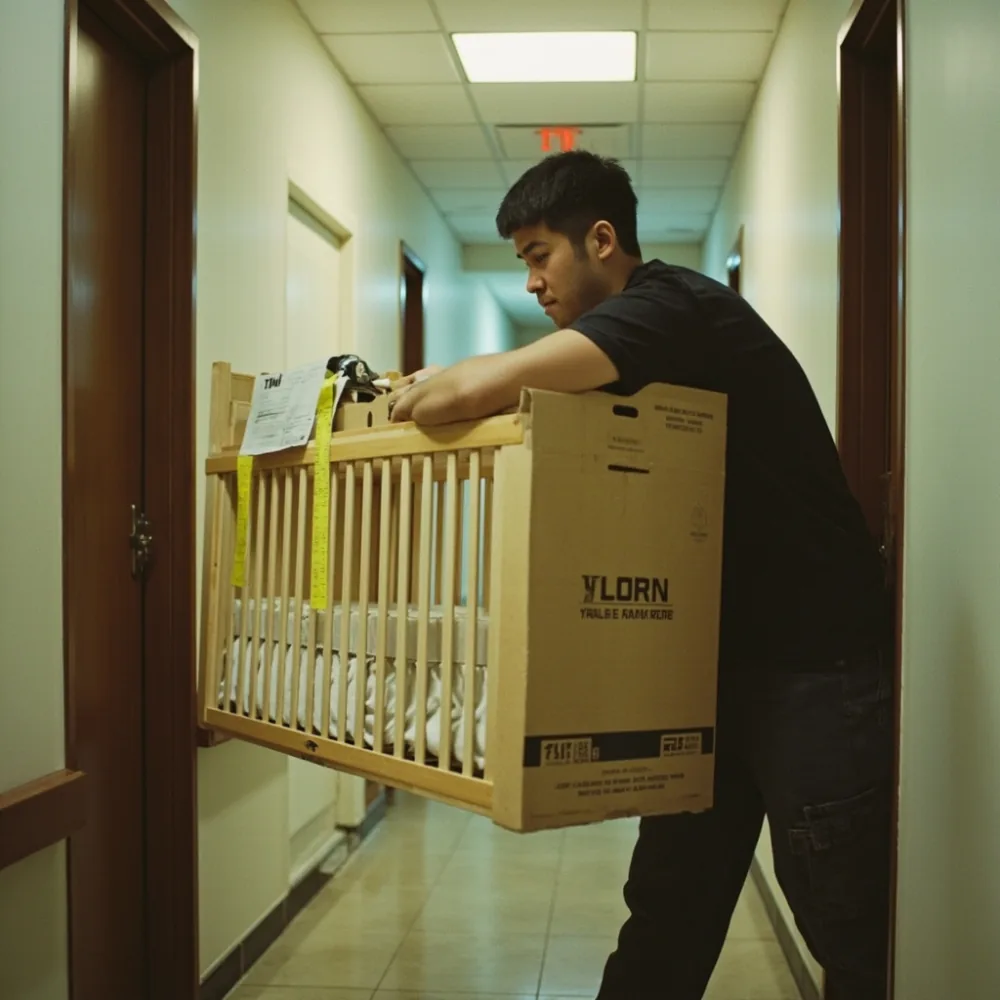
What humidity does to different materials
Practical steps that actually help
Yes, humidity ruins solid wood if you ignore it, but no, it does not have to be a disaster. Singapore sits at 70 to 85 percent relative humidity year-round, with afternoon spikes during the monsoon season from November to January. Solid wood breathes, which is why it feels nicer than MDF, but that breathing becomes swelling, sticking drawers, and cracked panels when the moisture content of the wood keeps shifting.
What I look for is kiln-dried solid wood furniture, ideally dried to 8 to 12 percent moisture content, with joinery that allows movement. Mortise and tenon, dowels, and proper dovetail drawer boxes all let the wood expand without splitting. MDF and particleboard absorb humidity faster than solid wood and swell permanently within 2 to 3 years, especially on drawer bottoms and shelf edges.
- Run a small dehumidifier set to 55 percent humidity in the nursery, it costs roughly 15 to 25 SGD a month in electricity
- Keep nursery furniture 20 to 30 cm away from exterior walls, which sweat more during the wet season
- Avoid placing the cot near the window, morning sun and condensation both damage finishes over time
- Wipe spills within minutes, never let water sit on a wood surface overnight
A well-made solid wood piece from a maker like MIDHILL, who has been producing solid wood furniture out of Foshan since 2008, is built for exactly these conditions. Their 10-year structural warranty covers joint failure and cracking, which are the two things humidity actually causes. Cheaper pieces without that warranty usually fail at the joints first.
What safety standards should a Singapore nursery cot actually meet?
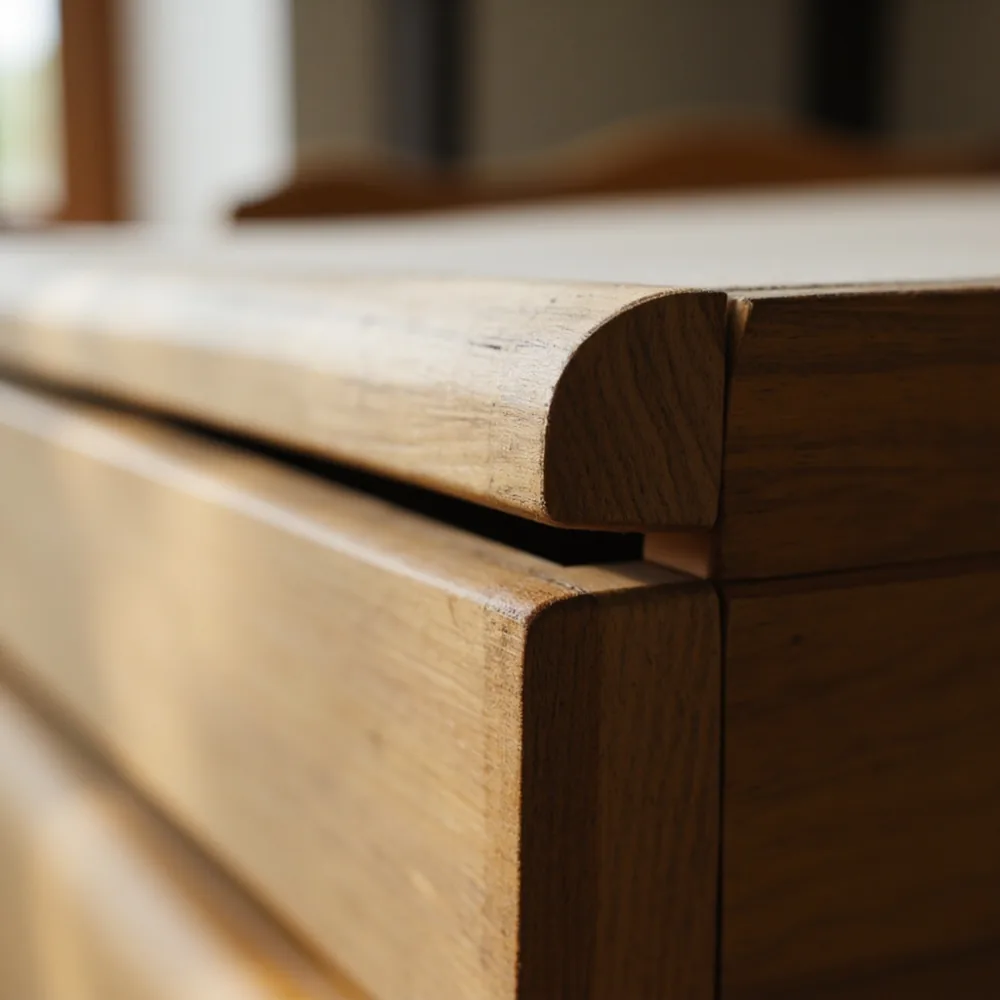
The marks worth trusting
Common gaps in cheaper cots
Singapore does not have a single mandatory safety standard for nursery cots the way the EU and US do, so the brands that bother to test to EN 716 or ASTM F1169 are doing you a favour. I treat those certifications as a baseline, not a bonus. A cot that has not been tested is a gamble I am not willing to take with a 6-month-old.
Beyond the certification, look at the specifics. Slat spacing must be under 6 cm so a baby's head cannot get trapped. The mattress must fit snugly with no gap over 3 cm on any side. Drop sides have been banned in many markets because of mechanical failures, so I prefer fixed-side cots with a lower rail height of about 60 cm from the mattress base.
- EN 716 (Europe) or ASTM F1169 (US) certification printed on the packaging or manual
- Non-toxic, water-based finish that is food-contact safe, since babies chew the rails
- Teething rails on at least the top edges, plastic is fine if it is BPA-free
- Lockable castors if the cot has wheels, a cot that drifts is dangerous on a wooden HDB floor
Custom furniture makers in the region often skip these certifications because the local market does not require them. If you are buying custom, ask the maker directly which standard they tested to and request the test report. A reputable workshop will have one on file.
How much should a quality nursery set realistically cost in Singapore?
Price tiers and what they actually buy you
Hidden costs Singapore parents forget
Budget roughly 1,500 to 4,500 SGD for a complete nursery set, cot plus dresser plus nursing chair, if you want pieces that last two children. Below 1,000 SGD for the set and you are almost certainly looking at MDF with a thin laminate, which will not survive Singapore humidity past the toddler years. Above 6,000 SGD and you are paying for brand name, not necessarily better wood or joinery.
I keep a spreadsheet when comparing, and the real cost is never the sticker price. Delivery to a specific HDB on floor both, with no lift, runs a 40 to 80 SGD surcharge depending on the district. Sentosa and certain private condos require time-slot bookings that add 30 to 60 SGD. Assembly is sometimes included, but stairwell-only access in older blocks like those in Tiong Bahru can add 100 to 200 SGD for two delivery men carrying flat-pack boxes up four floors.
- Entry tier (under 800 SGD): MDF with paper laminate, expect 2 to 4 year lifespan
- Mid tier (1,200 to 2,500 SGD): solid wood or quality engineered wood, 5 to 8 year lifespan
- Premium tier (3,000 to 6,000 SGD): kiln-dried solid wood, dovetail joinery, 10+ year lifespan
- Custom tier (4,000 to 8,000 SGD+): made-to-measure, often imported, 6 to 12 week lead time
For parents who want durability without the premium markup, looking at established regional makers is the smartest move. A Foshan-based workshop shipping directly or through a Singapore distributor can land a solid wood cot at 900 to 1,400 SGD with finishes that match pieces twice the price at local retailers.
Which nursery pieces are worth buying used and which should always be new?
Safe to buy pre-loved
Never buy second-hand
A wooden cot and a solid dresser from nursery are the pieces I would always buy new. The reason is not snobbery, it is safety recall history. A cot made before 2011 may not meet current slat spacing rules, and you often cannot verify the recall status of an imported used piece. Mattresses are the same, used mattresses can harbour mould and dust mites that you cannot wash out, and Singapore humidity makes this worse.
What I happily buy used is a nursing rocking chair, a glider, a baby bouncer, a stroller, and a high chair. These items have no recall risk, they wear out cosmetically rather than structurally, and they lose 50 to 70 percent of their value the day they leave the shop. Carousels at Thomson and Tiong Bahru are the best hunting grounds, plus Facebook groups for specific estates like Bishan, Punggol, and Marine Parade.
- Cot: always buy new, safety recalls cannot be verified on used imports
- Mattress: always buy new, hygiene and support inside humidity
- Dresser: new if solid wood, used if quality brand and you can inspect joints
- Nursing chair: used is ideal, no safety concern and big savings
- High chair, bouncer, swing: used is fine, check fabric for mould and straps for fraying
If you go custom, you skip the used market entirely, which is honestly the cleanest path for first-time parents. You get pieces sized to your exact room, finishes that match your existing solid wood furniture, and a warranty that means something because the workshop is accountable.
What dimensions do you actually need for a Singapore nursery cot and mattress?
Standard sizes and when to deviate
Standard Singapore and regional cots take a 120 cm by 60 cm mattress, which is the same as European sizing. American cots take 130 cm by 70 cm, so do not assume a US mattress fits a regional cot or you will have dangerous gaps. The internal cot dimensions should be roughly 124 cm by 65 cm to allow the mattress to slide in without force and without gaps.
Mattress height off the floor matters more than parents realise. For a newborn, the mattress should sit at the highest position, roughly 55 to 60 cm from the floor, so you do not strain your back during night feeds. As the baby grows and starts to pull up, drop the mattress to the lowest position, which should leave at least 60 cm from the top rail to the mattress surface to prevent climbing out.
| Item | Standard size (cm) | Weight (kg) | Price range (SGD) | Lifespan in Singapore |
|---|---|---|---|---|
| Cot (internal) | 124 x 65 x 90 | 18 to 28 | 400 to 1,800 | 7 to 10 years |
| Mattress | 120 x 60 x 10 | 3 to 6 | 120 to 600 | 3 to 5 years |
| Dresser with changer | 90 x 50 x 95 | 35 to 55 | 500 to 2,200 | 10+ years |
| Nursing rocking chair | 75 x 70 x 95 | 15 to 25 | 300 to 1,400 | 10+ years |
| Convertible cot (extended) | 140 x 75 x 90 | 25 to 40 | 800 to 3,000 | 10+ years |
I always tell parents to bring their own measuring tape to the showroom. A cot that looks compact on the shop floor will look enormous in a 9 sqm HDB bedroom with a queen bed already in it.
How long does delivery and assembly actually take in Singapore?
Realistic timeframes
What to have ready before delivery day
For in-stock pieces, expect 3 to 7 working days for delivery within Singapore. Custom orders from regional workshops take 6 to 10 weeks plus shipping, so order before the third trimester if you can. Made-to-measure pieces from local carpenters can take 4 to 8 weeks depending on the workshop queue, and HDB corridor restrictions sometimes force evening or weekend delivery slots that add 50 to 100 SGD.
On delivery day, clear the corridor outside your HDB unit the night before. Delivery teams in Singapore are fast, but they cannot carry a flat-pack cot box through a hallway cluttered with your neighbour's shoe rack and a stack of cardboard boxes waiting for the recycling truck. Have your old nursery furniture, if any, already disassembled or marked for disposal. The team that delivers your new cot is usually not the team that takes your old one away.
- Stocked cot: 3 to 7 working days, often white-glove with assembly included
- Custom solid wood piece: 6 to 10 weeks production, plus 2 to 4 weeks shipping
- Local carpenter build: 4 to 8 weeks, faster if you visit the workshop weekly
- Assembly time on-site: 45 to 90 minutes for a full cot, 2 to 3 hours for a dresser
Durable furniture is also about the delivery experience. A workshop that sends the same team who built your furniture to install it tends to catch small issues on the spot. That alone is worth choosing a smaller maker over a big-box retailer, even if the price is slightly higher.
Should you choose convertible nursery furniture or single-purpose pieces?
When convertible wins
When single-purpose wins
Convertible furniture wins when you have limited space, a tight budget over a 7 to 10 year horizon, and you like the idea of one purchase doing the work of three. A good convertible cot becomes a toddler bed, then a daybed, then sometimes a small sofa frame. That is genuinely useful in a Singapore HDB where you cannot afford to swap furniture every two years.
Single-purpose pieces win when you want the best version of each item. A purpose-built nursing rocking chair is more comfortable than a convertible cot-attach glider. A purpose-built changing table is sturdier than a dresser with a removable changer top. If you have the room and you know you want baby number two soon, single-purpose buys you comfort now. If this is your only child or your last, single-purpose buys you long-term flexibility, you can sell each separately when the nursery phase ends.
- Convertible cot to toddler bed: useful if you plan one child for 5+ years
- Dresser with removable changer top: useful if you want a real dresser after nappy years
- Nursing chair that becomes a reading chair: useful in a small HDB where nothing is wasted
- Cot that becomes a desk: gimmicky for most, the conversion usually costs more than a real desk
My honest take after watching friends go through both paths: go convertible for the cot, single-purpose for the chair. That is the best balance of footprint, cost, and what you actually use in a Singapore nursery.
Frequently asked questions
What is the safest finish for a nursery cot in Singapore?
Look for water-based, low-VOC finishes that are labelled food-contact or toy-safe. Avoid oil-based varnishes that off-gas for weeks. Solid wood with a hard wax oil is a common low-odour choice, but always air the cot for 3 to 5 days before the first use regardless of the finish claimed.
How long does nursery furniture typically last in Singapore?
A well-made cot and dresser should last through two children, roughly 7 to 10 years. Humidity and sunlight shorten lifespan, so keep pieces away from direct window light and run a dehumidifier in the nursery. Cheap MDF tends to swell within 2 to 3 years here.
Can a standard cot fit through an HDB door?
Yes. Standard HDB door openings are about 90 cm wide and most cots disassemble to under 80 cm wide panels. The real issue is the lift, so check whether the delivery team carries to a specific floor and whether stairwell corners on a different level are wide enough for bulky flat-pack boxes.
When should I start buying nursery furniture?
Start 8 to 10 weeks before the due date. Custom orders take 6 to 10 weeks, and popular convertible cots often sell out. Anything bought last minute in Singapore tends to be lower quality because the good pieces get snapped up by parents who planned earlier.
Questions about specifications, fabric or delivery? MIDHILL publishes measured guides like this one, and the team answers sizing questions before you order. See the full collection or contact the team.