Lacquered Nursery Furniture Care for Singapore Homes
Humid air, warm rooms, sudden rain and hard-working household surfaces make Singapore a demanding place for lacquered furniture. A nursery bench, child’s wardrobe or small solid wood bed frame may look beautifully restrained when new, yet tropical conditions can make fingerprints, water rings, sticky marks and colour shifts appear sooner. Good care does not require specialist machinery or constant polishing. It requires a few measured habits, suitable products and attention to where the furniture actually lives.

For families in HDB flats and private condos in Tampines, Bedok and Punggol, the practical questions are often practical ones: Can a cabinet be carried through a narrow corridor? Will a lacquered top tolerate a mug left beside a humid cot? How should a surface be wiped after a child spills milk? This guide focuses on lacquered nursery furniture, including compact nightstands, children’s wardrobes, dressing tables, toy chests and other solid wood pieces used around a child’s room.
MIDHILL designs and manufactures solid wood furniture in Foshan, China. Its production experience since 2008, export network across more than 15 countries and 10-year structural warranty are relevant when choosing nursery furniture, while a lifetime refinishing service offers a long-term repair route. The lacquer itself, however, still responds to heat, moisture, abrasion and careless cleaning. Preservation begins with sensible placement and a consistent care routine.
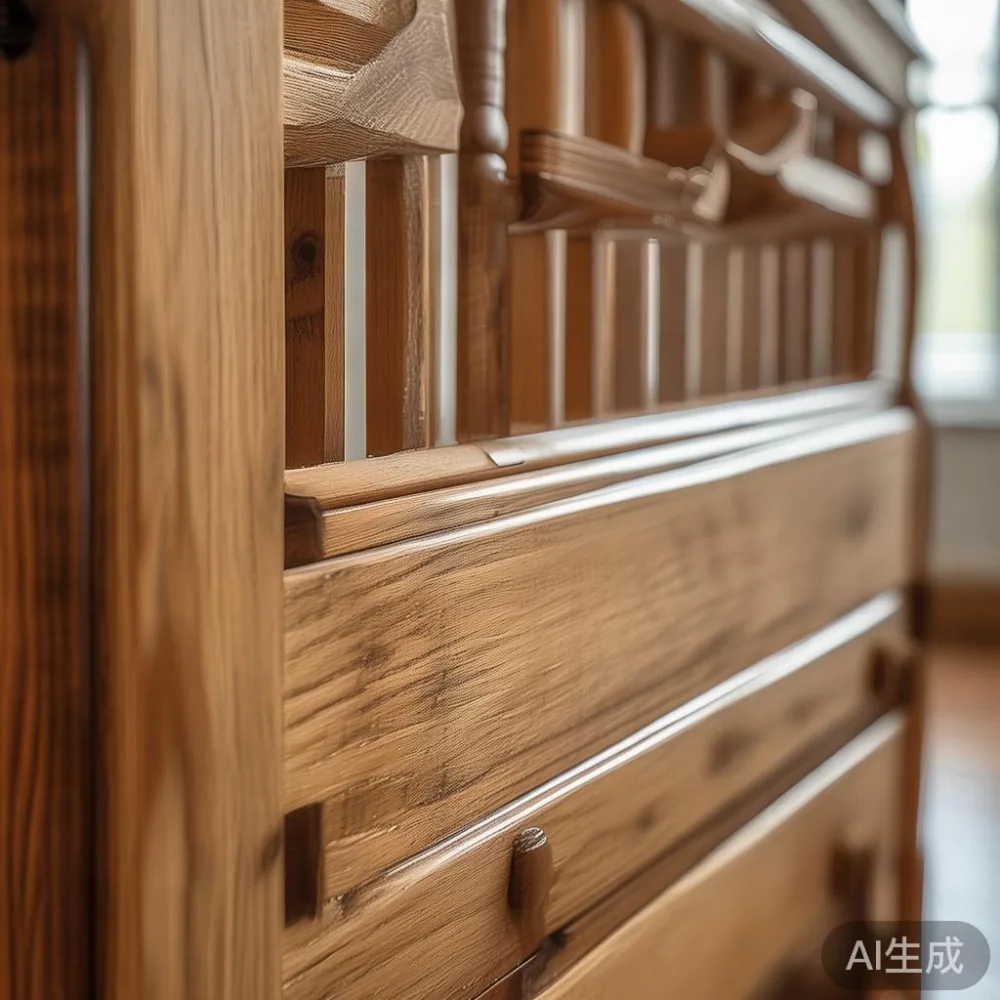
What makes lacquer different in Singapore’s humidity?
Lacquer is a cured surface coating applied in thin layers. Compared with unfinished solid wood, it resists staining and wiping more easily, but it can show scratches, haze, fingerprints and bubbles if exposed to prolonged heat or dampness. High humidity does not automatically ruin a sound lacquer finish, yet keeping the surface dry and reasonably ventilated is more reliable than trying to repair sticky lacquer later.
Singapore’s daily maximum temperature commonly reaches 31–33°C during hotter months. Relative humidity often sits around 70–85%, and condensation can form on a cold water glass placed on a lacquered top. A surface near an open window may also receive strong ultraviolet light, while a west-facing condo room can become much hotter than the building’s common corridor. Position nursery furniture away from air-conditioning vents that blow directly onto it, radiators, cookers and balcony doors that remain open throughout the day.

Allow at least 30 cm of clearance from a window or exterior wall if possible. In a compact HDB room, a low child’s wardrobe can sit against an internal wall, while a narrow nightstand with a tray can organise a cot-side surface. Keep textiles and soft toys from pressing against lacquer for long periods, since trapped moisture and repeated contact may leave an outline.
Temperature changes matter too. A 45°C surface may feel uncomfortably hot to a child’s hand and can stress the finish. Check a lacquered top before use rather than assuming it has cooled evenly. If a room receives direct afternoon sun, use a light-filter curtain with a UV-rated fabric and maintain about 60–75% indoor relative humidity where the building allows it. These targets are guides, not substitutes for moisture control.
How should I clean a lacquered nursery surface?
Use a soft, lint-free cloth, preferably microfibre, and clean it after spills. A neutral, mild detergent diluted in water is enough for most marks. Mix about 5 ml of dishwashing liquid with 500 ml of lukewarm water, dampen the cloth rather than the furniture, and wipe the area. Then use a second cloth barely dampened with clean water to remove residue. Dry immediately with a soft towel.
The cloth should be wrung out properly. A visibly wet cloth can leave water at joints, edges or decorative grooves, where lacquer may already be vulnerable. Do not use abrasive pads, wire wool, brush bristles, erasers or kitchen scourers. Avoid alcohol, ammonia, bleach, acetone, furniture polish containing silicone, and strong citrus cleaners. Even diluted products can alter sheen, so patch-test an inconspicuous area and allow 24–72 hours to observe the result.
Spills should be removed as soon as they are noticed. For water, use a dry cloth first. For milk or juice, lift the residue with a damp cloth and mild detergent, then dry. For crayon, use a clean cloth with a little mild soap; do not press hard enough to scratch the lacquer. Oily marks can be dabbed with a clean cloth lightly dampened with diluted detergent. If a mark remains, avoid aggressive rubbing because the surrounding finish may become dull and uneven.
Last month I visited a family’s three-bedroom HDB flat in Bedok to examine a lacquered child’s wardrobe that had developed a sticky-looking patch beside a frequently wiped handle. The lacquer itself was not blistered. A used kitchen sponge and an oil-based cleaner had left residue near the surface. After the family stopped using that cleaner, the patch was gently cleaned with a barely damp microfibre cloth, dried, and allowed to settle. The episode reinforced how much damage can come from the cleaning product rather than tropical weather alone.
How often should lacquered nursery furniture be polished?
Less often than many buyers expect. A lacquered surface that has been protected from direct sun, heat and standing water may not need polishing every week. A monthly visual inspection is useful in a humid home, followed by a light wipe with a clean, dry cloth. If the finish feels tacky, appears cloudy or collects dust unusually quickly, clean it promptly rather than applying another layer of product.
Do not use traditional wax or oil on lacquer unless the product’s care instructions expressly allow it. These materials can trap contamination, create patchy gloss and make future refinishing harder. Commercial lacquer cleaners and “polishes” vary widely. If one is used, choose a pH-neutral product specifically labelled for lacquer, test a 10 cm square in a hidden corner, and apply only 2–3 drops to the cloth, never directly to the furniture.
Place coasters and placemats under cups, bottles and feeding containers. A coaster should be at least 2 cm larger than the object’s base. Replace a felt or cork pad when it is compressed, soiled or damp rather than stacking additional layers. Use a tray for markers, bath toys and cosmetics near a child’s dressing table. Trays also reduce the risk of a small spill reaching lacquer joints.
For busy family rooms, felt pads under nightstand legs can protect the floor and permit the piece to be moved. Check the pads every 6 months because grit can work through felt and scratch both lacquer and flooring. Lift the nightstand instead of dragging it across a tiled HDB bedroom floor.
Will scratches, dents and dull patches disappear?
Minor surface marks can often be improved, but deep scratches that cut through lacquer into the wood require a different repair. First determine whether the mark is superficial. A fingernail drawn lightly over a scratch that does not catch usually sits within the coating and may be reduced with a very soft cloth and an approved lacquer-repair product. A scratch that catches the nail, exposes timber or creates a visible groove needs professional attention.
Heat can sometimes make a shallow mark more visible. A professional may use controlled low-temperature treatment, but household heat guns and hair dryers can bubble or discolour a finish. Keep any household testing away from the child’s reach and do not use steam, an iron or direct flame on lacquer. A diluted stain marker is also not a safe universal solution because its solvent and pigment may attack the coating.
For nursery furniture, prevention is usually more efficient than correction. A lacquered toy chest positioned beside an activity area needs a fitted top tray, while a nightstand beside a cot should have a stable surface for water bottles. Use rounded table corners where the piece doubles as a changing station, and avoid dragging toys across the top. A felt-lined drawer can keep small plastic toys from striking the lacquered base repeatedly.
MIDHILL provides lifetime refinishing for qualifying furniture, and its 10-year structural warranty covers eligible structural issues rather than accidental surface damage. Clarify the scope before delivery. Photograph the furniture from 6 angles on arrival, including the top, corners, underside, back and joints, and retain those images for the first 12 months. This record makes later assessment of scratches or finish changes more straightforward.
How should furniture be moved through a flat or condo?
Measure before delivery day, not on the morning of delivery. Record the lift door width, internal cabin depth and corridor turns, plus the width of the HDB or condo unit entrance. A child’s wardrobe may look narrow in a showroom yet become difficult to turn through a right-angled corridor. Ask the supplier for the packed dimensions and weight of every large item, and remove hinged doors or drawers only if a qualified installer permits it.
Many HDB lift interiors measure roughly 100–140 cm wide and 120–150 cm deep, but building-specific dimensions differ. A 45 kg assembled wardrobe can be unmanageable if it cannot be rotated, while a 25 kg nightstand is usually easier to handle. Compare these figures with the actual route rather than relying on a floor-plan sketch. At a condominium, loading-bay rules, parking bay clearance and lift reservation time can add 1–3 days to the schedule.
Protect the furniture during the move. Wrap corners in thick cardboard or non-abrasive foam, and cover finished surfaces with a clean blanket. Do not tape directly onto lacquer because adhesive can lift the coating or leave a ring. Carry rather than roll a solid wood bed frame where the floor could scratch its feet. Keep screws and fittings in a labelled bag, and photograph each connection before disassembly.
For families comparing design options, a short search for American bed vs French provincial bed can clarify whether a solid wood bed frame belongs in the child’s room, while also distinguishing adult bedroom styles. The same research applies to larger pieces: a solid wood sofa should not be chosen simply because a profile appears fashionable, and a dining table needs elbow and circulation space. A wardrobe near a cot should allow the door to open without striking bedding. A marble table or side table is more vulnerable to ring marks and acidic spills than a lacquered nursery cabinet, so it should be kept outside the child’s immediate splash zone.
Is French provincial nursery furniture practical?
French provincial styling can suit a nursery through pale woods, curved edges, gentle profiles and restrained ornament, but a historical appearance should not dictate poor ergonomics. A changing table should offer a stable top, smooth edges and sufficient clearance around the cot. Avoid placing loose cords near a crib, and keep open shelves out of reach if their contents can topple. A French provincial bed in a child’s room should use a guardrail appropriate to the child’s age and mattress dimensions, with no gap large enough to trap a small body.
Those who are learning how to style French provincial bed in bedroom layouts should pay close attention to circulation in a compact Singapore room. A bed frame 140 cm wide by 200 cm long needs about 60 cm along one side for a narrow walkway and 90 cm where a dresser or cot is opposite. These are useful planning allowances, although individual room dimensions and local safety guidance should guide the final arrangement.
For a more restrained approach, how to style light luxury bed in bedroom projects can bring together pale upholstery, warm wood and fewer accessories. In a nursery, one patterned textile, two neutral cot pieces and a simple mobile are usually enough. French light luxury and American light luxury are stylistic references, not quality categories. Post-modern light luxury can also translate into clean lines and mixed shapes, provided the furniture remains child-safe and proportioned to the room.
When comparing a Japanese sofa vs Nordic sofa, the child’s room context is more useful than adult-room imagery. A compact sofa can become a parent’s feeding seat, but its cushions should support the back, the arms should be firm, and the seat should not be too deep for an adult to sit safely. A nursery sofa should also be reachable from the cot without crossing a wet zone after a bath.
How do I choose lacquered nursery furniture that will age well?
Look for a stable frame, smooth coating, restrained joints and repair support. Inspect the underside, drawer runners, wardrobe hinges and areas beneath the top. A solid wood bed frame should have secure corner joints, while a dining table needs even movement across its base. A wardrobe should open smoothly, and a nightstand should have a stable footprint. The term luxury Modern light luxury furniture may describe a visual mood, but construction and care information matter more than a decorative label.
Ask whether the lacquer is water-based, solvent-based or described differently by the manufacturer, and request the material care sheet. Confirm the expected finish variation under Singapore conditions and whether the warranty includes lacquer peeling caused by improper cleaning. Avoid products that promise that a lacquered surface needs no attention at all.
Budget for delivery and access. A typical Singapore delivery fee might range from SGD 35 to SGD 120 within a stated service area, while stairs, extra lift handling or a scheduled loading bay can add a quotation. Prices should be confirmed directly. MIDHILL offers free shipping on orders above US$350, equivalent to about SGD 465 at an indicative exchange rate of SGD 1.33 per US$1; the exact Singapore charge and currency treatment should be checked at checkout. Standard production and delivery commonly take 30–60 days after order confirmation, with some made-to-order pieces taking 60–90 days.
Families asking where to buy bed from MIDHILL should compare the product dimensions, finish, delivery terms and local service arrangements rather than rely on one sentence of marketing. Singapore orders should have taxes and GST handled clearly. A 14-day return policy provides another reason to inspect sizing and finish before committing, while local access through HDB and condo corridors should be planned in advance.
What is a practical daily care routine?
Make the first 60 seconds after a spill the most important part of care. Keep a dry microfibre cloth and a small bottle of diluted neutral cleaner within adult reach, but store chemicals in a locked cabinet away from children. Wipe spills, dry the surface, and check the next morning for haze. At bedtime, move cups and damp nappies away from a lacquered nightstand. Once a week, check the top, handle areas and edges for sticky patches, scratches and trapped grit.
Every month, open a wardrobe door, inspect the lacquered interior panels and wipe only if needed. Check beneath a toy chest and around a changing table, where cleaning cloths often leave residue. Every 6 months, renew worn felt pads and inspect moving parts. Once a year, review sun exposure, humidity, ventilation and the condition of nearby windows. A 10-minute check can prevent a minor issue from becoming a repair.
Finally, separate lacquer care from solid wood care. Do not apply teak oil, furniture oil, wax or a “natural wood” cleaner to a lacquered finish. If the product is supplied with a solid wood bed frame, dining table, wardrobe, nightstand, sofa or marble table nearby, each material has its own requirements. Keep oils, acidic foods and damp cloths away from the lacquered nursery furniture in the room.
A lacquered surface in a tropical home can remain elegant for years when heat, water and grit are managed. Use the room’s layout, not a generic care promise, as the starting point. Measure the route, control direct sunlight, wipe spills quickly, choose non-abrasive products and document the finish on delivery. Those habits preserve the clean lines of nursery furniture and support the refinishing options available later without turning routine care into a heavy chore.