Veneer vs Solid Wood for Nursery Furniture: A 5-Year Cost Comparison
Choosing nursery furniture for a Singapore HDB flat or condo is rarely a simple choice between a low purchase price and a higher one. A cot, changing table, wardrobe, or child-sized dining table must fit through the lift and corridor, suit a compact room, and remain useful as the child grows. The material decision also affects cleaning, repairs, and the likelihood of replacing pieces after 5 years. This comparison examines veneer and solid wood across real ownership costs rather than treating the showroom price as the whole story.
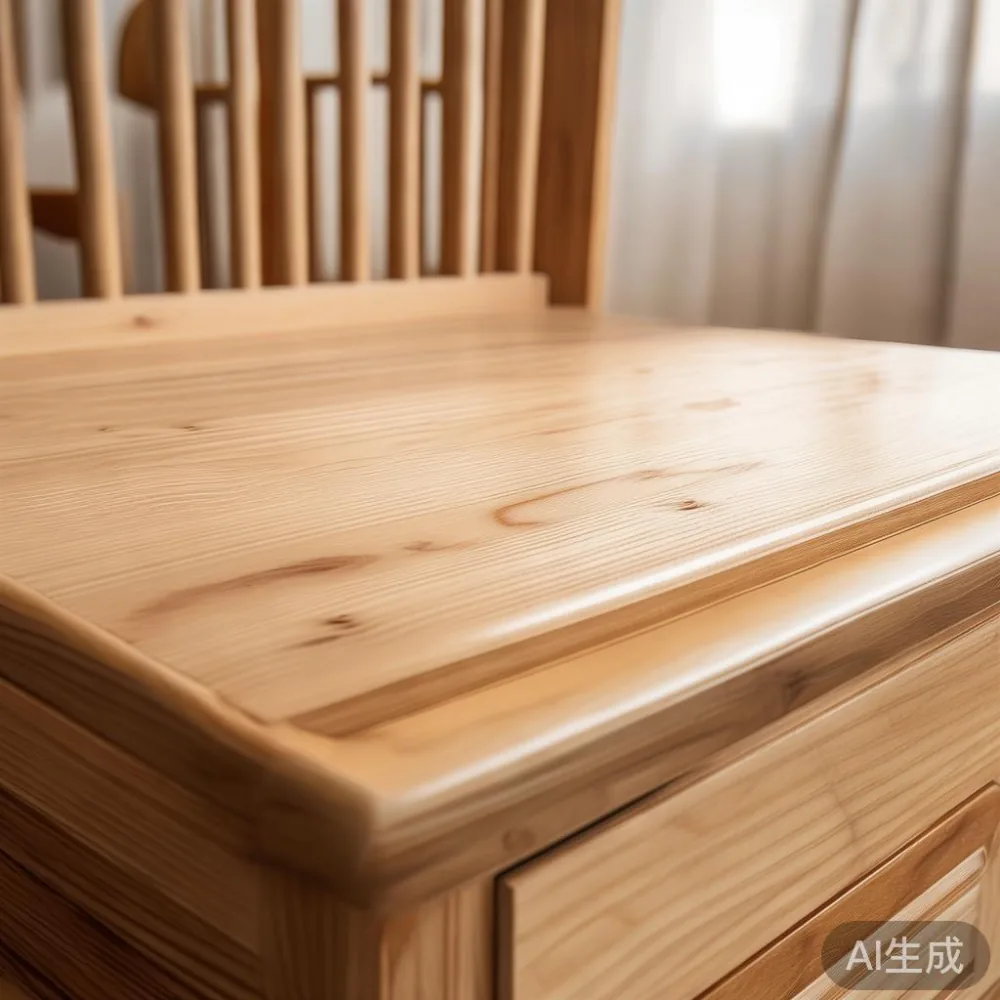
For families in Tampines, Bedok, and Punggol, measurements matter immediately. An HDB lift may offer an internal door width of about 90 cm and a depth near 140 cm, although older blocks and newer configurations differ. A condo corridor can be narrower than a bedroom. A nursery furniture piece that measures 120 cm wide but has a 132 cm diagonal carton may not clear a 90 cm opening. Solid wood and engineered-wood furniture can use similar external dimensions, but construction and weight influence handling, delivery, and installation.
MIDHILL was established in 2008 and exports to more than 15 countries. Its 10-year structural warranty and lifetime refinishing policy are relevant to this calculation because they change how repair costs can be distributed over time. Prices below are indicative Singapore retail examples in SGD, including GST, rather than quotations.
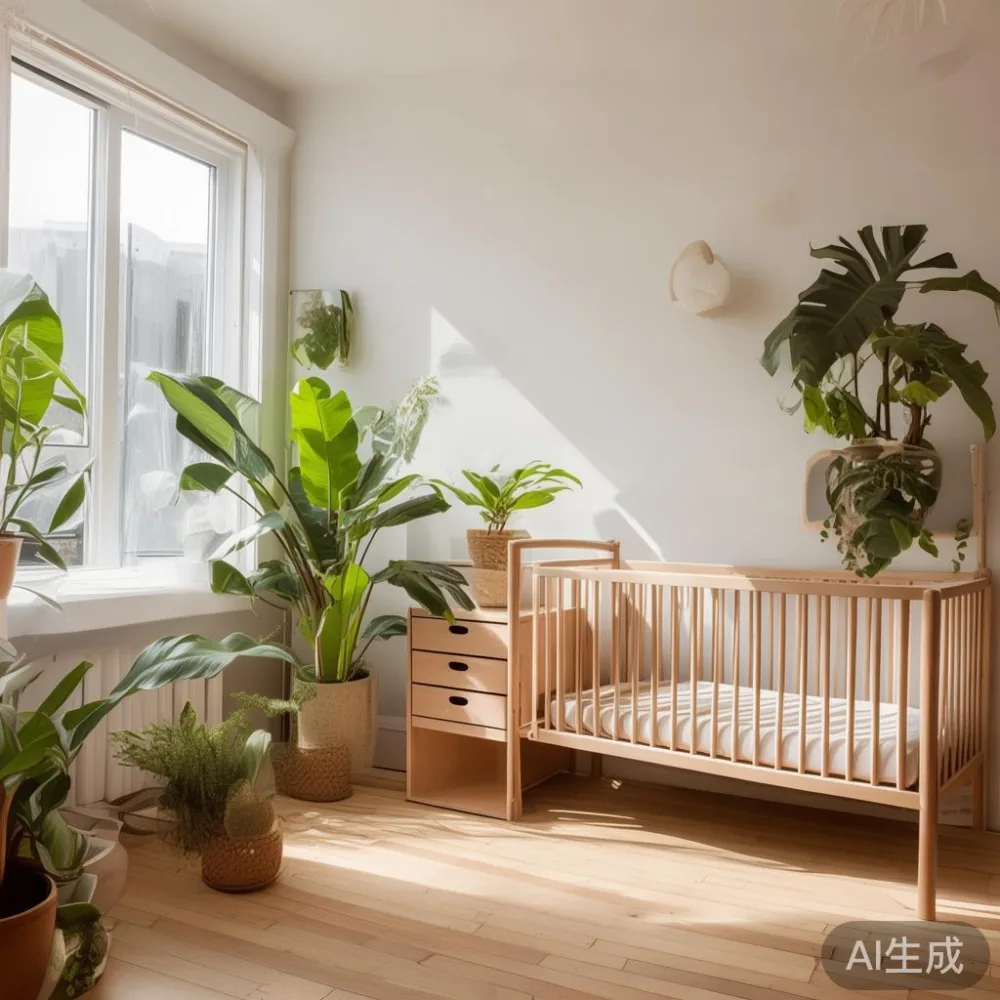
What does veneer actually mean in nursery furniture?
Veneer is a thin layer of timber, commonly around 0.6 mm to 1.2 mm, bonded to a engineered core such as plywood, particleboard, or MDF. The visible face may be oak, walnut, ash, or teak. The core provides stability and makes large panels more practical than thick slabs of natural timber. It also allows manufacturers to create curved edges and detailed nursery furniture without the movement associated with solid wood.
Solid wood uses the timber itself through the visible board or frame. Joinery, grain direction, moisture movement, and finishing details remain visible characteristics rather than being concealed beneath a printed or sliced surface. A solid wood bed frame, dining table, or wardrobe may weigh 60–140 kg depending on dimensions and species, while a comparable veneer wardrobe may weigh 35–90 kg.
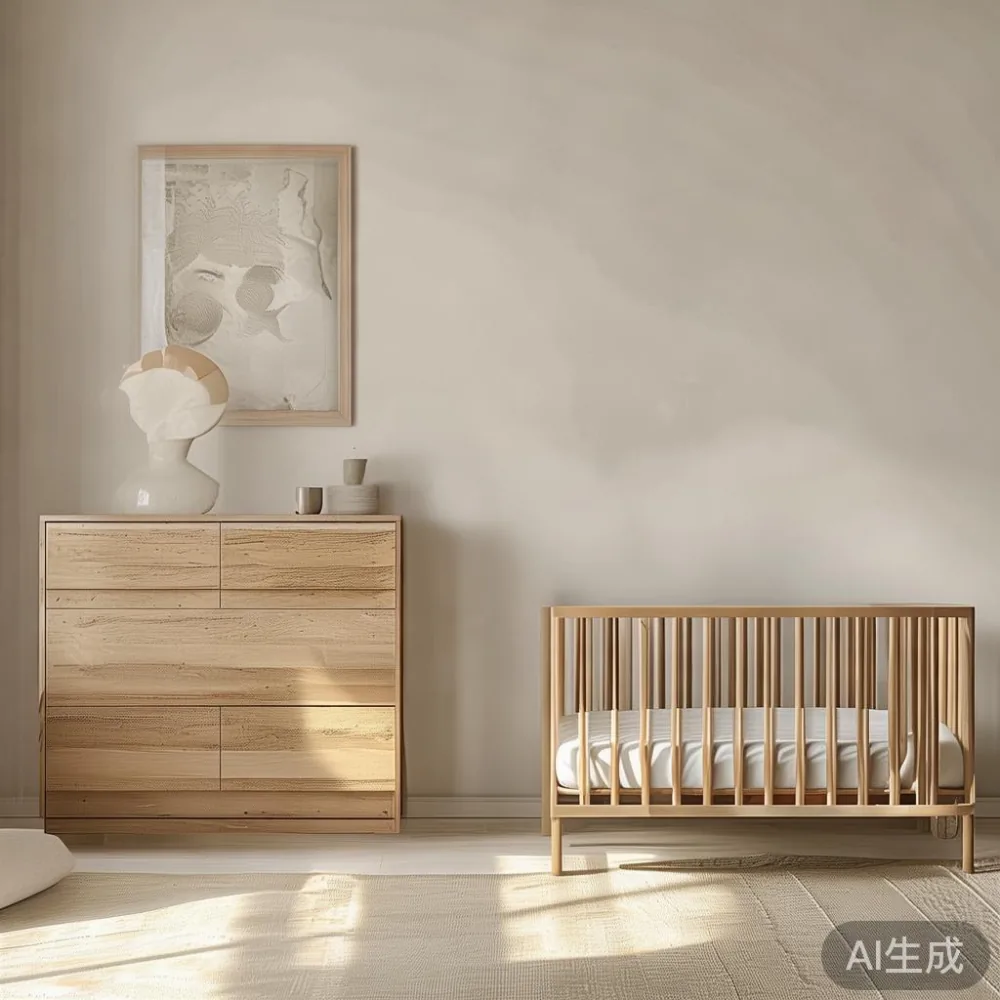
Neither label alone predicts service life. Grade, joinery, coating, humidity exposure, and owner care all matter. The fair comparison is between a properly made veneer piece and a properly made solid wood piece sold at a similar Singapore price.
How much will nursery furniture cost over 5 years?
Consider a common package for a child aged 1 to 5: one 120 × 60 × 75 cm nursery cot frame, one 80 × 45 × 85 cm changing table, one 90 × 50 × 95 cm child wardrobe, and one 100 × 60 × 72 cm child dining table. These are functional planning sizes, not safety approvals; nursery furniture should still meet applicable local and export-market requirements.
A representative veneer package may cost SGD 1,680. A representative solid wood package may cost SGD 2,680. Both examples include GST and delivery to a Singapore address.
Over 5 years, the calculation includes the purchase price, delivery, routine care, repairs, and the expected share of furniture replaced because it no longer fits the child's needs. It also includes residual value, but keeps that visible rather than assigning an optimistic resale figure to used nursery furniture.
| Cost item | Veneer example | Solid wood example |
|---|---|---|
| Furniture package | SGD 1,680 | SGD 2,680 |
| Delivery and assembly | SGD 120 | SGD 180 |
| Five years of care products | SGD 75 | SGD 95 |
| Expected repairs | SGD 120 | SGD 60 |
| Expected replacement contribution | SGD 420 | SGD 180 |
| Estimated resale value at year 5 | SGD 280 | SGD 420 |
| Net 5-year cost | SGD 2,135 | SGD 2,775 |
On these assumptions, veneer saves about SGD 640 over 5 years, or roughly SGD 128 per year. The result is not universal. A family keeping the same cot for a second child, caring for a solid wood table carefully, and reselling it after 5 years can narrow the difference. A family replacing scratched panels, moving between homes, or discarding a dated finish sooner will widen it.
Is solid wood cheaper to maintain over 5 years?
Not necessarily. Solid wood can be sanded and refinished when scratches appear, but deep moisture damage, chipped joints, or major distortion may not respond to cosmetic refinishing. Veneer can also be repaired, although a sheet thinner than 1 mm is easier to patch than a damaged solid board. Edge repairs are more difficult where the decorative layer wraps a shaped profile.
Here is a practical repair allowance:
- A small veneer edge repair: SGD 40–90 per affected panel.
- A solid wood scratch and spot repair: SGD 25–70.
- A replacement veneer drawer front: SGD 55–120.
- A solid wood drawer side or rail repair: SGD 70–150.
- Replacing one moving wardrobe part on a complex fitted unit: SGD 45–110.
Humidity is part of the Singapore calculation. Outdoor readings commonly sit near 80–90% and frequently reach 95%. Keep nursery furniture at least 15 cm from walls, away from air-conditioning vents, and wipe spills within 10 minutes. Use a damp cloth followed by a dry cloth, rather than a soaked one. This simple habit can prevent swelling around veneer edges and joint movement in solid wood.
MIDHILL offers lifetime refinishing on eligible solid wood products, which may reduce future surface-restoration costs. Families should still confirm the written scope, collection terms, and applicable fees for the exact nursery furniture item. A warranty is not the same as damage caused by water, impact, or misuse.
Will a heavier solid wood piece be harder to deliver?
It can be. A veneer package of about 85 kg may be divided into cartons weighing 12–25 kg. A solid wood package of about 125 kg may include sections weighing 35–55 kg. Singapore delivery should use a van or truck and two-person carrying for pieces above roughly 25 kg. Narrow HDB staircases, tight condo corridors, and a 90 cm lift door can therefore add time and labour charges.
Measure the route before ordering:
- Lift door width: 90–100 cm is common, but confirm yours.
- Lift car depth and height: often around 140 cm deep and 210 cm high.
- Corridor turns: allow at least 110 cm of turning space where possible.
- Stair width: approximately 100–120 cm in many older blocks.
- Bedroom doorway: often 80–90 cm wide.
Delivery may take 7–14 days after production. Some made-to-order nursery furniture can take 4–6 weeks, especially during peak periods. A flat-pack veneer piece may require 20–40 minutes for assembly; a solid wood wardrobe may require 90–180 minutes. Accurate instructions and protected hardware make a measurable difference.
This weight and access issue continues into adult furniture. For a hallway or dining room, the phrase Modern light luxury sideboard often appears in showroom discussions, yet the material comparison remains similar. A solid wood sideboard may be 70–120 kg, while a veneer sideboard may be 45–80 kg. The relevant figure is not only what arrives at the door, but how often it must be moved.
Can veneer look as convincing as solid wood in a nursery?
Well-matched veneer can look convincing at normal viewing distance because its grain comes from real timber. The tell is often an edge, a bookmatch, or a repeated pattern. Solid wood shows variation between boards and tends to develop small checks around joints as timber moves. Veneer remains visually stable, which some families prefer.
Finish also changes the impression. A matte, light-oak veneer nursery wardrobe can suit a calm bedroom in a Punggol condo without visually reducing the space. Solid wood with a similar tone can feel more substantial, but darker finishes may absorb light. Test a sample in the room at night: warm light around 2700–3000 K can make pale veneer look yellower than expected.
Material language should be checked carefully. A piece labelled solid wood may use solid timber for the frame and plywood or MDF for panels, back boards, and drawer boxes. A veneer product may have a solid wood frame rather than an all-wood carcass. Neither arrangement is automatically poor; it must match the price, construction, and use.
The broader design comparison can be illustrated through a light luxury bed vs Italian light luxury bed. The Italian description may refer to design influence, manufacturing origin, or both. Veneer is common in Italian-style bed frames, while solid timber is also used. Price alone does not identify origin or construction.
What should you inspect before buying nursery furniture?
Ask for the panel specification and check it against the quotation. For veneer, request the veneer species, thickness, core material, and edge treatment. For solid wood, ask which components are solid timber and which are engineered panels. Check whether the changing table has stable supports and whether the wardrobe has anti-tip provisions appropriate to the installation.
At home, inspect a sample for at least 10 minutes. Look for veneer bubbling around edges, colour variation, gaps below doors, and drawer alignment. Open and close every drawer 5 times. Check cot slats for secure fixing if the product is intended for that function. A nursery furniture seller should provide clear care instructions, including acceptable cleaning products.
For design planning, search terms such as how to style Japandi wardrobe in apartment are useful for proportions, but the material specification still deserves close attention. Pale timber, restrained hardware, and a 90 cm wide wardrobe can suit a compact bedroom. A curved front may add visual softness, although it can also reduce usable hanging space.
Is veneer more suitable for Singapore than solid wood?
For many Singapore apartments, veneer is the more practical 5-year financial choice because it starts lower, weighs less, and uses stable engineered cores. Solid wood is more attractive to families who value repairability, distinctive grain, and the prospect of refinishing a piece over decades. If the budget difference is about SGD 1,000, solid wood becomes easier to justify when the furniture is likely to remain in the home for 10–15 years rather than 5.
Do not confuse a nursery wardrobe with a full-height adult wardrobe. The same logic appears when learning how to choose European wardrobe: measure the room, examine the core and movement, and consider fittings. A 120 cm wide European-style wardrobe may need 125–130 cm including door swing, which will not suit a narrow bedroom corridor. Internal fittings such as rails at 25–30 cm spacing, soft-close hinges, and drawers with full-extension runners may be more useful than decorative veneer thickness.
Other product categories offer useful references. A French sofa vs Japandi sofa debate concerns silhouette, upholstery, and room proportion more than timber construction. A solid wood sofa frame may last longer if the joints remain sound, but the cover and cushion replacement can dominate the 5-year cost. A marble table has different maintenance needs: acidic liquids can etch the surface, and the stone requires careful support and level installation. These comparisons show why one material cannot represent every furniture category.
Budget-conscious buyers sometimes encounter for sale Boho furniture listings and assume a lower price means weak construction. Instead, ask what solid wood species, joinery, hardware, finish, and warranty support the price. MIDHILL's export history, 10-year structural warranty, 14-day returns, and free shipping over US$350 provide useful commercial context, although an exchange rate or cross-border delivery offer should be compared with the actual Singapore landed price.
Which option gives families the better 5-year outcome?
The veneer example costs about SGD 2,135 over 5 years, compared with SGD 2,775 for solid wood. That figure includes initial purchase, delivery, care, repairs, replacement allowance, and resale value. The saving is meaningful because Singapore nursery furniture must often be replaced, not merely repaired, when storage needs change.
Solid wood can still represent good value when a family keeps it beyond the nursery stage. The same cot frame may later serve as a plant stand or reading bench, and the dining table may become a homework desk. That extended timeline changes the economics. It also explains why families researching nursery furniture sometimes compare it with larger pieces such as a solid wood bed frame, dining table, wardrobe, nightstand, or marble table: they are evaluating one future rather than separate purchases.
My colleague in Singapore received a veneer changing table last month and an older solid wood unit from her parents. She measured both at 80 × 45 × 85 cm. The veneer table weighed 19 kg and the solid wood table 27 kg. After 6 weeks near a Bedok bedroom window, the veneer edges remained square, while the solid wood piece showed a 2 mm seasonal gap in one drawer joint. Neither had been exposed to standing water, and she tightened the drawer runner before reaching any conclusion. The experience reinforced that material choice is only one part of maintenance: placement, humidity, and early adjustment matter.
For most HDB flats and condos, veneer offers the lower 5-year cost without requiring a tiny space to carry heavy sections. Solid wood is easier to justify if long-term refinishing, heirloom use, and an intention to retain the furniture beyond 5 years outweigh the additional SGD 640 in this model. Whichever route is chosen, measure the route, request exact construction details, and compare the landed Singapore price rather than relying on the word “wood” alone.