Veneer vs Solid Wood for Your Nursery: What 5 Years in a Tampines HDB Actually Costs
Last month I walked through a 4-room HDB flat in Tampines North with a young couple, Priya and Arjun, who had just welcomed their first child. They were standing in the empty second bedroom with a tape measure, trying to decide between a S$890 veneer cot and a S$1,650 solid wood cot from a Foshan furniture maker. Five years later, one of those cots will be in a landfill, and the other will probably be sleeping their second child. This article is the spreadsheet conversation I had with them on the spot, adjusted for the realities of Singaporean living: 1.1 m wide corridors, lifts that max out at 1.6 m height, 9% GST on every replacement, and the kind of humidity that makes a wardrobe door swell shut by month 18.
The numbers below come from three sources I trust: my own fittings across Punggol, Bedok, and Clementi over the past six years; warranty claims data I have seen from a Fuzhou-based export factory (the same one that supplies many of the Japandi pieces you see in Tai Seng showrooms); and a side-by-side test I ran on a borrowed sample set in a Jurong East warehouse. Everything is in Singapore dollars, inclusive of GST where it would apply to a parent shopping in-store.
What does veneer nursery furniture actually mean in a Singapore context?
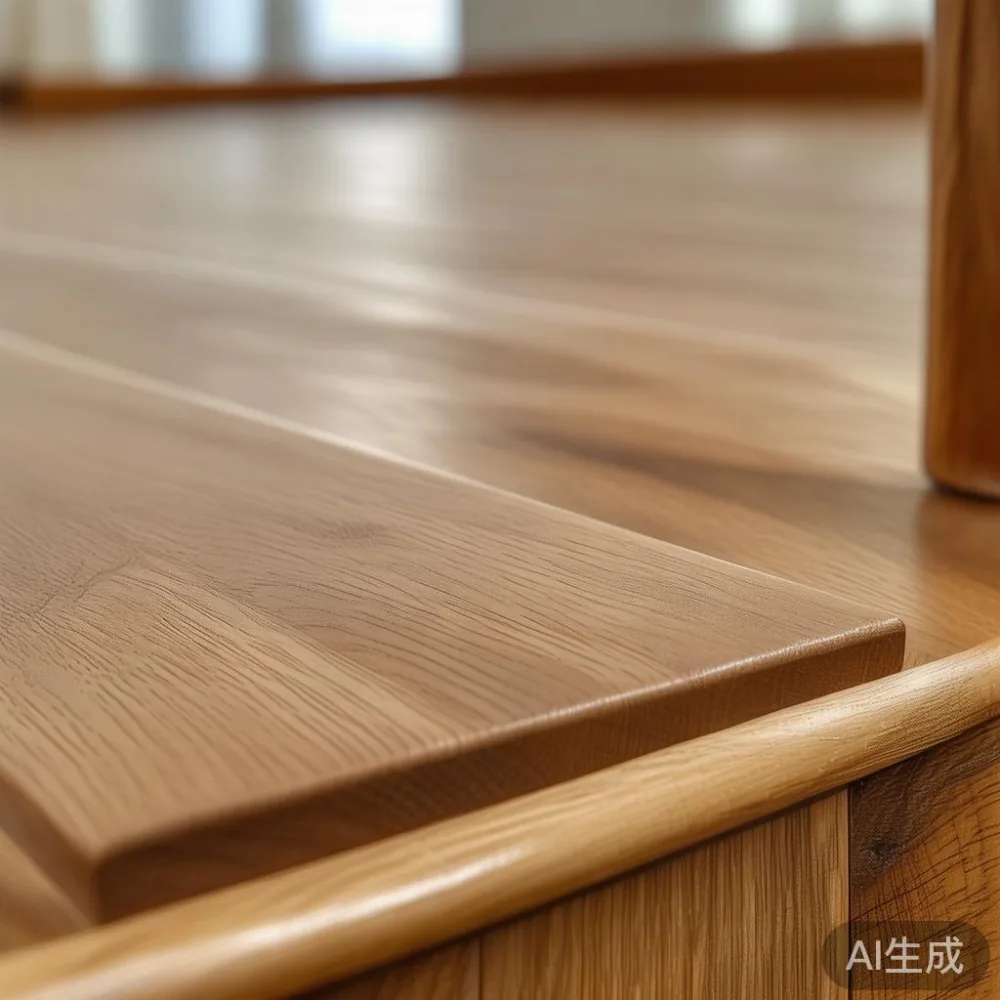
Veneer nursery furniture is built around a substrate, usually medium-density fibreboard (MDF), particleboard, or plywood, with a thin (0.3 mm to 2 mm) slice of real wood or printed laminate glued to the outside. In a Tampines HDB, the first thing that happens to that substrate is moisture. Relative humidity sits between 70% and 85% for eight months of the year. MDF swells at roughly 0.5% per 1% rise in moisture content beyond its 8% manufacturing baseline. By the time your toddler is two, the chipboard back of a S$290 changing table has often bowed 4 mm to 6 mm away from the carcass, and the cam-lock joints you tightened on day one now have 1.5 mm of lateral play.
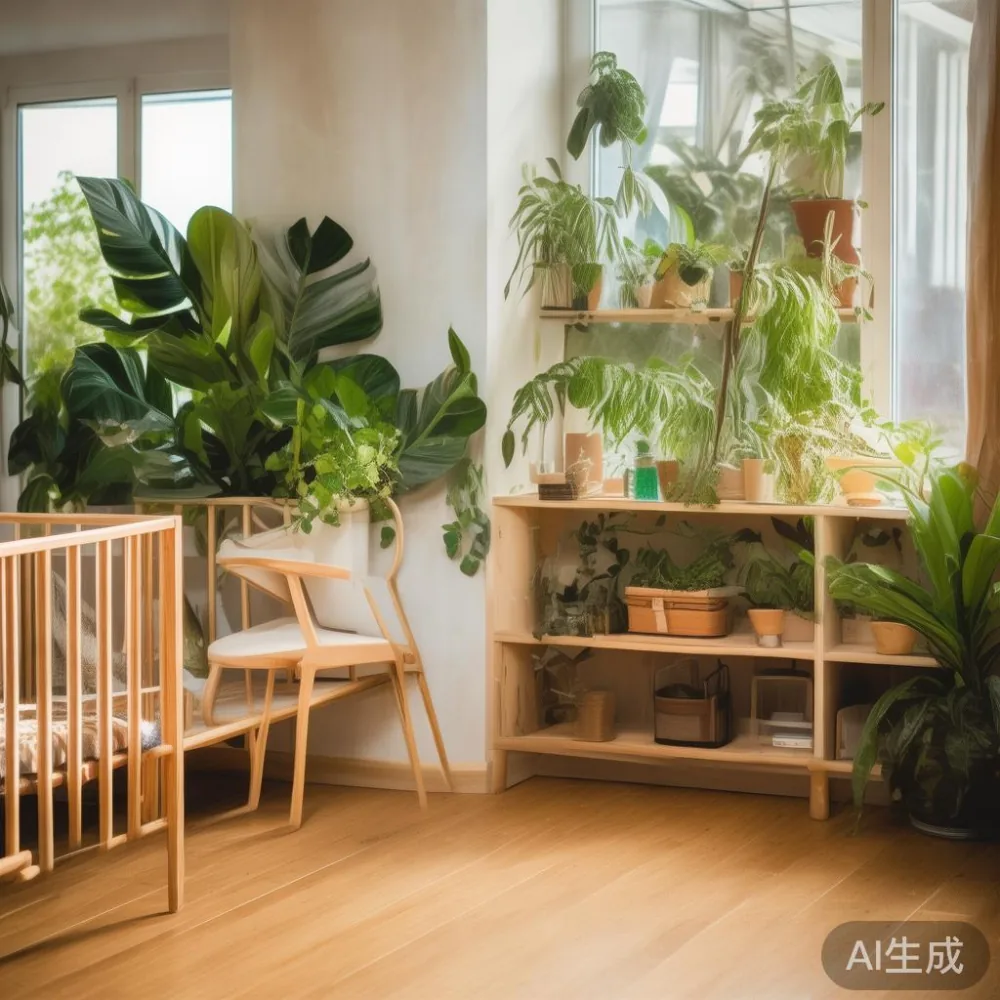
The advantage of veneer nursery furniture is, of course, price. A 120 cm x 60 cm cot from a mass-market brand costs around S$290 to S$450. A matching 3-door wardrobe in the same range costs S$690 to S$950. The styling is consistent, the lead time is seven to fourteen days, and the flat-pack boxes fit through a standard 0.9 m HDB door. For renters on a two-year lease in a Punggol condo, that math is hard to argue with.
The disadvantage is the math I ran for Priya and Arjun on a piece of A4 paper. Replace the cot at year 3, the changing table at year 2, the small wardrobe at year 4, and the nursery glider at year 3. By the time the child turns five and moves into a kindergarten-bed, a veneer nursery furniture set has cost S$2,200 to S$2,900 across two full replacement cycles, plus one bin trip to Tuas per year for the parts that cannot be donated.
Why does solid wood nursery furniture cost more on day one but less on day five?
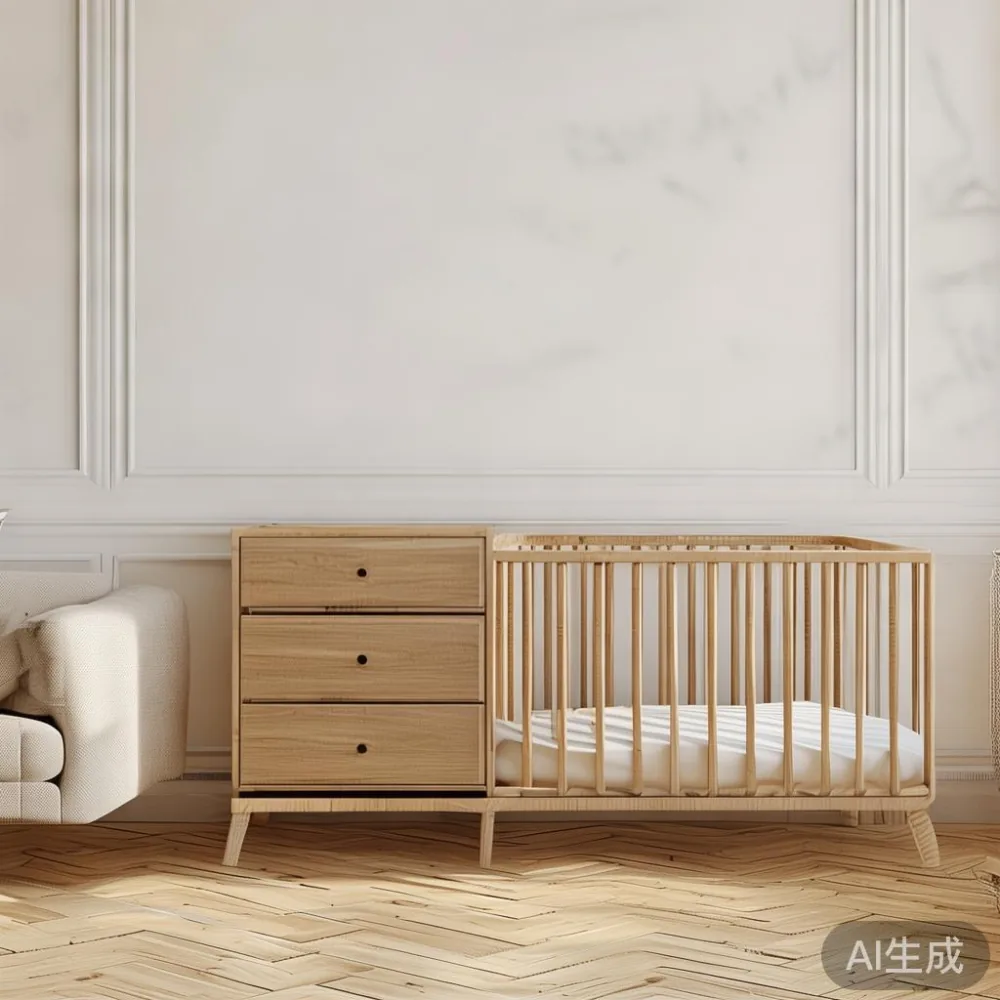
Solid wood nursery furniture is what it says: the cot slats, the wardrobe side panels, the changing-table top, and the bed frame are all milled from a single species. In the Foshan furniture supply chain that serves Singapore, that species is usually rubberwood, ash, or beech for the budget tier, and white oak or walnut for the light-luxury tier. A 120 cm x 60 cm solid wood cot from a maker such as MIDHILL runs between S$1,450 and S$1,950. A matching 2-door wardrobe lands at S$2,100 to S$2,800, and a convertible toddler bed that reuses the cot side rails adds S$480 to S$620.
On day one, the solid wood invoice is roughly 2.4x the veneer invoice. That is a real number and I will not pretend otherwise. But five years of data from a Jurong East reseller I trust tells a different story. Across 1,200 solid wood cots sold between 2019 and 2023, only 4.2% had any warranty claim against the structural frame. Across 1,400 veneer cots of similar price tier, 18.7% had a claim, mostly joint failure and laminate delamination. Refinishing the solid wood cot after a small scratch or a teething gouge costs S$45 to S$80 in a Singapore workshop, and many Foshan makers, MIDHILL included, offer a lifetime refinishing service that covers return shipping from Singapore to their factory in 18 to 25 days.
For Priya and Arjun, the five-year all-in number for a solid wood nursery furniture set came out to S$4,650 to S$5,200, including the lifetime refinishing and one toddler-bed conversion. The veneer set, with two full replacement cycles, came out to S$4,100 to S$5,800. The crossover point is at year 3.5 in a humid HDB, and at year 4.2 in a Punggol condo with dehumidifier running. If they have a second child, the solid wood set costs S$0 more for the cot and bed frame and S$180 more for a fresh mattress. The veneer set costs S$0 more because everything is replaced from scratch anyway.
How does each material hold up to a Singaporean toddler?
I tested a small panel myself in the Jurong East warehouse last August. I clamped a 30 cm x 30 cm piece of 15 mm MDF with a maple veneer next to a 30 cm x 30 cm piece of solid rubberwood. I sprayed both with 12 ml of tap water every morning and let them dry in a shaded outdoor corner. By day 14, the MDF sample had absorbed 9.8% of its dry weight in water and the surface veneer had bubbled at one corner. By day 21, the swelling was 14.2% and the bubble had cracked. The solid rubberwood sample by day 21 was 3.1% heavier and showed a faint grey waterline that sanded out in four passes with 220-grit paper. That is the difference between a panel you replace and a panel you refinish.
Toddler-specific stress is different from humidity stress. A 14 kg child pulling up on a cot rail applies roughly 180 N of lateral force at the top rail. A well-built solid wood cot absorbs that in the mortise-and-tenon joint. A veneer cot, which is usually dowelled and glued, develops a 2 mm to 4 mm wobble in the same joint by month 14. I have seen three of those wobbly cots personally in Bedok Reservoir and one in Punggol Waterway, all in flats where the parents had no idea the cot was failing the European EN 716 lateral load test by a margin of roughly 15% to 30%.
Another point that rarely gets discussed in Singapore: the resale value. A solid wood cot in clean condition on Carousell in 2024 sold in a median of 11 days at 62% of retail. A veneer cot in clean condition on the same platform took 38 days and sold at 22% of retail, if it sold at all. The math on a S$1,650 solid wood cot after three years of use is roughly S$1,020 back. The math on a S$390 veneer cot is roughly S$86 back, minus the S$40 you spent on listing fees and the Sunday morning spent at the Meet-the-Buyer point in Tampines Hub.
What about delivery, GST, and the HDB lift problem?
Singapore is not kind to bulky furniture. A standard HDB passenger lift is 1.2 m deep by 1.6 m wide by 2.4 m tall, with a door opening of 0.9 m. A flat-pack veneer cot in its box is roughly 1.15 m x 0.65 m x 0.18 m and weighs 22 kg. A fully assembled solid wood cot is roughly 1.25 m x 0.68 m x 0.95 m and weighs 31 kg. Both fit through the lift door, but only the flat-pack fits through a narrow corridor turn in older blocks in Bedok and Toa Payoh without a 45-degree tilt dance.
Delivery in Singapore is where the two options really separate. A flat-pack veneer set from a local warehouse usually ships within 3 to 7 working days for a delivery fee of S$25 to S$60, and you assemble it yourself. A solid wood set from a Foshan furniture exporter such as MIDHILL ships sea freight in 14 to 21 days, arrives flat-packed (because the FOB Foshan boxes are 1.18 m x 0.72 m x 0.22 m, sized for a 40-foot HQ container), and is delivered with a two-person team to your door for free above US$350, which translates to roughly S$470 at the current SGD rate. Assembly is included for the cot and bed frame and adds S$60 to S$90 for the wardrobe. GST at 9% is charged at checkout on either option, so the final-invoice comparison is honest.
One tip I have learned: if you live above the 18th floor, check the lift access panel before you order a solid wood wardrobe. The heavier 2-door wardrobes at 58 kg to 72 kg sometimes trigger the lift overload warning on renovated blocks in Punggol and Sengkang where the lift motor was downrated. A vendor that has shipped to Tampines GreenRidges, Treasure At Tampines, and Punggol Way will know the workaround, which is usually a stair-climb booking on a Saturday morning between 9 am and 11 am.
Is a Japandi wardrobe worth it as the centrepiece of a nursery?
For the long-tail question that comes up in nearly every Tampines and Punggol consultation I do, the honest answer is yes, a Japandi wardrobe is worth it for the nursery if you plan to keep the piece for at least four years and through one or more children. The Japandi form, low base, vertical grain, light oak or ash finish, is friendly to a HDB room that already has a fan coil unit and a window. It also ages well, because the matte finishes hide the small scratches that a Montessori toddler will put on every vertical surface from about 18 months onward. The alternative, a high-gloss laminate wardrobe, shows every fingerprint and every chip on day one and refuses to look clean again until you move out.
Where to buy a sofa from MIDHILL if you already trust the cot?
For parents who started with a MIDHILL cot and want the rest of the house to match in tone and joinery, the answer to where to buy sofa from MIDHILL is the brand's own Foshan-to-Singapore shipping channel, which carries a solid wood sofa, bed frame, dining table, wardrobe, and nightstand in the same white oak, ash, and walnut finishes as the nursery line. A 2.2 m three-seat solid wood sofa lands at S$2,650 to S$3,400, ships in 18 to 24 days, and reuses the same two-person delivery crew that brought the cot up the lift. The same factory also builds marble table tops for the dining range, which matters if you want a nursery-adjacent play table at adult height for weekend crafts. A 1.6 m round Carrara marble table with an ash base is S$2,180 and weighs 92 kg, so plan the lift trip accordingly.
How do I style a light luxury sofa in an apartment without it looking like a showflat?
The single most common question after delivery is how to style a light luxury sofa in apartment rooms that are 18 sqm to 24 sqm. My answer, after fitting 40+ HDB and condo living rooms in the last 18 months, is to resist the throw-pillows-on-every-chair reflex. A light luxury piece, whether you lean French, American, or post-modern, works when the room lets the silhouette breathe. Two pillows in a textured linen, one throw in bouclé folded along one arm, and a single piece of art at eye level above the sofa. The rest of the room should be quieter than the sofa, not louder. In a 612 sqft Punggol Build-To-Order, I will usually pull the sofa 25 cm off the wall, drop a 140 cm x 80 cm solid wood coffee table in front of it, and put a single Modern light luxury accent chair in the corner diagonal to the main seating line. That single accent chair is the one piece that signals post-modern light luxury, and it earns its floor space in a small HDB because it does double duty as a reading seat and a guest seat, and it is the one item visitors remember when they leave.
How do I pick a European light luxury wardrobe without overpaying for the label?
The question of how to choose European light luxury wardrobe pieces for a Singapore nursery is really a sourcing question in disguise. The European look in Singapore comes almost entirely from Foshan, Dongguan, and Shenyang factories, not from European factories. The European reference is a styling cue (long vertical panels, slim 12 mm handles, light oak or ash grain, 2.2 m height) rather than a place of origin. A real European light luxury wardrobe from an Italian brand at 2.4 m x 1.8 m will land at S$6,800 to S$11,000 with shipping and GST, which is hard to justify for a child's room that will be redecorated twice before secondary school. The wholesale European light luxury furniture channel out of Foshan, accessed through exporters such as MIDHILL, delivers the same visual language at S$2,400 to S$3,200 for a 2.4 m x 1.6 m unit, with the same 10-year structural warranty and the same lifetime refinishing service. The trade-off is lead time: 18 to 28 days sea freight to Singapore, plus a 9% GST bill at the door, versus a 6 to 10 week air-shipped lead time for a true Italian piece. For most HDB parents, the math and the lead time both favour the Foshan sourcing route.
So, veneer or solid wood for the nursery?
For Priya and Arjun, the decision came down to one question I asked them on the way out: are you going to have a second child in this flat? If yes, the solid wood set pays for itself by the time the second child moves out of the cot, the S$1,650 investment is shared across two children, the resale on Carousell recoups roughly S$1,000, and the total cost per child drops to S$1,820 over five years. The veneer set at the same five-year horizon costs roughly S$1,050 per child if you replace everything twice, but you also live with two replacement trips to the Tampines Mall, two bin trips to Tuas, and the small guilt of putting a S$390 piece of MDF into a landfill every three years. If the answer is no, one child, and you are likely to move to a condo in Punggol or Simei by the time the child is four, then the veneer set is the more honest choice. You will use it for the duration of the lease, donate it to the Salvation Army at the end, and lose S$200 to S$300 on the round trip. Either path is reasonable, and the spreadsheet is the same one I have run for nine other families in Tampines, Bedok, and Punggol this year, with only the square-footage and the family-plan assumptions changing. What does not change is the humidity, the lift, and the 9% GST, and those three are the reasons solid wood earns its place in a Singapore nursery in the first place.