What to Check Before You Buy a Sofa You Cannot Sit On: A Singapore Nursery-Furniture Buyer's Guide
Most Singapore parents buy a sofa the usual way: walk into a showroom at Tampines Mall or Jalan Jurong Kechil, sink into the cushions, drink the free coffee, swipe the card. A nursery sofa is different. The baby arrives, the living room shrinks, the dog gets hairier, and the sofa you loved at the showroom becomes the one you cannot sit on — because a sleeping three-month-old is curled against the armrest, or a toddler is doing parkour on the seat cushions. So you stop using it, and you judge it from a distance, with one eye on the baby monitor and the other on whether the piping matches the roman blinds.
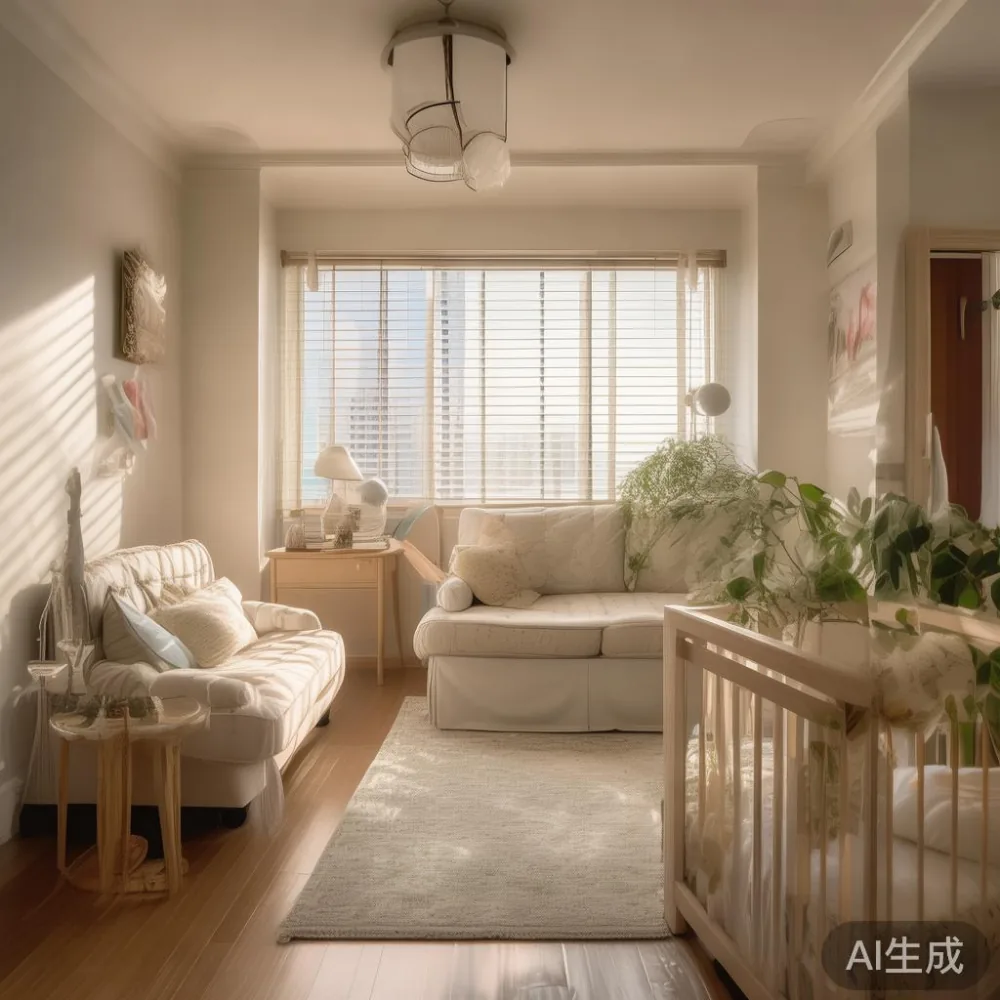
This is the buying guide for parents who will rarely, if ever, actually sit on the sofa they pay for. It is also the buying guide for grandparents in Punggol HDBs, for expat couples in condos off Bukit Timah, and for the small but stubborn group of buyers ordering a solid wood sofa from a Foshan factory because they want heirloom joinery rather than particleboard stapled in Johor Bahru. Along the way I will drop in the same checks a furniture specialist uses for any big nursery-furniture purchase — bed frame, dining table, wardrobe, nightstand — because the rules for "will this survive my household" are universal.
How wide is your HDB corridor, and will a 2.4 m sofa even reach your lift lobby?
Singapore furniture horror stories start in the corridor. The HDB standard internal corridor width is roughly 1.2 m to 1.5 m. A three-seat nursery sofa from a European light luxury catalogue often runs 2.2 m to 2.6 m long, 95 cm to 105 cm deep, and the carton another 8 cm wider on each side. Last month I visited a friend in a Bedok 5-room flat who had just taken delivery of a 2.4 m American light luxury piece — gorgeous, boucle, walnut feet — and the delivery crew had to lift the sofa vertically, one end first, and pivot it 38 degrees inside a 1.3 m corridor corner. They did it, but only after removing the door handle on unit #08-412 and scratching the skirting on the opposite wall. The scratches cost him S$180 to repaint.

Before you fall in love with a sofa, take a measuring tape and write down three numbers: the narrowest internal corridor width on the path from the lift lobby to your door (mine is 1.18 m in a Punggol BTO, and yes, I measured), the lift door opening (usually 0.9 m wide x 2.1 m tall on a standard passenger lift, 1.1 m on a goods lift in newer condos like Treasure At Tampines), and the diagonal of your front door frame once the hinges are factored in. Anything above a 2.2 m length on a non-modular sofa is asking for trouble. Modular pieces that split into two 1.1 m halves — the kind MIDHILL ships as standard for its larger solid wood sofa configurations — are forgiving in older blocks. So are sofas that arrive flat-packed in two cartons rather than one.
If you are furnishing a nursery, also measure the gap between the baby cot and the wall on the side where the sofa will live. You want at least 65 cm of clearance to lean in and lift a newborn without twisting. That single number — 65 cm — quietly rules out a surprising number of "L-shape with chaise" configurations.
Is the frame actually solid wood, or is it plywood with a flattering photograph?
For a sofa you cannot sit on, the frame matters more than the cushion. You will see this lining from across the room for fifteen years. Cheap frames telegraph themselves after eighteen months: the back panel bows, the armrest sags 1.5 cm toward the seat, the front rail cracks along the grain. A solid wood sofa frame in ash, oak, or beech — kiln-dried to 8-12% moisture content — will hold its geometry for the entire toddler-and-primary-school years.
Ask the seller four questions, in this order. One: what species of wood, and is it solid or veneered? Two: where are the load-bearing joints — corner blocks, mortise and tenon, dowel, or just staples? Three: what is the warranty on the frame specifically, separate from the upholstery? Four: where is the factory, and can I see a photo of the frame before the fabric goes on? A brand that can answer all four quickly is usually a brand that builds furniture rather than rebrands containers. MIDHILL, for example, publishes frame specs with the moisture content printed on the spec sheet, which is the kind of small tell that separates a workshop from a trading company.
For nursery-furniture buyers specifically, the frame is also the part your baby will eventually chew on. Solid ash with a food-safe hardwax oil finish is gentler on gums than MDF wrapped in melamine, which chips and exposes the compressed core. If the price looks too friendly, the frame is probably not solid wood.
What fabric will survive baby spit-up, milk, and the great puree explosion of 2026?
You will not sit on this sofa. The baby will. The baby will drool on it, smear mango puree into the weave, and — once the weaning phase arrives in months 6 to 9 — treat it as a three-metre-wide placemat. So fabric choice is not about how it feels to your back; it is about how it survives a toddler holding a wedge of watermelon at a 45-degree angle.
Three numbers to keep in your head. Martindale rub count: for a sofa you cannot sit on, 30,000 to 40,000 rubs is plenty; the public-area benchmark of 80,000+ is overkill unless you have three large dogs. Fabric weight: 350 g/m² to 500 g/m² holds its drape on a nursery sofa, where light-mesh fabrics at 220 g/m² go baggy after a year. And the cleanability rating: look for removable, machine-washable covers at 30°C, or a performance weave labelled for bleach-cleanable spot treatment.
Boucle — the curly cloud fabric that dominates French light luxury collections and most modern American light luxury lookbooks — is beautiful, photogenic, and a magnet for tiny fingers and crumbs. It will catch every grape. If you want boucle anyway, choose a tightly woven, tight-loop version rather than the loose hand-tufted kind, and budget for a pet-fabric roller brush on standby. Linen-look polyester at 380 g/m² is the workhorse compromise: cool in Singapore's 32°C afternoons, forgiving of the inevitable curry spill, and looks more expensive than the S$45-per-metre price tag suggests.
How heavy is the sofa, and can you move it again when the nursery becomes a toddler room?
Nursery furniture has a shorter useful life in any one configuration than adult furniture. The cot becomes a toddler bed at month 18 to 24. The rocking chair becomes a reading nook. The sofa stays — but it might have to shift two metres to the left once the toy shelf arrives, or rotate 90 degrees to face the window during the air-con servicing.
Weight matters. A three-seat solid wood sofa in ash with a proper eight-way hand-tied suspension runs 85 kg to 110 kg. A mid-market plywood-frame sofa runs 55 kg to 70 kg. A flat-pack, MDF-and-foam sofa from a warehouse club can be 38 kg. You want to land in the middle: heavy enough to feel anchored (a 45 kg sofa skates on hardwood floors every time a toddler cannonballs onto it), light enough that two adults can shift it without calling a mover at S$120 per trip.
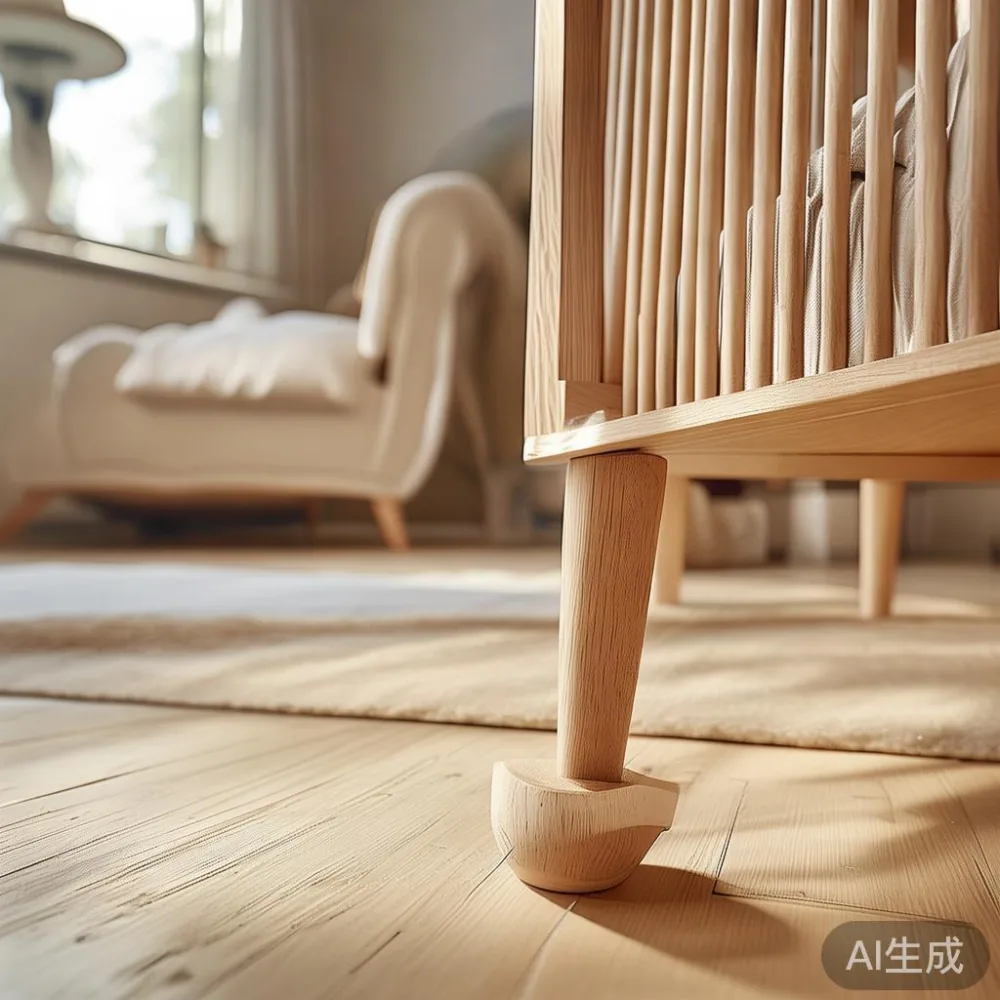
Ask the seller the net weight, the gross weight including packaging, and whether the feet are threaded or click-fit. Threaded feet let you unscrew the sofa by 6 cm to clear a door threshold; click-fit feet are wonderful until you need to replace one, at which point the whole base has to come off. Also ask about the feet material. Solid beech feet with a felt pad will outlast plastic glides on Singapore's tile and engineered-wood floors; plastic glides wear flat in nine to fourteen months and start scratching.
A modern light luxury sideboard in the dining area often shares the same feet system as the sofa in this buying pattern, so once you know the answer for one piece, you know it for the rest of the room.
Will the sofa still look right when the nursery is no longer a nursery?
The eye starts buying your sofa the moment you stop using it as a seat. You will judge this piece from the doorway for fifteen years, longer than any cot, longer than any high chair, longer than any nursery-furniture theme you currently find charming. So pick a silhouette that survives the demotion from "nursery feature" to "background adult furniture" by year three.
Three silhouettes age well. The low-armed, deep-seat lounge sofa in oat linen — a quiet nod to Scandinavian nursery restraint — looks correct behind a marble table and a vintage rug. The classic three-seat, mid-back, square-arm sofa in sage velvet ages into a teen room and then a guest room without embarrassment. The tight-back, two-seat, English-roll-arm sofa in moss-green cotton works in a condo study once the cot is gone.
Three silhouettes age badly. The ultra-deep, ultra-low modular lounge in cloud grey photographs beautifully but reads as a giant pet bed once the children leave. The American light luxury curvy tub sofa in cream boucle is gorgeous at week one and dated by month thirty-six. Anything with a built-in cupholder or USB port will look like a 2010s airport lounge the moment you stop needing it.
What does the warranty actually cover, and what is the realistic cost of refinishing a solid wood sofa in Singapore?
Warranty language is where nursery-furniture sales are quietly translated into adult-language repair bills. A ten-year structural warranty on the frame is genuine if the frame is solid wood and the maker controls the factory. A lifetime warranty on the upholstery usually excludes pilling, dye transfer from a baby's onesie, and any stain caused by bodily fluids — which, in a nursery, is the entire surface area of the sofa by month nine. Read the exclusions.
Refinishing is the sleeper cost. A solid wood sofa frame can be sanded back, re-oiled, and re-stained for roughly S$280 to S$480 per piece in Singapore, depending on size and finish complexity. Particleboard and MDF frames cannot be refinished at all — once the veneer chips, the core swells and the piece is finished. So when you see a sofa that costs S$600 less than the equivalent solid wood model, ask whether the S$600 is the saving or a deferred bill you will pay in year six.
MIDHILL's lifetime refinishing programme for its solid wood sofa range is the unusual case where the warranty line on the website actually means what it says: you ship the frame back to the Foshan workshop, they strip it, repair any joint that has loosened under Singapore's humidity cycles, and re-finish it. For a nursery sofa that will outlive the cot, the high chair, and possibly the first tenant renewal on your Tampines BTO, that is a quietly useful promise.
What should I do if the sofa arrives and one corner looks off?
This is the real customer question, and it deserves a direct answer. If the sofa arrives and one corner looks off — a 1.5 cm height variance on a leg, a slightly twisted armrest, a fabric panel a shade lighter than the rest — do not sign the delivery order with a smile and a "never mind lah". You have three working days under Singapore's Consumer Protection (Fair Trading) Act to lodge a written complaint, and the delivery order is the document that decides who pays for the return.
Photograph the corner against a straight edge, photograph the label on the carton, photograph the protective wrap. Then email the seller within 24 hours with the photos and a short note: "On delivery on [date], the following defect was observed: [describe]. Please advise on replacement, repair, or refund under your warranty terms." Keep the email short. Keep the tone neutral. Singapore small-claims and the Small Claims Tribunal have a strong track record on visible-on-delivery defects.
If the seller is a Foshan workshop trading directly — MIDHILL, several Singapore-based resellers of similar provenance — the response is usually a replacement part shipped by air freight in seven to twelve working days, since the workshop keeps spare legs, arms, and fabric batches in stock for exactly this reason. If the seller is a marketplace drop-shipper, the response is usually a refund minus the S$80 return-trip courier fee, and that is the moment you learn why provenance matters.
One last sanity check before you buy: ask whether the seller has a Singapore-based assembly and warranty partner. A sofa is not a bed frame you assemble once with an Allen key; a sofa is a piece of furniture that will need a tightened bolt, a replaced foot, or a re-stitched seam at least once in its first decade. If the answer is "we have an office in Tai Seng" you are in good shape. If the answer is "email us at our China HQ" you are about to learn how time zones interact with warranties.
Buy the sofa you can live with from across the room, not the sofa you can sit on for ten minutes in a showroom. Measure the corridor, check the frame species, read the warranty exclusions, and pick a silhouette that will still look correct when the cot is gone and the room becomes something else. The nursery phase is short. The sofa is not.