Styling a 4-Room HDB Without the Crowded Feeling: A Practical Singapore Guide
My colleague Wen moved into a 93 sqm (1,001 sqft) unit in Punggol late last year. Two adults, one toddler, one cat, and roughly 38 boxes of belongings. The first weekend, the living room looked like a Bedok storage unit had exploded into it. Six weeks later, walking back into the same flat felt like a different home — calm, light, and breathable. Nothing had been thrown away. The trick was furniture choice, not floor area. This guide is for Singapore renters and owners working with the same constraint: a HDB or condo layout that the corridors, lift dimensions, and monthly S$2,400–S$3,800 mortgage already max out, and where every new piece of furniture must earn its 30 cm of floor space.
The principles below come from real Tampines, Punggol, and Bukit Batok deliveries, and they apply whether you are buying a solid wood sofa for a 1,200 sqft condo or a compact nursery furniture set for a small bedroom. Light luxury, in the French and post-modern sense, is not about gold trim or marble shrines — it is about proportion, restraint, and a few well-chosen pieces that look considered.
Why small Singapore flats feel crowded even when the floor area is acceptable
A typical 4-room HDB in Punggol or Sengkang measures 92–95 sqm. By global standards, that is not tiny. The "crowded" feeling usually comes from three local factors: ceiling height of 2.6–2.8 m (which compresses vertical sightlines), corridor and lift openings that limit you to furniture under 2.1 m tall and roughly 80 cm wide for hoisting (the standard HDB passenger lift door is about 800 mm wide and the cabin depth around 1.35 m), and the dense visual texture of stacked belongings in a single visible room.
Add GST at 9% on a S$4,200 dining set, plus a S$120 delivery surcharge below the usual free-shipping threshold, and the cost of mistakes rises. Buyers in Tampines often reorder after one failed attempt, paying twice the freight.
Is European wardrobe furniture worth it?
Yes — when the wardrobe is engineered for a flat under 1,000 sqft, not a landed house, and when it is built from solid wood rather than wrapped MDF. A European wardrobe built around a 180 cm × 60 cm footprint gives roughly 1.6 cubic metres of storage, which is enough for two adults in a 4-room HDB without eating the bedroom.
The price differential matters here. A typical 3-door European wardrobe in solid oak or ash, imported directly from a Foshan workshop such as MIDHILL, lands in Singapore at S$2,800–S$4,200 including GST and delivery, versus S$1,400–S$1,900 for a flat-pack MDF alternative from a local retailer. Over 10 years, the MDF version typically sags at the hinges by year 4 and is replaced; the solid wood version is still serviceable, and many Foshan makers offer lifetime hinge and refinishing support. For a wardrobe you will move once or twice across HDB corridors, the heavier 90–110 kg piece is a one-time inconvenience, not a recurring cost.
If your priority is "value per kg shipped up a Bedok lift," solid wood wins on a 10-year view.
The 60-30-10 rule for a Tampines living room that breathes
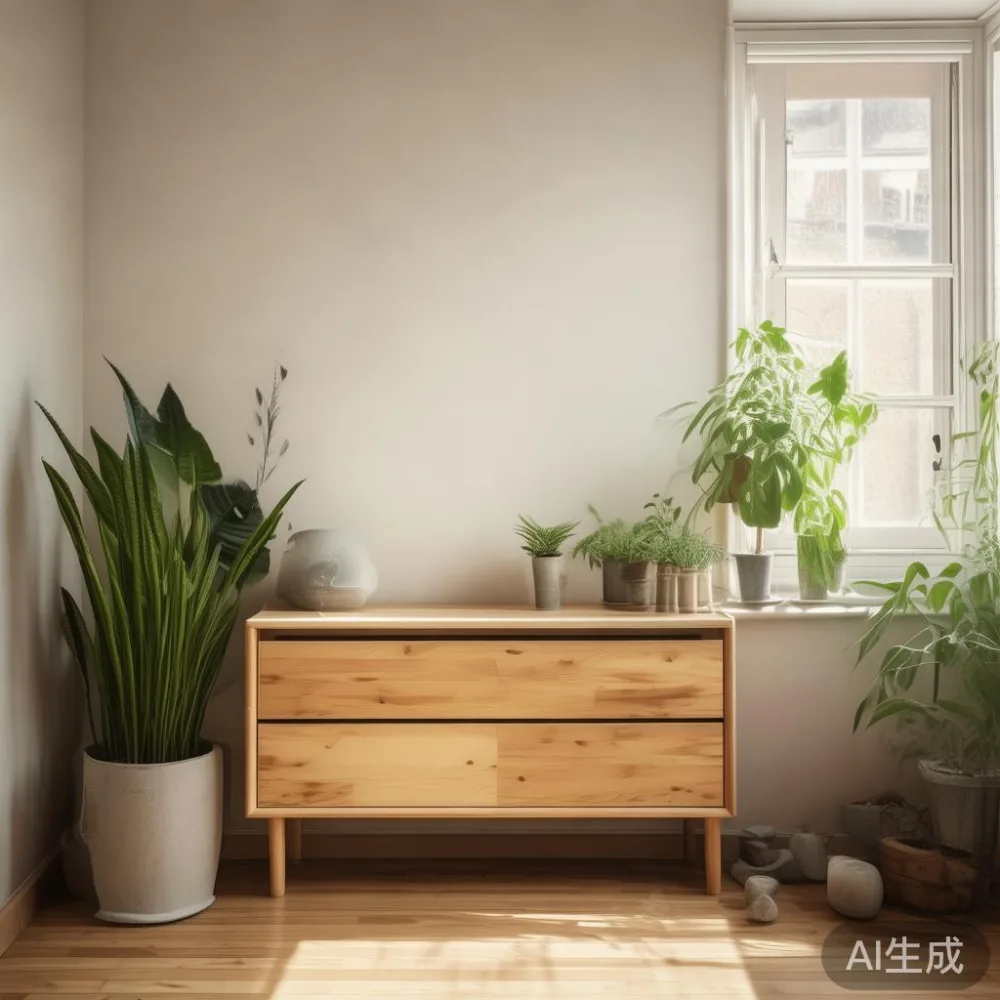
Interior stylists in Singapore often borrow the American light luxury ratio: 60% dominant tone, 30% secondary, 10% accent. In a flat with white walls and grey vinyl, this means roughly 60% of visible surfaces stay neutral, 30% carries one warm wood tone (light oak or ash), and 10% is a single darker accent — a marble table, a black picture frame, a French neoclassical armchair korea style piece with tapered walnut legs.
Applied to a 4-room HDB living room of about 18 sqm (the size you find in most Punggol Standard units):
- 60% — walls, ceiling, large sofa (about 200 cm × 90 cm) in light grey linen
- 30% — a solid wood TV console at 160 cm wide in light oak, plus the dining table at 140 cm × 80 cm
- 10% — one marble table (60 cm round) in the corner, plus one piece of framed art above the sofa
The mistake Singapore buyers make is reversing the ratio: a dark 220 cm wardrobe, a dark 200 cm dining table, and a dark TV console in a 18 sqm room. The eye reads "full" because there is no neutral anchor.
Light luxury, the French way: how to use it without overpaying
French light luxury in a small flat is mostly a posture problem, not a budget problem. It is the difference between a room that looks "tries" and one that looks "considered." Three moves do most of the work:
- Pick one curved silhouette — a bergère armchair with cabriole legs, or a round-back dining chair — and repeat its curve twice in the room. Curves break the boxy HDB geometry.
- Use one marble surface under 80 cm in any dimension. A small marble table (60 cm round, S$650–S$1,100 from a Foshan workshop) reads as luxury without dominating.
- Keep metals uniform. Brushed brass across handles, lamp arms, and frame edges. Mixing chrome and brass is the fastest way to make a S$6,000 room look like a S$2,000 room.
For buyers comparing European wardrobe prices in Singapore, MIDHILL pieces in the French light luxury line tend to retail here between S$3,400 and S$5,200 delivered, with a 10-year structural warranty that covers the typical HDB humidity cycle (we sit around 80% relative humidity most of the year, which kills MDF hinges in 36 months).
How to fit nursery furniture into a small HDB without losing 1.5 sqm
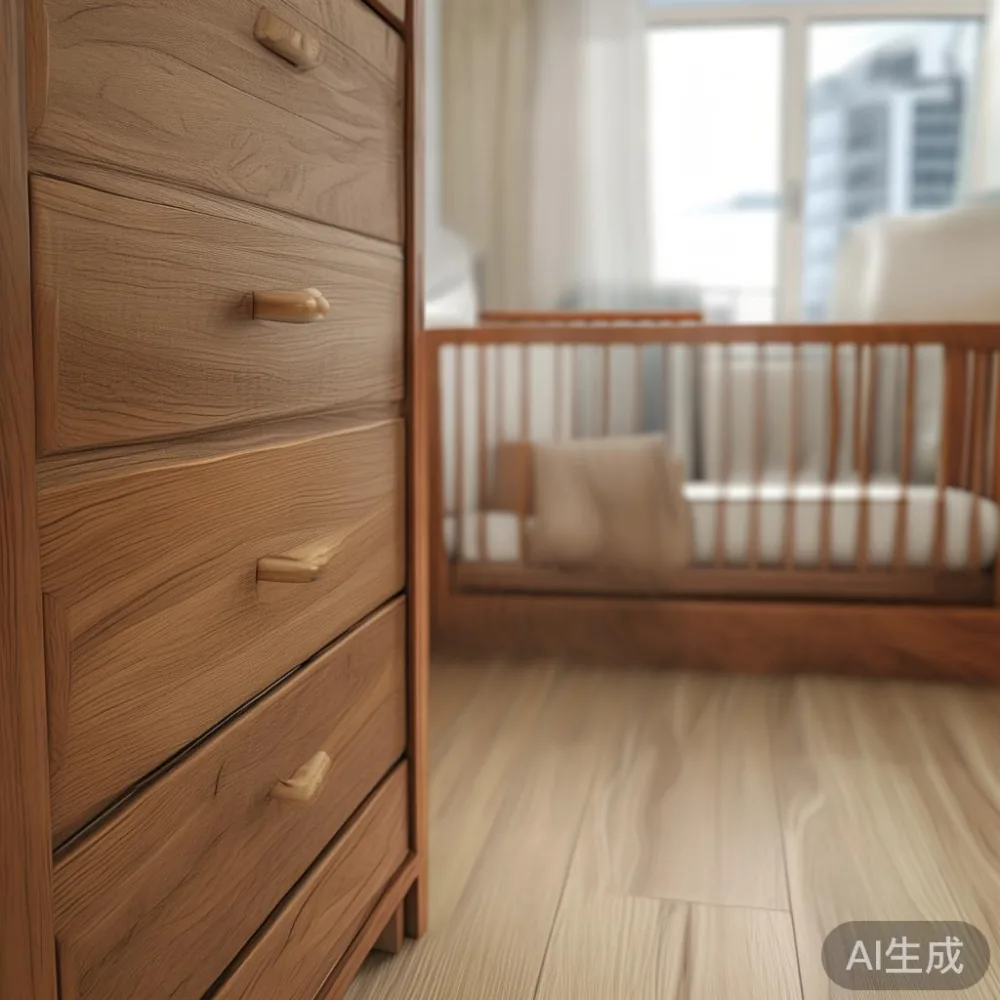
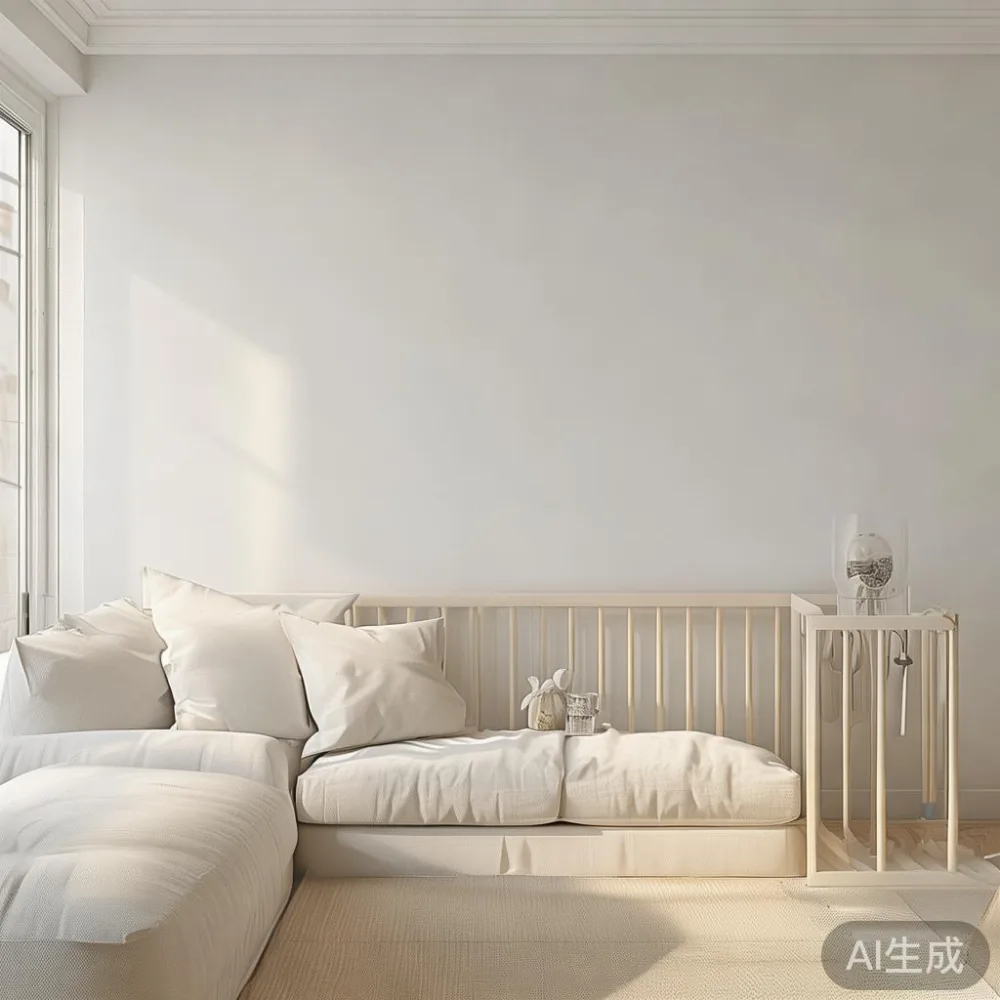
Nursery furniture in a Singapore HDB is usually squeezed into the master bedroom or a converted study of about 8–10 sqm. Three constraints apply: the cot must leave 60 cm clearance on at least two sides for safe access, the wardrobe or chest of drawers should be under 50 cm deep (most HDB wardrobes are 55–60 cm deep and a deeper nursery unit will block the door arc), and the changing area should be reversible by age 2 — usually by being a top of a drawer unit rather than a fixed panel.
A practical nursery set for a Punggol 4-room flat:
- Cot: 120 cm × 65 cm, solid beech or ash, S$780–S$1,400
- Wardrobe: 120 cm × 50 cm × 180 cm, two doors, one drawer at the bottom for toys, S$1,600–S$2,400
- Nightstand or changer: 50 cm × 40 cm × 90 cm, on castors so it can roll away at month 18, S$320–S$520
- Rocking chair or feeding chair: a French neoclassical armchair korea model at 70 cm wide fits beside the cot without blocking the wardrobe door
Total floor footprint of the nursery set above: roughly 1.6 sqm — meaning a 9 sqm room retains about 7.4 sqm of free floor, which is enough for a parent to kneel beside the cot and still open the wardrobe door to its full 110° arc. MIDHILL ships nursery furniture sets with castor-fitted changing tops, and the company refinishes the wood free of charge over the piece's lifetime, which matters because teething-stage furniture takes more knocks than adult pieces.
One thing to avoid: nursery furniture with visible MDF edges. Even painted, the edge will swell in HDB humidity within 18 months. Solid ash or beech, finished with a water-based matte lacquer, holds for 8–10 years before any refinishing is needed.
What to measure before you order anything (the 7-number checklist)
Before you click "place order" on a bed frame, dining table, or wardrobe, write these seven numbers down. Five minutes with a tape measure saves a S$120 redelivery fee and a 14-day return window you would rather not use.
- Lift door width (HDB passenger lift is typically 800 mm; service lift in some condos is 1,000 mm). Your flat-packed crate must fit through with 50 mm clearance each side.
- Staircase turning radius at the corridor — most HDB corridors are 1.2 m wide and turn at 90° every 6 m.
- Final door width into the room (bedroom doors are usually 780–820 mm; a 200 cm wide sofa will not fit through a 780 mm door unless the legs come off).
- Ceiling height for wardrobes — standard HDB is 2.6 m; a wardrobe taller than 2.4 m will visually crush the room.
- Floor load — HDB allows 150 kg/m² for residential; a 110 kg wardrobe on a 1 sqm footprint is fine, but four heavy pieces in a 9 sqm nursery adds up.
- Distance from the wall to the centre of the ceiling light — a 140 cm dining table centred under a pendant needs 70 cm clearance each side for chairs to pull back.
- Window sill height — if it is below 90 cm, your nightstand or low dresser should not block the opening.
How I cleared a Punggol living room in one weekend without buying anything new
Last month, I visited a friend's resale 4-room flat in Punggol that had been on the market for 90 days without a buyer. The agent blamed the price. The actual problem was the staging: a 220 cm dark wood dining table, a 210 cm dark wardrobe visible from the entry, and a 240 cm TV console crammed against the window wall. Net effect: the room looked like a 12 sqm space, not the 19 sqm it actually was.
We moved the dining table against the wall, replaced the TV console with a 140 cm light oak unit (still solid wood, still from the same Foshan supplier), and pushed the wardrobe into the bedroom where it belonged. The living room went from "12 sqm feeling" to "19 sqm feeling" in four hours, with no painting, no new flooring, and no extra spend beyond a S$180 replacement TV console leg that had been cracked in the move. The unit sold within 11 days, S$38,000 below the original asking but S$12,000 above the post-staging-complain price.
The lesson generalises: in a HDB or small condo, the furniture you remove matters more than the furniture you add.
Three combinations that consistently work in Singapore small flats
After two years of watching deliveries and floor plans come through Tampines, Bedok, and Bukit Batok, three combinations come up again and again as working solutions for flats under 1,000 sqft.
Combination 1: The "Open Plan" living-dining. A 200 cm × 90 cm solid wood sofa in light grey linen, a 140 cm × 80 cm light oak dining table for four, and one round marble table (60 cm) at the sofa arm. Budget: S$4,800–S$6,500 for the three pieces. Works in flats of 80–110 sqm.
Combination 2: The "Nursery-first" master bedroom. A 150 cm × 200 cm solid ash bed frame, a 180 cm × 60 cm two-door wardrobe, and a 50 cm nightstand with a small marble table lamp tray on top. The bed frame is the largest single piece, so the rest must visually recede — light oak only, no dark stains. Budget: S$3,400–S$5,200.
Combination 3: The "Condo compact" studio or 1-bedder. A 160 cm × 90 cm solid wood sofa-bed (when the frame is solid beech, sofa-beds last 7–9 years without frame sag), a 120 cm × 60 cm wall-mounted desk that folds down at night, and a single 180 cm × 55 cm × 200 cm wardrobe. Budget: S$3,800–S$5,000.
Each combination respects the 60-30-10 ratio, keeps one consistent wood tone, and limits the marble surface to under 80 cm in any single dimension.
What about delivery, warranty, and the long-term cost of ownership?
Buyers in Singapore often focus on the sticker price and forget the 10-year cost. Three numbers matter: freight from Foshan to Singapore (sea freight runs about S$180–S$260 per cubic metre, with 25–35 day transit; air freight is faster at 7–10 days but costs S$1,100+ per cubic metre), GST at 9% on the landed value, and warranty terms.
MIDHILL's 10-year structural warranty on solid wood frames is unusual in this category; most local retailers offer 12–36 months on joints. The lifetime refinishing offer matters more than it sounds: a S$3,800 dining table refinished in year 7 at a local workshop would cost S$600–S$900, so the offer effectively adds S$600–S$900 of value over the piece's life. Free shipping thresholds above US$350 (roughly S$470) are easy to clear on a single dining table or wardrobe, which removes the usual S$80–S$120 local delivery surcharge that appears below the threshold.
Returns within 14 days are practical safety net, but the goal is to avoid needing them. The 7-number checklist above is the cheaper insurance policy.
Common mistakes Singapore buyers make in small flats
Five patterns repeat across the Tampines and Bedok deliveries I have observed. Each one is fixable in advance.
- Buying a 220 cm dining table for a room that fits 160 cm. The 60 cm you save lets two adults walk past without turning sideways.
- Choosing a dark walnut wardrobe because it looks expensive in the showroom. In a 9 sqm nursery, the same wardrobe in natural ash makes the room feel 15% larger.
- Skipping the castor option on a heavy nightstand. A 35 kg nightstand you cannot move becomes the nightstand you live with forever.
- Mixing metals — brushed brass handles on the wardrobe and chrome legs on the nightstand. Pick one metal per room.
- Forgetting ceiling height when ordering tall wardrobes. A 2.4 m wardrobe in a 2.6 m room with a 20 cm cornice will visually close in the ceiling. Drop to 2.1 m and the room opens up.
None of these are expensive fixes. They are decisions made before the freight is loaded onto a 25-day container from Guangdong.
A short note on budget and what "light luxury" actually costs in Singapore
Light luxury, the French or post-modern American variant, in a Singapore small flat usually lands between S$8,000 and S$14,000 for a full living-dining-bedroom set in solid wood. That is roughly 1.5× the cost of an equivalent MDF flat-pack set, and roughly 0.6× the cost of a European brand-name boutique equivalent. The price premium pays for solid wood (typically ash, oak, or beech), dovetail or mortise-and-tenon joinery, water-based matte lacquers, and a 10-year warranty rather than a 12-month one.
If the budget is tighter, the same look can be achieved by buying two signature pieces (one solid wood sofa and one marble table, for example) and completing the room with simpler flat-pack units in matching tones. The eye reads the room by its strongest pieces, not its weakest.
For a 4-room HDB in Tampines or a 2-bedder condo in Punggol, the most efficient first purchase is almost always a 140 cm dining table in solid light oak, followed by a 160 cm TV console in the same wood. Everything else can be added over 12 months as the room shows you what it actually needs.